
Why are Indian investors suddenly asking me about a radioactive metal instead of safe fixed deposits or traditional Nifty 50 index funds?
When I first started my journey as a computer engineer and later during my MBA, energy was mostly about oil and coal. But today, the narrative has shifted dramatically. During my 5+ years working at ICICI Prudential, I noticed a common pattern: retail investors often chase investment themes only after they have peaked. However, the global pivot toward nuclear energy as a clean, baseload power source feels like a structural shift, not a passing trend.
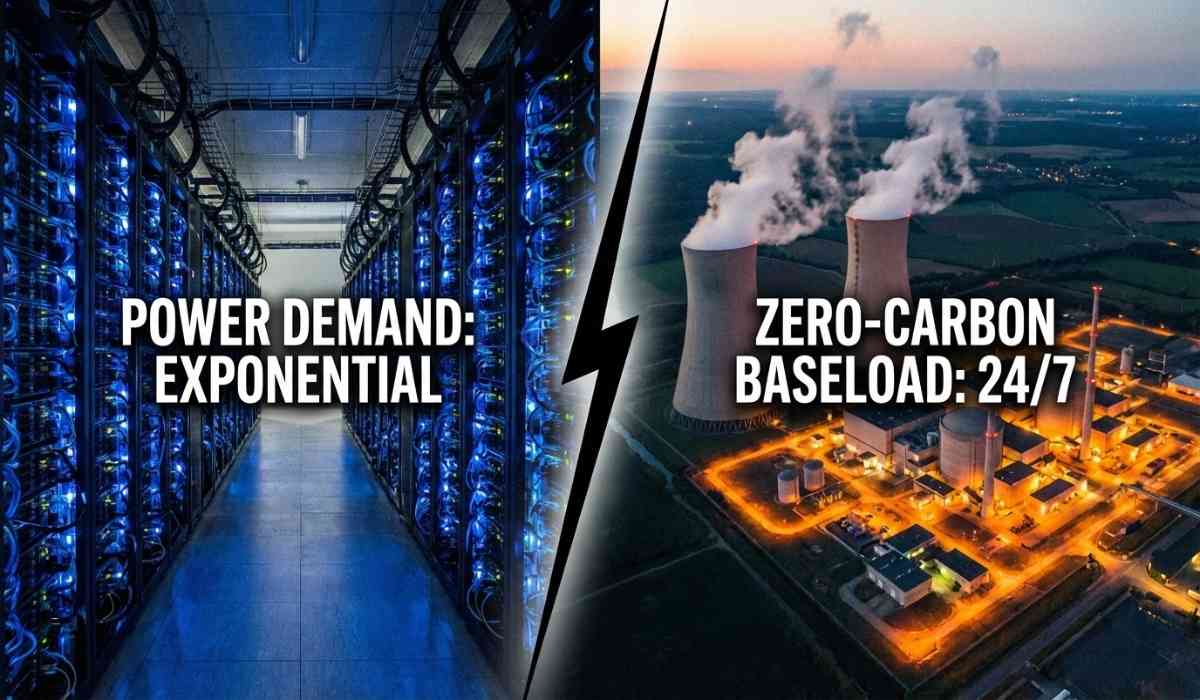
If you are looking at investing in Uranium from India 2026, you are looking at a market caught in a massive supply-demand imbalance. Governments worldwide are realizing that solar and wind are simply not enough to power the future—especially with the explosive energy demands of Artificial Intelligence (AI) data centers.
In this comprehensive guide, I am going to break down exactly how you can gain exposure to this highly specialized sector. We will cover the changing Indian laws, the global data backing this trend, and the exact step-by-step methods you can use to diversify your portfolio, all without relying on blindly forwarded stock tips.
Let’s dive in.
Why Investing in Uranium from India 2026 is Suddenly Trending

Before you put a single rupee into the market, you need to understand the data driving the thesis. You should never invest in something just because it sounds exciting.
In my 14 years of actively investing in mutual funds and the Indian stock market, I have learned that macro-economics dictate long-term returns. Here is what is happening in the uranium space right now:
- Massive Supply Cuts: According to recent company announcements, Kazatomprom—the world’s largest uranium producer based in Kazakhstan—is planning to cut its uranium production by roughly 10% in 2026. This removes about 5% of the world’s primary supply from the market.
- Aggressive Indian Expansion: The Indian government has set an ambitious target to expand our domestic nuclear capacity to 100 GW by the year 2047, up from roughly 8.2 GW at the end of 2024.
- Price Projections: Analysts at Bank of America have projected that uranium spot prices could soar to $130 per pound by the fourth quarter of 2026. (Note: As an investor, always treat analyst predictions as possibilities, not guarantees).
The world needs clean energy. Nuclear power provides zero-carbon electricity that runs 24/7, unlike wind or solar. This realization is what makes investing in Uranium from India 2026 a unique thematic opportunity.
The Global and Indian Uranium Landscape in 2026

The year 2025 and 2026 will be remembered as a turning point for nuclear energy in India. Why? Because of a massive regulatory change.
In December 2025, the Indian Parliament passed the SHANTI Bill (Sustainable Harnessing and Advancement of Nuclear Energy for Transforming India). This historic piece of legislation repeals the decades-old Atomic Energy Act of 1962.
For the first time ever, the Indian government is opening up the civil nuclear sector to private participation. This move is designed to attract an estimated $214 billion in investment opportunities. While private players still cannot own nuclear fuel, they can now co-develop nuclear plants, manufacture equipment, and manage operations.
Globally, the situation is equally tense. Supply chains are tight. Geopolitical tensions in Africa (such as Niger nationalizing the Somaïr uranium mine) are forcing Western countries to secure their nuclear fuel supplies urgently. All of this puts upward pressure on the underlying commodity.
Can You Directly Buy Physical Uranium in India?
Let me answer this directly: No. Unlike gold or silver, retail investors in India cannot buy, store, or trade physical uranium. It is a radioactive, highly regulated material controlled by the Department of Atomic Energy for national security reasons.
If you want to capitalize on this trend, you cannot hoard the metal in a bank vault. Instead, you must use indirect financial instruments. This requires strategic financial planning and a good understanding of global markets.
3 Best Ways for Investing in Uranium from India 2026

Since you cannot buy the metal, you must buy the companies that mine it, process it, or the funds that hold these companies. Here is exactly how you can execute a strategy for investing in Uranium from India 2026.
1. International Mutual Funds and Fund of Funds (FoFs)
In my experience, this is the safest and most accessible route for the average Indian retail investor. You don’t need to open a foreign brokerage account or convert your rupees to dollars.
A Fund of Funds (FoF) is exactly what it sounds like: an Indian mutual fund that pools your money in rupees and invests it into an international fund that tracks global uranium or energy stocks.
How to do it:
- You can invest via your standard Indian brokerage app (like Groww, Zerodha Coin, or Rupeezy).
- Look for thematic funds that hold international energy or metal equities. For example, the ICICI Prudential Strategic Metal and Energy Equity FoF invests in the units of the First Trust Strategic Metal and Energy Equity UCITS Fund. While not a “pure-play” uranium fund, it offers exposure to the broader strategic metals and clean energy transition.
- You can start a SIP (Systematic Investment Plan) for as little as ₹100 or ₹500 a month.
The Pros: It is incredibly easy. You can track your investment via its daily NAV (Net Asset Value) just like any standard domestic equity fund.
The Cons: These funds usually have a slightly higher expense ratio (the fee the fund house charges you to manage your money) because you are paying both the Indian fund manager and the underlying international fund manager.
2. Global Uranium ETFs via the LRS Route
If you have a slightly higher risk appetite and want direct, targeted exposure to pure uranium mining companies, you need to look beyond the BSE (Bombay Stock Exchange) and NSE (National Stock Exchange). You need to buy Global ETFs (Exchange Traded Funds).
Under the Reserve Bank of India’s Liberalised Remittance Scheme (LRS), an Indian resident can legally transfer up to $250,000 per financial year overseas for investments.
How to do it:
- Open an international trading account through platforms like INDmoney, Vested, or HDFC Global Investing.
- Transfer funds from your Indian bank account to your US brokerage account (keeping the LRS and 20% TCS—Tax Collected at Source—rules in mind).
- Search for dedicated Uranium ETFs on the US markets.
Examples of popular US ETFs (Not investment recommendations):
- Global X Uranium ETF (URA): One of the largest and most liquid funds tracking a broad basket of global uranium miners and nuclear component producers.
- Sprott Uranium Miners ETF (URNM): Focuses specifically on pure-play uranium mining companies.
- Themes Uranium & Nuclear ETF (URAN): Another thematic option targeting the nuclear energy transition.
The Pros: You get pure, undiluted exposure to the global uranium sector and benefit from geographic diversification.
The Cons: Remitting money involves forex markup fees and flat bank transfer charges. Therefore, this route only makes sense if you are investing a lump sum of at least ₹50,000 to ₹1,00,000 to justify the transfer costs.
3. Indian Proxy Stocks and the SHANTI Bill Effect
What if you strictly want to keep your money in India? While there are no pure-play uranium miners listed on the NSE or BSE (uranium mining is monopolized by the government-owned Uranium Corporation of India), you can invest in the broader nuclear infrastructure theme.
Thanks to the SHANTI Bill 2025, private players are now entering the game. The Nuclear Power Corporation of India Limited (NPCIL) recently floated a tender for co-developing 220 MWe Bharat Small Reactors (BSR).
The Proxy Play:
Instead of buying uranium, you buy the Indian infrastructure giants that will build the reactors, supply the heavy engineering equipment, and distribute the power. Companies like Reliance Industries, Adani Power, Tata Power, and JSPL have reportedly shown interest in these Small Modular Reactor (SMR) tenders. Furthermore, heavy engineering companies like BHEL and L&T have historically been the backbone of India’s nuclear plant construction.
The Pros: No currency risk. You are investing in well-known Indian blue-chip companies with established track records.
The Cons: These are massive conglomerates. Nuclear energy will only be a small fraction of their overall revenue. A 50% spike in uranium prices will not double the stock price of Tata Power.
(Disclaimer: The companies mentioned above are for educational purposes only. I do not provide stock tips. Always read the annual reports and check the fundamentals before investing).
Read: 5 Uranium Related Stocks to Watch in 2026
Comparison of Investment Routes
| Investment Route | Ease of Access | Pure Uranium Exposure | Currency Risk | Ideal For |
| Indian FoFs | Very High (Standard SIP) | Low/Medium (Broader energy) | Yes (Indirect) | Beginners, SIP investors |
| US Uranium ETFs | Medium (Requires LRS setup) | High (Pure play miners) | Yes (Direct USD) | Experienced investors |
| Indian Proxy Stocks | Very High (Demat account) | Very Low (Infrastructure only) | No | Investors avoiding LRS |
The Risks: What My 14 Years in the Markets Tell Me
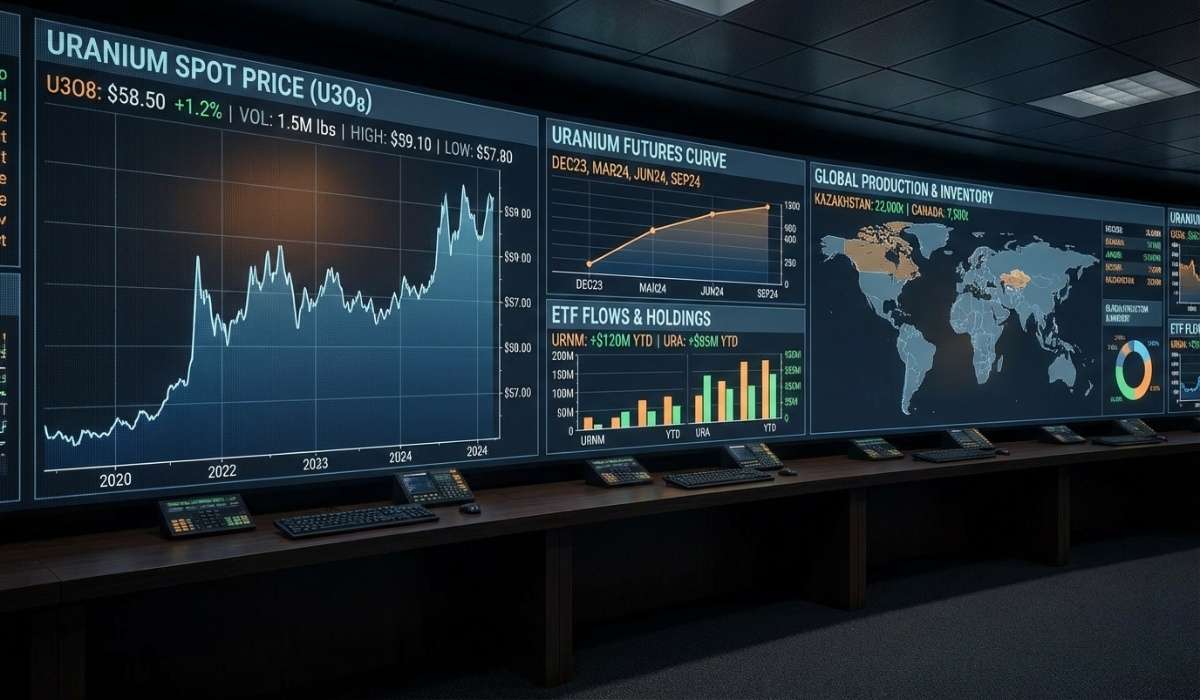
I have spent 14 years investing in mutual funds and 5 years actively navigating the brutal volatility of the cryptocurrency markets. If there is one thing I can tell you with absolute certainty, it is this: Thematic investing is dangerous if you lack patience.
Before you commit your capital to investing in Uranium from India 2026, you must understand the risks:
- Commodity Supercycles are Volatile: Uranium is a commodity. Its price is driven by spot markets, long-term contracting, and geopolitical headlines. A single piece of bad news regarding a nuclear plant anywhere in the world can crash uranium stocks overnight.
- Taxation Headwinds: If you use the LRS route to buy US ETFs, you are subject to a 20% TCS upfront (which you can claim back during your Income Tax Return, but it locks up your liquidity). Furthermore, foreign equity taxation applies to your capital gains.
- The “Shiny Object” Syndrome: It is easy to look at a sector that has run up 50% in the last year and assume the CAGR (Compound Annual Growth Rate) will remain that high forever. It won’t. Proper asset allocation means thematic investments like Uranium should never exceed 5% to 10% of your total portfolio.
- Long Gestation Periods: Building nuclear reactors takes years, sometimes decades. The Indian government’s goal of 100 GW is targeted for 2047. This is a multi-decade story, not a “get-rich-in-six-months” scheme.
Conclusion: Should You Add Uranium to Your Portfolio?

The landscape of energy is changing. We are moving away from fossil fuels, and nuclear power is currently the only viable, scalable, and zero-carbon baseload alternative.
Here are your key takeaways:
- The opportunity is real: With Kazatomprom cutting supply in 2026 and India aiming for 100 GW of nuclear capacity, the demand metrics are highly favorable.
- Pick your route carefully: Beginners should stick to domestic FoFs that invest in global energy, while seasoned investors can utilize the LRS route to buy specialized US-based ETFs like URA or URNM.
- Stay local for safety: If you want zero currency risk, look into Indian heavy engineering and power stocks that will benefit from the SHANTI Bill 2025.
- Manage your risk: Keep this allocation strictly in the “satellite” portion of your portfolio (under 5-10%).
Investing in Uranium from India 2026 is not about finding a quick shortcut to wealth. It is about understanding global macro-economics, identifying a severe supply-demand bottleneck, and positioning yourself early.
Do your own research, calculate your risk appetite, and remember: an educated investor is a profitable investor. Start small, track the data, and build your wealth systematically.
Also Read: Can Thematic Funds Capture India’s Semiconductors & AI Infra?
Disclaimer: The information provided in this article is strictly for educational and informational purposes only and does not constitute financial, investment, or legal advice. The author is not a SEBI-registered investment advisor, and any references to specific funds, ETFs, or companies (such as URA, URNM, ICICI Prudential FoF, Tata Power, or L&T) are purely illustrative and should not be construed as recommendations to buy or sell any security. Readers are strongly advised to consult a qualified financial advisor and conduct their own due diligence before making any investment decisions, as all investments carry risk, including the possible loss of principal.