

India is pouring tens of thousands of crores into semiconductor manufacturing, AI research, and digital infrastructure. The government’s backing is real. The growth numbers are hard to ignore. And yet, if you search for a dedicated semiconductor mutual fund in India, you won’t find one. That gap between opportunity and access can be frustrating.
The good news is that several technology-focused and thematic mutual funds already hold companies that stand to benefit from this wave. IT services firms, electronics manufacturers, digital platforms, and infrastructure-linked businesses all sit within the semiconductor and AI value chain. You just need to know where to look.
This blog breaks down how thematic mutual funds work, why India’s tech landscape is set for significant growth in 2026, and which specific funds give you indirect exposure to semiconductor and AI infrastructure trends. We’ll also cover the real risks involved so you can make a more informed decision with your money.
Understanding Thematic Mutual Funds and India’s Tech Landscape
What are Thematic Mutual Funds?
Many investors ask me: “Ishwar, what’s the real difference between a sectoral fund and a thematic fund?”
It’s a fair question. Both sound similar at first.
Thematic mutual funds invest around a defined idea or broad economic trend that stretches across multiple industries. Think “digital transformation” or “infrastructure growth.” These aren’t limited to one sector like banking or pharmaceuticals. Instead, they cast a wider net to capture the full scope of a market narrative.
Sectoral funds are different. They stick to one sector, period. If you buy a pharma fund, you get pharma companies. Nothing else.
Thematic funds follow a top-down investment approach.
 Fund managers identify the theme first, then hunt for stocks that align with it, no matter which traditional sector they belong to. A digital transformation theme might include IT services, fintech platforms, logistics companies using AI, and even electronics manufacturers. All interconnected.
Regulations mandate that at least 80% of assets must be invested in line with the stated theme. This isn’t optional. SEBI enforces this rule to maintain transparency and protect investors from mis-selling.
Most thematic funds are equity-oriented, holding large-cap, mid-cap, and small-cap stocks. This diversification across market capitalizations can smooth out some volatility, but don’t mistake it for safety.
Here’s the trade-off: when the theme catches fire, returns can be exceptional. I’ve seen thematic funds deliver 30%+ annualized returns during strong bull runs in their chosen narrative.
But they carry concentration risk. If the theme stumbles, your portfolio takes a direct hit. Higher volatility is the price you pay for focused exposure. Diversified equity funds spread risk across themes and sectors, offering steadier rides. Thematic funds don’t.
India’s Booming Technology Sector: A Growth Overview
India’s technology sector is in expansion mode.
India’s IT industry is projected to reach $350 billion in FY26, up from $283 billion in FY25. That’s a 24% jump in just one year. The numbers speak volumes about the momentum behind Indian tech companies.
Technology spending in India is expected to hit $54.5 billion by 2027, the highest in the Asia Pacific region. Businesses are pouring capital into cloud infrastructure, cybersecurity, and digital transformation projects. This isn’t just hype; it’s real money flowing into real projects.
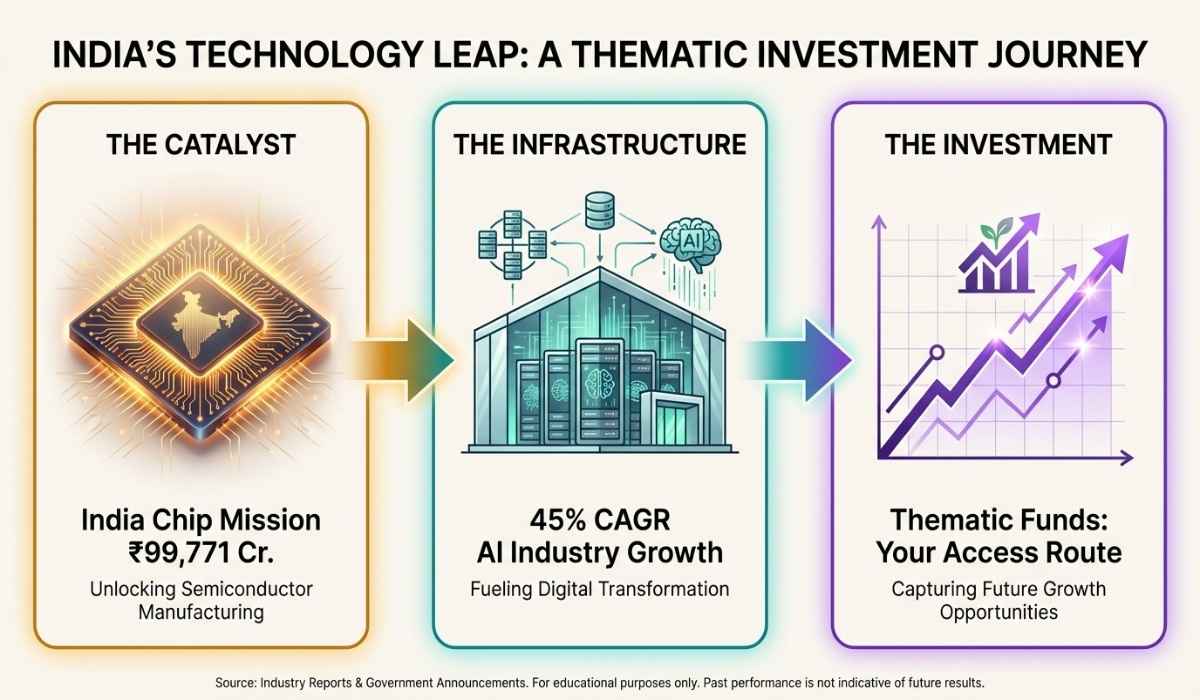
The Artificial Intelligence industry alone is projected to reach $28.8 billion by 2025, growing at a 45% CAGR. That growth rate is blistering. Between 2010 and 2025, India filed over 86,000 AI patents, indicating strong momentum in recent years. Patents signal innovation, and innovation drives future revenues.
The engineering R&D and product development market in India is expected to reach $63 billion by 2025, growing at a 12% CAGR. Multinational companies are increasingly outsourcing complex engineering work to Indian firms, recognizing the talent pool and cost advantages.
Technology now contributes around 7% to India’s GDP.
 This isn’t a fringe sector anymore. It’s a core pillar of the economy.
Semiconductor and AI Infrastructure in India: Indirect Investment Avenues
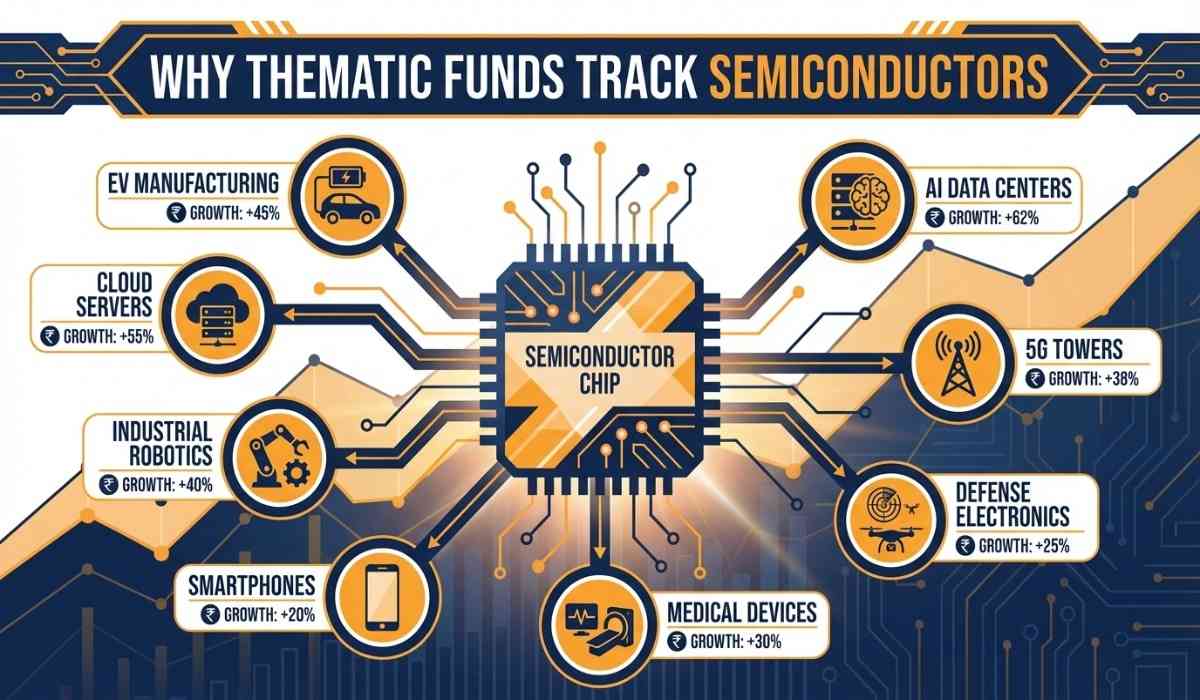
The semiconductor ecosystem sits at the heart of global technology growth. Chips power everything. AI models need them. Cloud data centers run on them. Electric vehicles depend on them. Electronics manufacturing can’t function without them.
India is witnessing large investments in semiconductor manufacturing and electronics production across states such as Gujarat, Assam, and Karnataka. Several fabrication units are under construction or in planning stages, backed by both government incentives and private capital.
Policy support is tangible. The government allocated ₹99,771 crore for a Research, Development and Innovation scheme to boost deep-tech research. The India AI Mission received a ₹2,000 crore allocation in 2025–26, signaling long-term commitment to building AI infrastructure and capabilities.
But here’s the catch: India does not offer dedicated semiconductor mutual funds.
You won’t find a scheme named “XYZ Semiconductor Fund.” The market simply doesn’t have one yet.
Investors can gain indirect exposure to semiconductor and AI-related companies through technology-focused and diversified equity schemes. These funds invest in IT services companies building AI platforms, digital businesses leveraging chips for their infrastructure, electronics manufacturers, and infrastructure-linked businesses dependent on advanced computing.
It’s indirect exposure, not pure-play. You’re betting on companies that benefit from semiconductor and AI growth rather than chip manufacturers themselves. For now, that’s the only practical route available to Indian mutual fund investors.
Identifying Thematic Funds for Semiconductor and AI Growth in India
Top Technology-Focused Mutual Funds with Indirect Exposure
Many investors I meet ask me the same question: “Ishwar, where are those dedicated semiconductor funds in India?” The truth is simple. They don’t exist yet.
But that doesn’t mean you’re locked out.
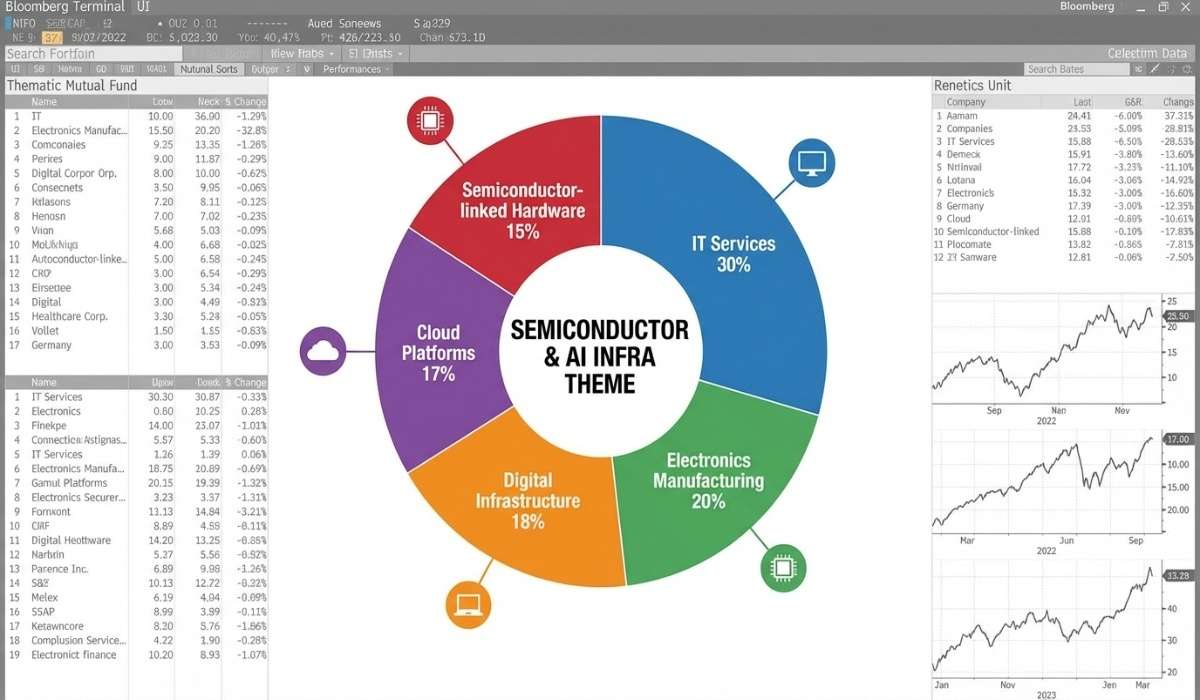
Instead, you can access semiconductor and AI growth through technology-focused mutual funds that hold companies positioned to benefit from this massive shift. These funds invest in IT services, digital infrastructure, electronics manufacturing, and cloud-driven businesses that form the backbone of India’s tech transformation by 2026.
Here are five funds offering meaningful indirect exposure to semiconductor and AI infrastructure trends:
Motilal Oswal Flexi Cap Fund stands out for its flexibility. This fund doesn’t limit itself to one sector or market cap. It spreads investments across large, mid, and small-cap stocks, capturing opportunities in technology, digital services, and infrastructure themes that connect to semiconductor growth. The fund manages an AUM of ₹14,312.44 crore with a NAV of ₹60.27 as of January 1, 2026. Its diversified approach reduces concentration risk while maintaining access to high-growth tech companies.
Tata Digital India Fund takes a sharper sector focus. It primarily invests in technology and digital businesses, including firms that supply IT services, software platforms, and hardware ecosystems tied to semiconductor demand. Companies in this portfolio often serve global clients and benefit directly from increased chip consumption in data centers, AI workloads, and digital infrastructure. The fund’s AUM stands at ₹12,084.86 crore with a NAV of ₹48.67 as of January 1, 2026.
ICICI Prudential Technology Fund is one of the oldest and largest technology funds in India. It provides exposure to both domestic and global technology companies. The fund’s portfolio indirectly benefits from semiconductor trends through investments in cloud infrastructure providers, electronics manufacturers, and IT services firms. With an AUM of ₹15,565.35 crore and a NAV of ₹209.22 as of January 1, 2026, it offers scale and liquidity.
Aditya Birla Sun Life Digital India Fund focuses on digital and technology-oriented companies across multiple sectors. The fund participates in the broader semiconductor value chain by investing in businesses that consume, integrate, or enable chip-based technologies. Think digital payment platforms, e-commerce tech, and enterprise software providers. The fund manages ₹4,848.62 crore in AUM with a NAV of ₹176.59 as of January 1, 2026.
SBI Technology Opportunities Fund invests mainly in Indian technology and technology-related companies. Its mandate covers IT services, software firms, digital businesses, and companies benefiting from technological adoption and innovation. This fund captures the domestic momentum in AI adoption, digital transformation, and tech infrastructure buildout.
None of these funds will give you pure-play semiconductor exposure. That’s not their job. What they do offer is access to companies positioned to grow alongside India’s semiconductor manufacturing push, AI infrastructure expansion, and digital economy acceleration.
Benefits of Investing in Technology Mutual Funds for AI and Semiconductor Growth
I’ve been investing in technology mutual funds for over a decade. The sector has consistently delivered when backed by strong structural drivers. Right now, those drivers are stronger than ever.

Strong Growth in the IT Sector provides the foundation. India’s IT industry is projected to reach $350 billion in FY26, up from $283 billion in FY25. This sector contributes around 7% to India’s GDP and employs millions. Technology mutual funds hold the market leaders in this space, companies that power global digital operations and increasingly integrate AI and semiconductor-driven solutions.
Expansion of Artificial Intelligence is reshaping everything. India’s AI industry alone is projected to reach $28.8 billion by 2025, growing at a 45% CAGR. India filed over 86,000 AI patents between 2010 and 2025. This isn’t hype. These are real companies building real solutions. Technology funds gain exposure to AI beneficiaries, from cloud service providers to enterprise software firms deploying machine learning at scale.
Rapid Growth in Engineering R&D creates another tailwind. India’s engineering R&D and product development market is expected to reach $63 billion by 2025, growing at 12% CAGR. Multinational companies increasingly outsource chip design, software development, and product engineering to Indian firms. This strengthens the earnings potential of companies held in technology mutual funds.
Rising Semiconductor and Electronics Investments are materializing on the ground. Large investments in semiconductor manufacturing and electronics production are rolling out across Gujarat, Assam, and Karnataka. These projects create demand for supporting services, IT infrastructure, testing labs, and skilled workforce. Technology funds hold companies positioned to supply these needs.
Policy Support for Innovation backs it all up. The government allocated ₹99,771 crore for Research, Development and Innovation schemes to boost deep-tech research. The India AI Mission received ₹2,000 crore in 2025–26. These are not token gestures. They signal long-term commitment to building domestic capabilities in semiconductors, AI, and digital infrastructure. Companies in technology mutual funds benefit directly and indirectly from this policy push.
I’ve seen sectors boom and bust. Technology is different. The demand is structural, not cyclical. AI isn’t going away. Semiconductors aren’t optional. Digital transformation isn’t a trend. It’s the baseline.
Risks and Factors to Consider Before Investing
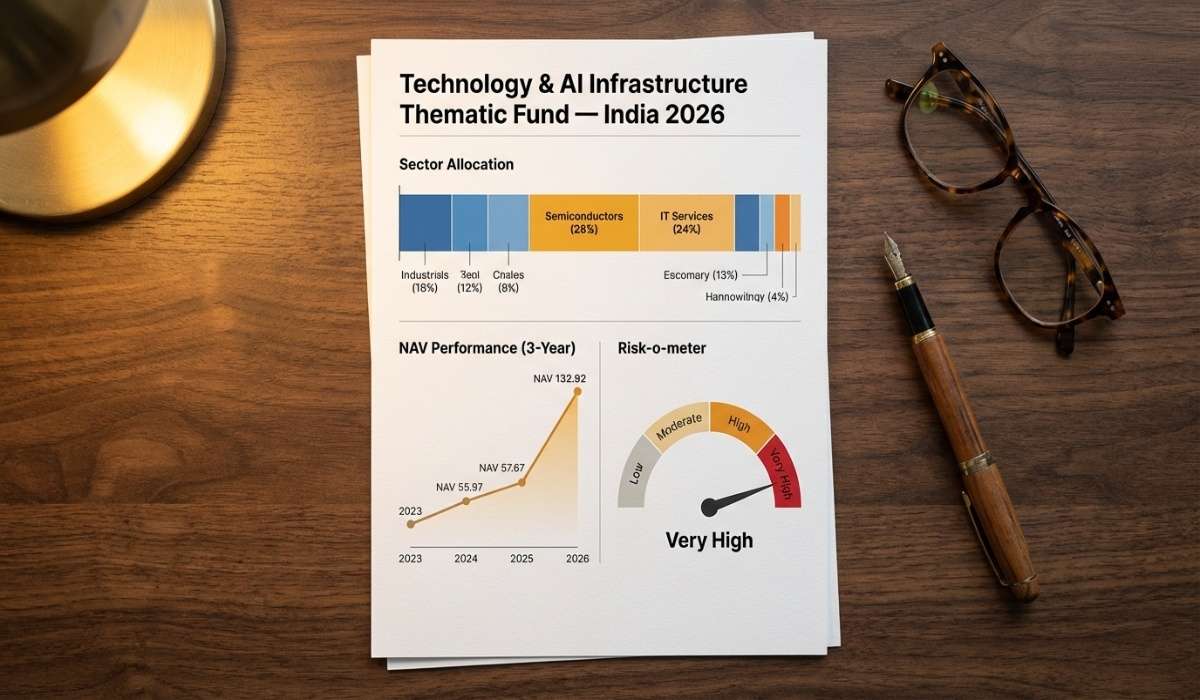
Technology mutual funds aren’t risk-free. I’ve held these funds through corrections, and I know what can go wrong.
Sector Concentration Risk is real. Funds investing primarily in technology can experience sharper declines if the sector underperforms. During 2022, when global tech stocks corrected hard, Indian technology funds felt the pain. You can’t ignore this. If you invest heavily in technology themes, you’re accepting higher volatility in exchange for higher growth potential.
Global Demand Dependency matters more than most investors realize. A large portion of revenue for Indian technology companies comes from overseas markets, especially the US and Europe. If those economies slow down, IT budgets shrink, and Indian tech firms lose revenue. I saw this firsthand during the 2008 financial crisis. Technology companies cut earnings guidance fast.
Currency Risk affects returns in ways most investors don’t track. Fluctuations in exchange rates, especially the US dollar against the rupee, can impact earnings and mutual fund returns. When the rupee strengthens, dollar revenues translate into lower rupee earnings. When it weakens, the opposite happens. This creates earnings volatility beyond operational performance.
Rapid Technological Change can make winners into losers overnight. The technology sector evolves quickly. Companies failing to adapt lose competitiveness fast. Portfolio holdings that look strong today may struggle tomorrow if they miss the next wave. Fund managers must stay ahead. You can’t be passive.
Regulatory and Data Policy Risk is rising globally. Changes in data protection laws, digital regulations, or export controls can impact business operations and profitability. New privacy laws in Europe or restrictions on chip exports to certain countries can hurt revenues for companies in your fund’s portfolio.
Valuation Sensitivity keeps me cautious. Technology stocks often trade at premium valuations. Any moderation in growth expectations can lead to quick stock price adjustments. I’ve seen high-flying tech stocks lose 30% in weeks when earnings miss estimates or guidance disappoints.
Cost Structure varies across funds. Expense ratios can range from 0.5% to over 2% depending on the fund. Over a 10-year horizon, a 1% difference in expense ratio can cost you lakhs in returns. Always check the expense ratio before investing.
I never put all my money into one theme. Technology funds should be part of a broader portfolio, not the entire portfolio. Balance them with diversified equity funds, debt funds, and other asset classes. That’s how you ride growth without getting crushed by volatility.
Also Read: Perplexity Finance: Smarter Way to Research Indian Stocks
Disclaimer: This blog is intended for informational and educational purposes only and does not constitute financial, investment, or legal advice. The mutual funds, AUM figures, NAV values, and market data mentioned are based on information available at the time of writing and may have changed — readers are advised to verify current details before making any investment decisions. Investing in mutual funds involves market risk, including the possible loss of principal; please read all scheme-related documents carefully and consult a SEBI-registered financial advisor before investing.