
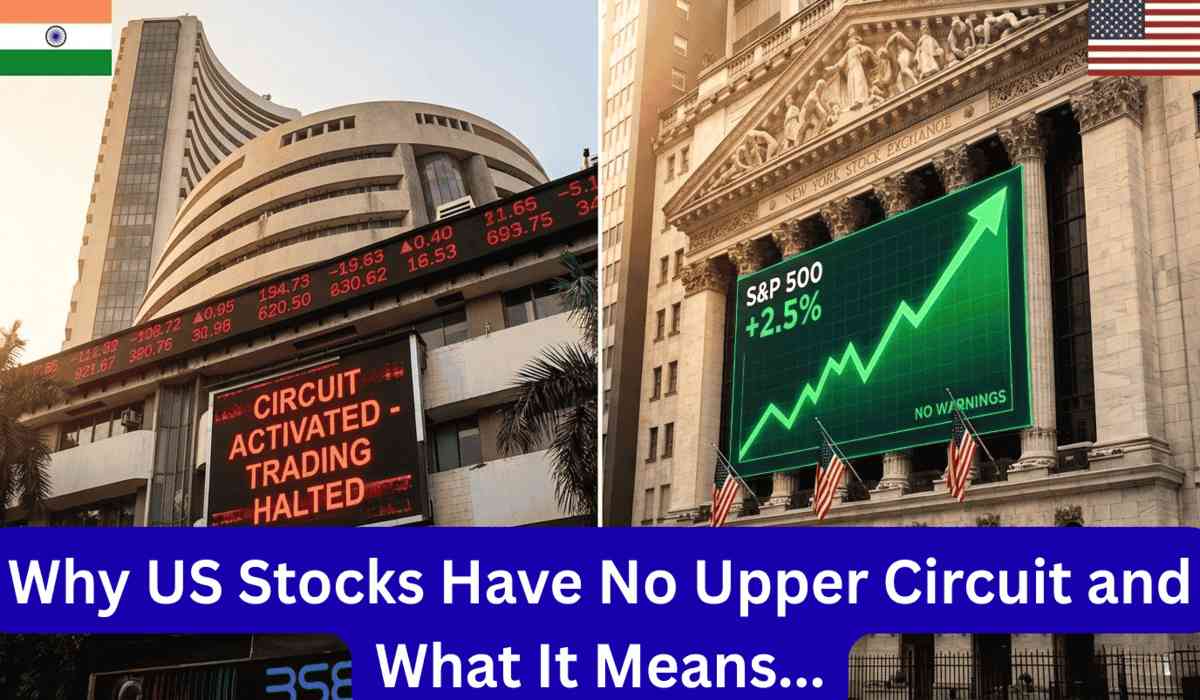
As an Indian investor, you’ve probably noticed that stocks in India hit upper circuits and pause trading when they rise too much in a single day. But here’s something that might surprise you: US markets don’t have these upper circuit limits at all.
This guide is specifically designed for Indian investors who trade or want to trade in US markets. You need to understand these fundamental differences before putting your money at risk in American stocks.
We’ll break down how circuit breakers work in Indian stock markets versus the US system. You’ll discover why US markets operate without upper circuit limits and instead use market-wide circuit breakers that work completely differently. Finally, we’ll share practical strategies you can use as an Indian investor to navigate US market volatility without the safety net of upper circuits you’re used to at home.
The volatility rules are different across the pond, and knowing these differences could save you from costly mistakes.
Understanding Circuit Breakers in Indian Stock Markets

What Are Upper and Lower Circuits and How They Work
When you trade in Indian stock markets, you encounter circuit breakers that act as safeguards to manage market volatility, preventing irrational price swings from panic buying or selling. These mechanisms serve as crucial protective measures for your investments during turbulent market conditions.
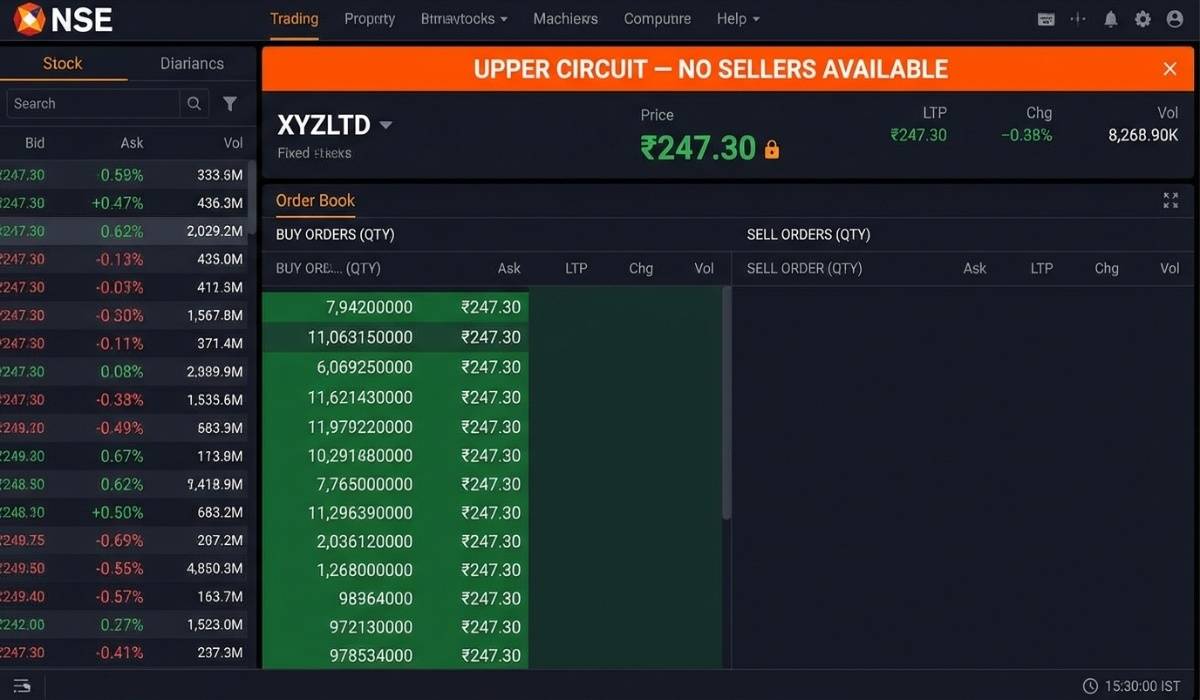
An upper circuit is a predefined limit preventing a stock from trading above a certain price during a single trading session. For example, if a stock’s upper circuit is 10% and it closes at ₹100, its maximum next-day price is ₹110. You cannot buy or sell this stock above this predetermined ceiling, regardless of market demand.
Conversely, a lower circuit sets a minimum price limit, preventing a stock from falling below a certain threshold. If a stock’s lower circuit is 10% and it closes at ₹100, it cannot trade below ₹90 the next day. This mechanism protects you from extreme downward price movements during market panic.
Circuit breakers provide a cooling-off period during intense market activity, enabling more informed decision-making by investors. When your stock hits either circuit limit, trading in that security is temporarily halted, giving you time to reassess your investment strategy without the pressure of rapid price fluctuations.
Historical Development and SEBI’s Role in Implementation
The concept of circuit breakers was historically introduced to curb excessive volatility in Indian stock markets. Your current trading environment benefits from decades of regulatory evolution designed to protect investor interests and maintain market stability.
The Securities and Exchange Board of India (SEBI) has been instrumental in implementing circuit breaker mechanisms, issuing clear guidelines and regulations in 2001. These comprehensive regulations established the framework that governs your trading activities today, ensuring consistent application across all stock exchanges in India.
Calculation Methods Based on Previous Day’s Closing Price
Circuit limits are calculated based on the previous day’s closing price, with stock exchanges applying predefined percentages. When you check your stock’s circuit limits, you’ll typically find them set at commonly used percentages of 10%, 15%, and 20%.
The calculation process is straightforward: if your stock closed at ₹100 yesterday with a 10% circuit limit, the upper circuit becomes ₹110 and the lower circuit becomes ₹90. This mathematical precision ensures you know exactly the price range within which your stock can trade during the current session.
Different Circuit Limits for Individual Stocks vs Market Indices
Stock-specific circuit breakers apply to individual stocks to manage price volatility and prevent extreme movements in single securities. When you invest in individual companies, these limits protect your portfolio from sudden, irrational price movements specific to that particular stock.
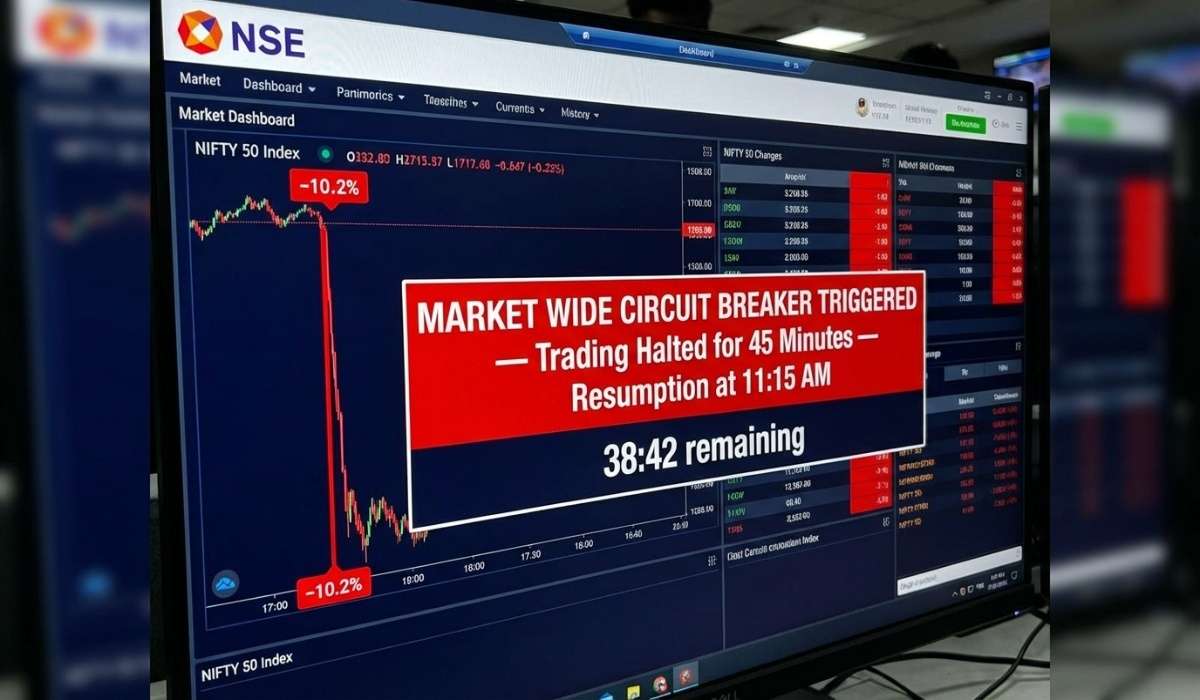
Market-wide circuit breakers are implemented for major indices like the BSE Sensex and Nifty 50, triggered by significant index movements such as 10%, 15%, or 20% changes. These broader mechanisms affect your entire portfolio when systemic market events occur, temporarily halting trading across all securities to restore market equilibrium.
Key Factors That Trigger Circuit Breakers in Indian Markets
Market Sentiment and Investor Psychology
Market sentiment plays a crucial role in determining when your stocks hit Indian stock market upper circuits or lower circuit limits. When you experience optimism in the market, this positive sentiment can drive stock prices rapidly upward, often activating upper circuits. Conversely, when pessimism or panic grips the market, your investments may quickly decline and trigger lower circuits.
Your emotional responses and psychological factors significantly influence these market movements. Fear, greed, and herd mentality can create rapid price swings that push stocks to their circuit limits within minutes of trading. Understanding this dynamic helps you recognize why certain stocks experience sudden circuit breaker triggers during high-emotion trading sessions.
Economic Indicators and Corporate Actions Impact
Economic indicators such as GDP growth, inflation rates, and interest rates significantly impact your stock prices and can trigger circuit breakers. When positive economic indicators are released, they boost your investor confidence, potentially driving prices to upper circuit levels. Negative indicators can cause sharp declines in your portfolio values.
Corporate actions play a pivotal role in circuit breaker triggers. When a company you’ve invested in announces significant mergers, acquisitions, dividends, or stock splits, you may witness dramatic price movements. Better-than-expected earnings can cause your stock to surge and hit the upper circuit, while severely negative earnings reports compared to expectations have led to panic selling, causing stocks to hit their lower circuits – as seen with some Adani group shares in June 2024.
Regulatory Announcements and Global Events
Regulatory changes and announcements by bodies like SEBI can lead to significant movements in your investments that trigger upper or lower circuits. When new regulations are announced, your stocks may experience immediate volatility as the market adjusts to the new compliance requirements or opportunities.
Global events such as geopolitical tensions, pandemics, and major economic shifts contribute to market volatility that can trigger circuit breakers in your portfolio. These external factors create uncertainty that affects investor psychology and can cause rapid price movements across sectors.
Company-Specific News and Earnings Reports
Company performance directly impacts whether your individual stocks hit circuit limits. Earnings reports, news about company leadership changes, and product launches can push your stock investments to hit their upper or lower circuits. When companies you’ve invested in release quarterly results, the market’s reaction can be swift and dramatic.
Negative news such as poor earnings reports, legal issues, or unfavorable market conditions specific to your invested companies can trigger lower circuits. This company-specific volatility differs from market-wide movements and requires you to monitor individual stock fundamentals closely to anticipate potential circuit breaker scenarios.
Why US Markets Operate Without Upper Circuit Limits
Different Regulatory Philosophy and Market Structure
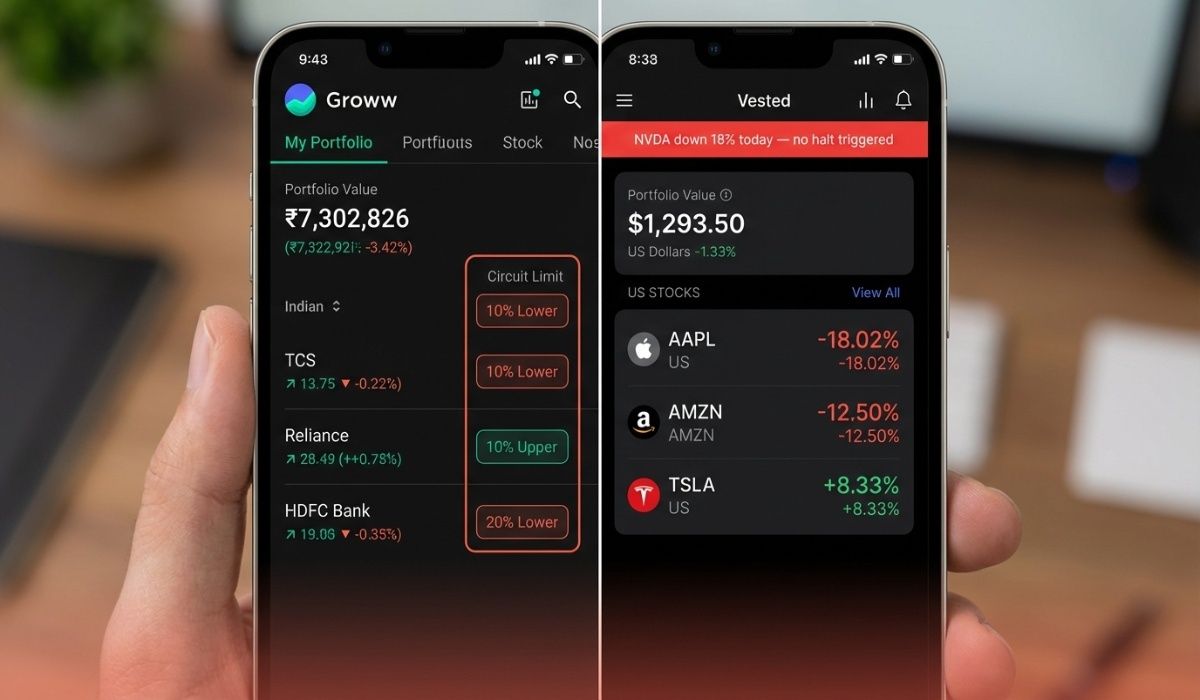
Your understanding of market regulation fundamentally changes when you examine the US approach to volatility management. While Indian markets implement upper circuits to protect individual investors from excessive price swings, the US regulatory framework operates on the principle that market forces should primarily determine stock prices. This philosophical difference stems from the belief that free-market mechanisms, combined with robust institutional oversight, provide better long-term price discovery than artificial price limitations.
The US market structure emphasizes transparency and continuous trading over protective barriers. You’ll find that American regulators focus on ensuring fair access to information and preventing manipulation rather than limiting price movements. This approach assumes that well-informed investors can make rational decisions even during periods of high volatility, whereas circuit breakers might actually impede efficient price discovery by preventing stocks from reaching their true market value.
Alternative Volatility Control Mechanisms in US Markets
Instead of upper circuits, you’ll encounter sophisticated volatility control mechanisms designed to address extreme market conditions without stopping individual stock trading. The primary tool is the Limit Up-Limit Down (LULD) mechanism, which pauses trading temporarily when a stock moves beyond predetermined percentage thresholds from its average price over a specific period.
You should understand that these trading halts are brief, typically lasting 5-10 minutes, allowing the market to absorb information and reset rather than preventing further price movement entirely. Additionally, the US markets employ single-stock circuit breakers for extreme movements, but these are designed to resume trading quickly rather than cap prices for the entire trading session.
Market makers and high-frequency trading algorithms also serve as natural volatility dampeners, providing liquidity during stressed conditions and helping to smooth out extreme price movements through their continuous buying and selling activities.
Market Liquidity and Institutional Participation Differences
Your trading experience in US markets will be shaped by significantly higher liquidity levels compared to Indian markets. The deep institutional participation from pension funds, mutual funds, and sophisticated algorithmic traders creates a more resilient market structure that can absorb large orders without dramatic price disruptions.
This institutional dominance means that you’re trading alongside participants with substantial research capabilities and risk management systems, creating a more efficient price discovery mechanism. The sheer volume of daily trading in US markets – often exceeding $500 billion – provides natural stability that reduces the need for protective circuit breakers.
You’ll also notice that the presence of multiple market makers and electronic trading platforms creates competitive pricing that naturally limits extreme volatility through arbitrage opportunities and liquidity provision.
Historical Market Events That Shaped US Approach
Your appreciation of the current US system requires understanding key historical events that influenced this regulatory philosophy. The 1987 Black Monday crash initially led to the implementation of market-wide circuit breakers, but regulators learned that stopping trading entirely sometimes exacerbated panic rather than calming markets.
The Flash Crash of 2010 demonstrated how modern electronic markets could experience extreme volatility in minutes, leading to the development of more sophisticated, real-time monitoring systems rather than blanket trading halts. These events taught regulators that maintaining market continuity while providing brief cooling-off periods was more effective than complete trading stops.
You should recognize that each major market disruption has refined the US approach toward maintaining market function during stress while protecting against genuine system failures, rather than protecting individual stocks from natural price movements.
Read: The Common Risks You Must Know Before Investing in the US Stock Markets
Market-Wide Circuit Breaker System for Major Indices
NSE Nifty50 and BSE Sensex Circuit Trigger Levels
When trading in Indian markets, you need to understand that market-wide circuit breakers apply to both the NSE Nifty50 and BSE Sensex 30 indices. These circuit breakers are triggered when either index experiences significant movements, with three primary trigger levels established by SEBI: 10%, 15%, and 20% declines from the previous day’s closing levels.
Once either the Nifty50 or Sensex hits any of these thresholds, trading is immediately halted across all equity and equity derivative markets nationwide. This means that regardless of which index triggers the circuit breaker first, your trading activity will be suspended across the entire Indian stock market ecosystem.
Trading Halt Durations Based on Time and Percentage Drops
Your trading experience will be significantly impacted by both the percentage drop and the timing of when these circuit breakers are triggered. The duration of trading halts follows a specific structure:
| Circuit Trigger | Before 1:00 PM | 1:00 PM – 2:30 PM | After 2:30 PM |
|---|---|---|---|
| 10% Drop | 45 minutes halt | 15 minutes halt | No halt |
| 15% Drop | 1 hour 45 minutes halt | 45 minutes halt (until 2:00 PM) | Remainder of day halt (after 2:00 PM) |
| 20% Drop | Remainder of day halt | Remainder of day halt | Remainder of day halt |
As you can see, the severity increases with both the percentage drop and the time of day. If you’re trading late in the session and a 15% or 20% trigger occurs, you’ll face extended or complete trading suspensions.
Pre-Open Call Auction Sessions After Market Halts
After specific market halts, you’ll participate in Pre-Open Call Auction Sessions designed to facilitate orderly price discovery when trading resumes. These sessions occur under the following conditions:
10% Trigger before 1:00 PM: You’ll experience a 15-minute Pre-Open Call Auction Session before regular trading resumes
15% Trigger before 1:00 PM: Similarly, a 15-minute Pre-Open Call Auction Session will precede normal trading
However, when a 20% trigger occurs at any time, no Pre-Open Call Auction Session is conducted since trading halts for the remainder of the day.
Differences Between Stock-Specific and Index-Wide Breakers
You should distinguish between two types of circuit breakers in Indian markets. Stock-specific circuit breakers protect you against extreme price movements in individual securities, limiting how much a single stock can move in a trading session. These operate independently and don’t affect the broader market.
In contrast, market-wide circuit breakers address systemic risk and broader market concerns. When triggered by significant movements in major indices, they halt trading across all equity and equity derivative markets nationwide, affecting your entire portfolio simultaneously rather than just individual positions.
Impact on Trading and Investment Strategies

How Circuit Breakers Affect Market Liquidity
Circuit breakers play a crucial role in maintaining market stability by significantly impacting market liquidity. When you’re trading in markets with circuit breaker systems, these mechanisms prevent extreme price movements and ensure the market remains liquid. This means that even during volatile periods, you can execute trades in an orderly manner once trading resumes after a halt. The circuit breaker system acts as a protective barrier, maintaining market integrity and providing you with confidence that transactions can occur without complete market breakdown.
Trading Limitations When Stocks Hit Circuit Limits
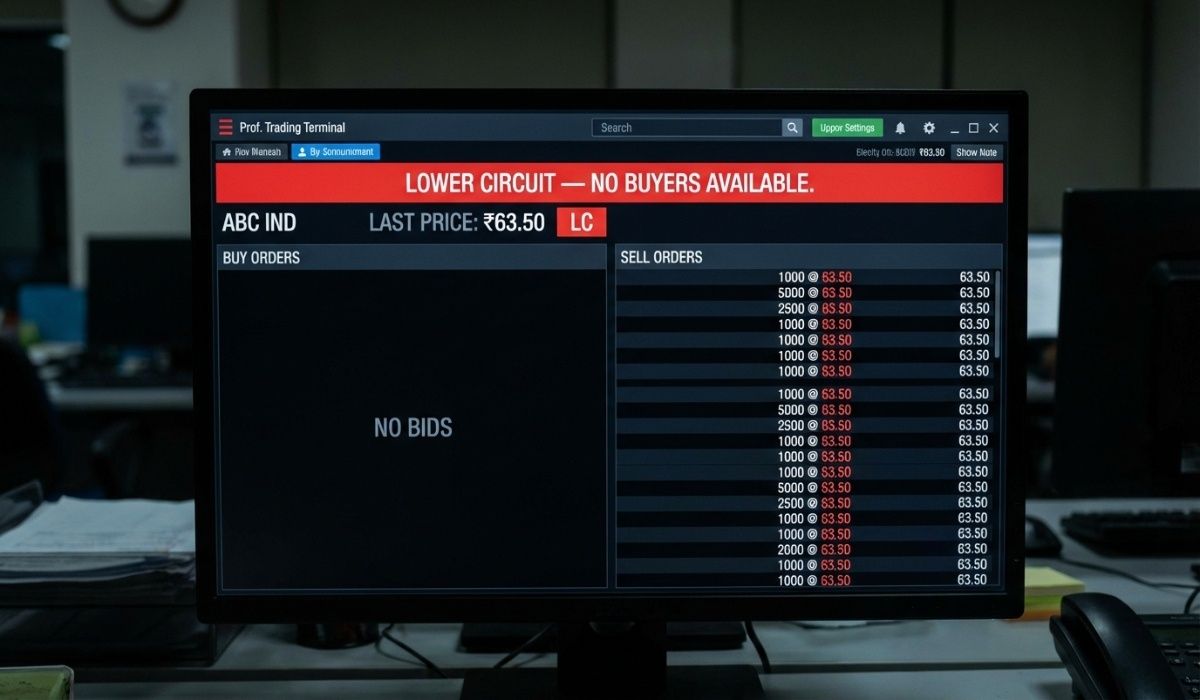
When a stock hits its upper or lower circuit limit, you’ll face immediate trading restrictions that halt all activity for a specified duration. During this halt period, no further buying or selling can occur, regardless of your trading intentions. This creates a unique challenge for your trading strategy, as you cannot execute any transactions until the halt is lifted.
You should be particularly cautious about buying at the upper circuit, as this represents a risky position. The stock price has already reached its maximum allowable increase for the day, and there’s no guarantee these elevated levels will sustain once normal trading resumes. Your investment could face immediate downward pressure when the market reopens.
Investment Opportunities During Circuit Situations
Circuit breaker situations can present unique investment opportunities that savvy investors like yourself can capitalize on. When a stock hits its lower circuit limit, it may signal potential undervaluation, offering you a chance to purchase shares at significantly reduced prices. However, you must carefully analyze the underlying reasons for these dramatic price movements before making investment decisions.
These situations require thorough research into whether the price decline reflects temporary market sentiment or fundamental issues with the company. By conducting proper due diligence, you can identify genuine opportunities where circuit-triggered price drops create attractive entry points for long-term positions.
Risk Management Considerations for Traders
Effective risk management becomes paramount when you’re trading near circuit limits or during volatile market conditions. Setting stop-loss orders represents a crucial strategy that you should implement, especially when operating in proximity to circuit boundaries. These automatic sell orders execute at predetermined price levels, helping you limit potential losses without requiring constant market monitoring.
Your risk management approach should include careful analysis of the factors driving price movements before deciding whether to buy or sell in circuit situations. Understanding the volatility trading strategies and market dynamics will help you make informed decisions while protecting your capital from excessive exposure during these high-risk scenarios.
Practical Strategies for Indian Investors
Monitoring Circuit Limits for Informed Decision Making
You can leverage various tools and platforms to monitor circuit limits and stock price movements in real-time, which helps you anticipate potential trading halts and make informed decisions. By staying aware of these market volatility management mechanisms, you position yourself to react swiftly when stocks approach their circuit boundaries. This monitoring approach becomes especially valuable when you’re trading in both Indian markets with upper circuits and US markets without such rigid limits, allowing you to understand the different volatility trading strategies required for each market.
Setting Stop-Loss Orders Near Circuit Levels
Setting stop-loss orders represents a crucial risk management strategy, particularly when you’re trading near circuit levels. This approach allows you to automatically sell a stock at a predetermined price, effectively limiting your potential losses before they spiral out of control. When you understand how circuit breaker system explained mechanisms work, you can strategically place these orders to protect your portfolio during periods of extreme market movements. This becomes even more critical when comparing US vs Indian stock market differences, as the absence of upper circuits in US markets requires more proactive risk management on your part.
Identifying Value Opportunities in Lower Circuit Stocks
When a stock hits its lower circuit, it may present you with an opportunity to identify undervalued stocks, allowing you to buy at a lower price. However, thorough due diligence remains essential before making any investment decisions. You should research the company’s fundamentals, financial health, management team, and prevailing market conditions to ensure you’re making a sound investment rather than catching a falling knife. This strategy requires patience and analytical skills, as lower circuit hits don’t automatically indicate buying opportunities.
Avoiding Herd Mentality During High Volatility Periods
It’s crucial for you to avoid the herd mentality, especially during periods of high market volatility, as blindly following the crowd can lead to poor investment decisions and significant losses. When markets experience extreme movements that trigger circuit breakers or NYSE trading halts, emotional decision-making often takes precedence over rational analysis. By maintaining discipline and conducting thorough due diligence, you can avoid the pitfalls of panic selling or euphoric buying that characterize herd behavior during volatile market conditions.

Understanding the differences between Indian and US market structures is crucial for your success as a global investor. While Indian markets rely on upper and lower circuits to manage volatility and protect investors from extreme price movements, US markets operate without these individual stock limits, instead using market-wide circuit breakers only for major indices during severe downturns. This fundamental difference means you need to adjust your trading strategies accordingly when investing across both markets.
As you expand your investment portfolio internationally, remember that each market has its own protective mechanisms and volatility patterns. The absence of upper circuits in US markets allows for greater price discovery but also requires more sophisticated risk management on your part. Whether you’re trading in Mumbai or New York, focus on thorough due diligence, proper position sizing, and disciplined stop-loss orders to navigate volatility effectively. By understanding these structural differences, you can make more informed decisions and capitalize on opportunities in both the regulated environment of Indian markets and the more open framework of US exchanges.
Also Read: Beyond the US: European ETFs Offer Hidden Growth Gems
Disclaimer : This article is intended for educational and informational purposes only and does not constitute financial, investment, or legal advice. The information provided about Indian and US stock market circuit breakers, trading mechanisms, and investment strategies reflects general market knowledge and should not be relied upon as a basis for making any investment decisions. Always consult a SEBI-registered investment advisor or qualified financial professional before investing in Indian or US securities, as market regulations and trading rules are subject to change without notice.