
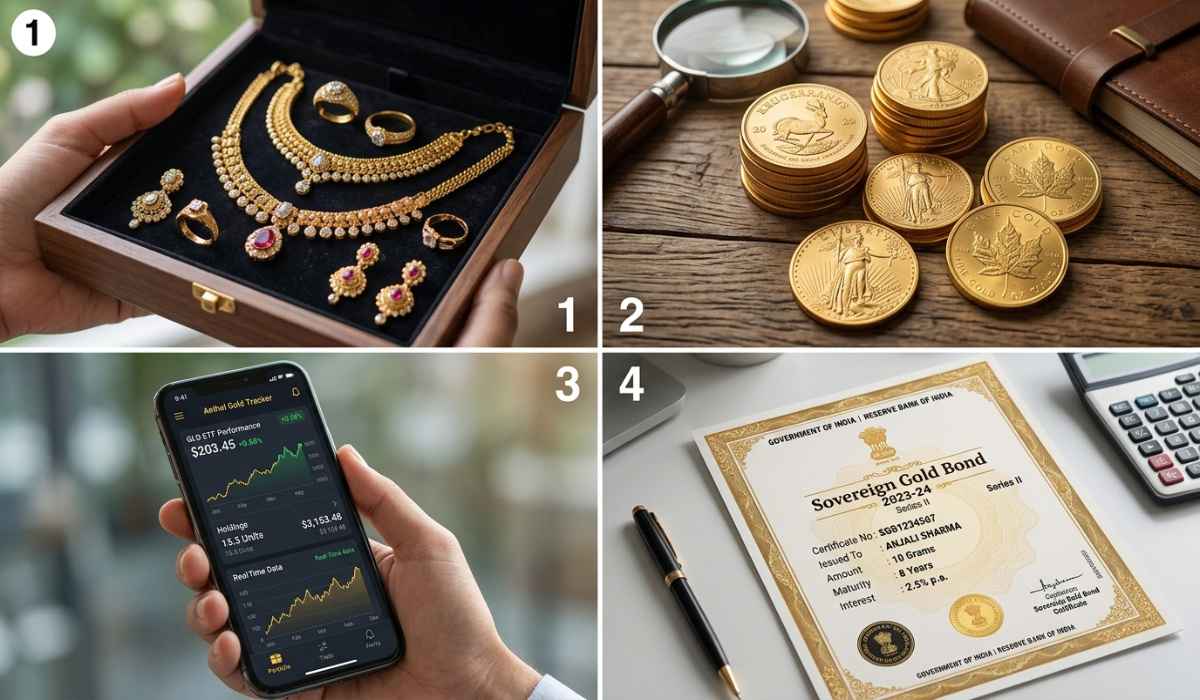
Gold is everywhere in Indian households. Almost 9 out of 10 Indian families own some form of it. It’s at weddings, in bank lockers, around necks, and increasingly, in demat accounts. The total value of gold held by Indian households is now worth more than India’s GDP. That’s a staggering number.
But here’s the thing. Most financial experts recommend keeping gold at somewhere between 5% and 20% of your total portfolio. A lot of Indian investors blow past that range without even realizing it. Cultural attachment, fear of inflation, and a deep trust in the yellow metal all play a role. And while gold is genuinely useful for protecting your wealth, too much of it can quietly eat into your long-term returns.
This post breaks down how much gold actually makes sense in a well-built portfolio, backed by over 50 years of data. You’ll also see why India’s gold market is shifting fast in 2026, what’s driving that change, and how to tell if you need to rebalance.
The Strategic Role of Gold in a Diversified Portfolio

Gold as a Hedge Against Uncertainty and Volatility
Let me start with a question I hear constantly: “Ishwar, why should I even hold gold when stocks have given me 15% returns?”
Fair question. Here’s the truth most investors miss.
Gold isn’t about beating equity returns. That’s not its job. Gold is your portfolio’s insurance policy, the stabilizer that keeps your ship steady when storms hit the markets.
During my 14+ years of investing, I’ve watched gold play this protective role repeatedly. When the COVID-19 pandemic sent stock markets crashing in March 2020, gold held firm. When geopolitical tensions flare up, when central banks print money like there’s no tomorrow, when recession fears grip the economy, gold steps up as the safe-haven asset that actually lives up to its name.
The inflation hedge aspect is real, not just theory. When your rupee loses purchasing power (and trust me, it always does over time), gold preserves wealth. I saw this firsthand during 2021-2022 when inflation surged across India. While cash savings lost value, gold maintained its purchasing power.
But here’s the data point that changed how I think about gold allocation completely. Gold’s correlation with stocks is just 0.01 and with bonds around 0.04 over the period from 1973 to 2024. That’s virtually zero correlation.

What does this mean in plain language? When stocks fall, gold doesn’t automatically follow. When bonds struggle, gold moves independently. This independence is pure portfolio magic. It enhances your risk-adjusted returns without requiring you to predict market movements or time your entries perfectly.
During my years at ICICI Prudential, I analyzed countless portfolios. The ones that weathered market downturns best weren’t necessarily the most aggressive. They were the ones with uncorrelated assets. Gold delivered that diversification benefit consistently.
What is the Optimal Gold Allocation for Your Portfolio?
So how much gold should you actually hold? Not 50%. Definitely not the 70-80% many Indian households unknowingly hold through jewelry.
Financial experts recommend 5% to 20% of your total portfolio. That’s the sweet spot.
Ray Dalio, who built Bridgewater Associates into one of the world’s largest hedge funds, suggests 10% to 15% allocation to gold specifically for downside protection. This isn’t theoretical advice. Dalio’s All Weather Portfolio has used this approach for decades.
The most compelling research comes from Flexible Plan Investments, covering data from 1973 to 2024. Their analysis revealed an optimal gold allocation of 18% for maximizing risk-adjusted returns measured by the Sharpe ratio. This translates to a portfolio split of approximately 49% stocks, 33% bonds, and 18% gold.
This optimized portfolio historically outperformed the traditional 60/40 stock-bond portfolio.

Same or slightly higher returns, but with lower annualized risk. Better returns with less volatility. That’s every investor’s dream.
Even more interesting? Allocations as high as 35% to gold maintained superior risk-reward ratios compared to conventional balanced portfolios. The research proves gold isn’t just defensive. It actively improves portfolio performance when allocated appropriately.
In my own portfolio, I maintain around 12-15% in gold through a mix of Gold ETFs and Sovereign Gold Bonds. This gives me downside protection without sacrificing too much growth potential from equities.
Understanding Different Avenues for Gold Investment
Physical gold, ETFs, mutual funds, or bonds? The options confuse many investors.
You can access gold through physical bullion, coins, jewelry, Gold Exchange Traded Funds, Gold Mutual Funds, and Sovereign Gold Bonds issued by RBI. Each serves different purposes.
Physical gold has emotional appeal. I get it. But storage, purity verification, and security create real hassles. Making charges on jewelry can reach 15-25%, eating into your investment immediately.
Gold ETFs and mutual funds solve these problems elegantly. They offer convenient, cost-effective exposure without storage headaches or purity concerns. You buy and sell units on stock exchanges just like shares. Expense ratios typically stay below 1%.
Sovereign Gold Bonds remain my personal favorite for long-term gold allocation. Why? You get 2.5% annual interest (paid semi-annually) on top of gold price appreciation. Capital gains are tax-free if you hold till maturity (8 years). No storage costs. No purity issues.
Gold mining stocks offer indirect exposure, but they behave differently. Their performance depends on operational efficiency, management decisions, labor costs, and exploration success. These company-specific factors reduce their correlation with actual gold prices, making them less effective as pure gold plays.
For most investors, a combination works best. I hold 70% in Sovereign Gold Bonds for long-term accumulation and 30% in Gold ETFs for liquidity and tactical rebalancing. This structure gives me both the tax benefits and the flexibility to rebalance when needed.
Why Indians Over-Allocate to Gold
Cultural Significance vs. Modern Investment Logic
Walk into any Indian household, rich or poor. You’ll likely find gold. Not just as an investment. As an heirloom, a tradition, a safety net wrapped in emotion and culture.
Here’s the reality: approximately 87% of Indian families own some form of gold. This isn’t just an urban elite phenomenon. Even 75% of households in the lowest income decile hold gold. That’s staggering. It cuts across every economic boundary you can imagine.
Gold isn’t just metal in India. It’s woven into the fabric of weddings, festivals, and milestone celebrations. It’s how parents save for their daughter’s marriage. It’s how grandparents transfer wealth across generations. In rural areas, where formal banking infrastructure remains limited, gold functions as the primary financial system itself. Need emergency cash? Take your gold to the local lender. No credit score required.
I’ve seen this firsthand during my years at ICICI Prudential. Clients would come in with substantial portfolios, yet resist selling even a fraction of their gold holdings, despite holding far beyond any reasonable allocation. The emotional anchor runs deep.
This cultural embedding creates a serious problem from a modern portfolio perspective. Indian households consistently maintain gold allocations that dwarf the globally recommended 5-20% range. We’re talking 30%, 40%, sometimes over 50% of total household wealth parked in yellow metal. The driver? Sentiment and tradition, not financial logic.
The Shifting Landscape: From Jewellery to Financial Gold
But something fascinating is happening beneath the surface. India’s relationship with gold is evolving. Fast.
The data tells a remarkable story.
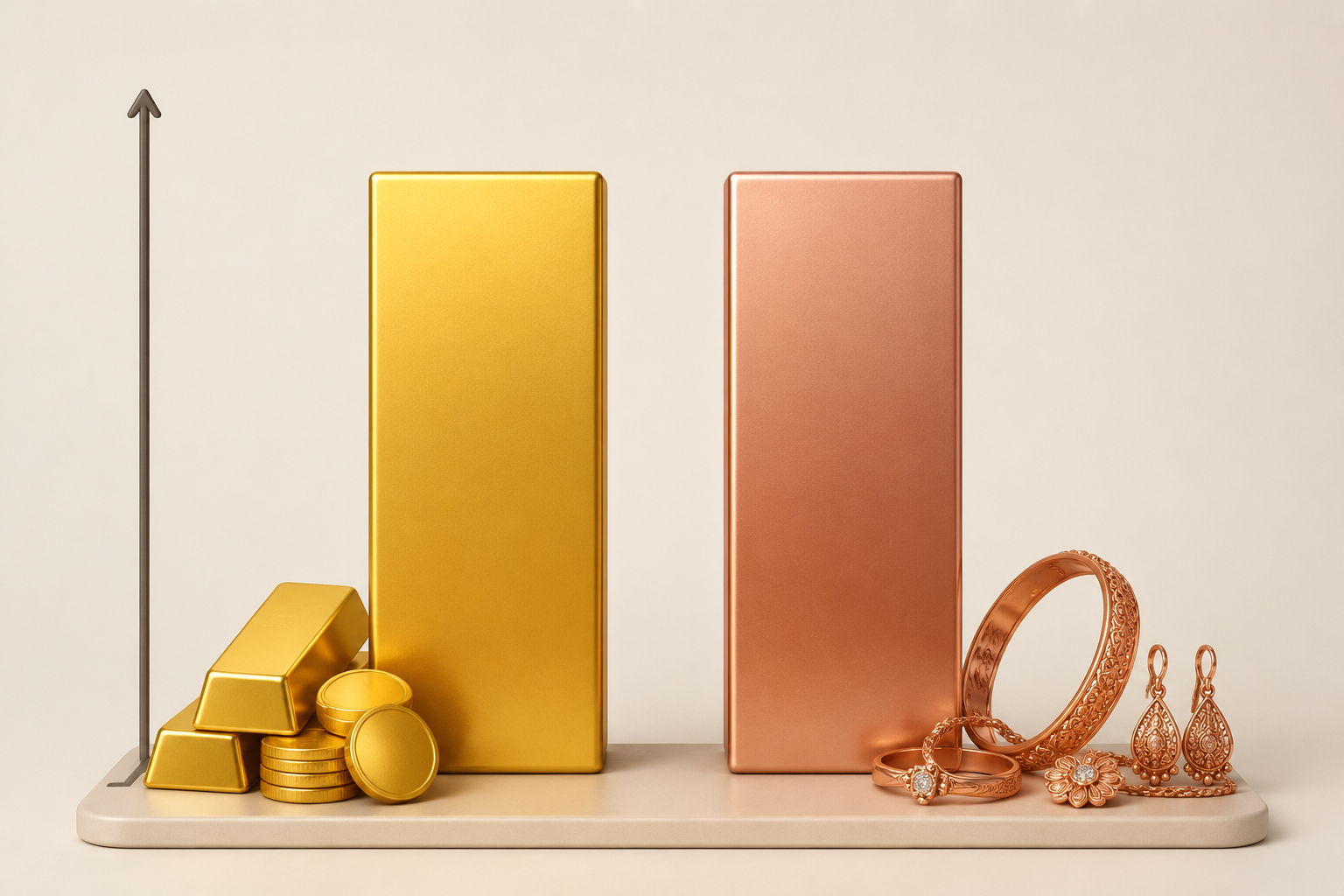 In Q1 2026, India’s gold investment demand jumped 54% year-on-year to 82 tonnes. Here’s what caught my eye: bar and coin demand hit 62 tonnes, nearly matching jewellery demand of 66 tonnes. Think about that. Investment gold is competing head-to-head with traditional jewellery for the first time in modern history.
Gold ETFs are experiencing an unprecedented boom. Q1 2026 was their strongest quarter ever, recording net inflows of 20 tonnes. Assets Under Management surged 191% year-on-year to roughly ₹1.7 lakh crore. India contributed 32% of global gold ETF demand in Q1 2026, second only to China.
This structural shift is undeniable. The share of jewellery in total gold consumption has dropped below 60%. Compare that to the long-term average of around 70%. Projections suggest investment demand will account for 35-40% of total gold consumption by FY27.
What’s driving this transformation? Digital access. Younger investors who grew up with smartphones and demat accounts find Gold ETFs and Sovereign Gold Bonds more appealing than physical gold. No storage hassles. No purity concerns. Instant liquidity.
Why Indians Trust Gold So Much
Economic memory runs deep in India. Decades of inflation and currency volatility have trained multiple generations to trust gold above all else.
The rupee’s persistent weakness against the dollar amplifies this behavior. When your currency depreciates year after year, holding an internationally recognized store of value makes intuitive sense. Historical economic uncertainties and inflationary pressures have cemented gold’s role as the ultimate financial insurance for Indian households.
Recent regulatory changes are adding institutional legitimacy to this preference. Indian equity funds can now allocate up to 35% to gold and silver. That’s not a minor rule change. It’s a signal that regulators recognize gold’s importance in Indian portfolios.
What surprises me most? Despite gold prices touching all-time highs, liquidation activity remains minimal. Indian investors aren’t treating current prices as cyclical peaks to book profits from. They view gold’s appreciation as a long-term secular trend. Buy and hold, indefinitely.
For investors trying to navigate these complex dynamics, staying informed with comprehensive insights becomes critical. Platforms like Paisa Forever provide data-driven analysis that helps cut through emotional biases and focus on optimal allocation strategies.

Risks of Over-Allocation and Smart Rebalancing Strategies
Let’s get tactical. Over-allocating to gold carries real costs that sentiment often obscures.
Opportunity cost is the big one. Every rupee locked in gold is a rupee not working in equities or other growth assets. Over the past 15 years, diversified equity portfolios have significantly outperformed gold in rupee terms. When 40-50% of your wealth sits in a non-income-generating asset, you’re leaving substantial returns on the table.
Gold offers diversification benefits, yes. But excessive allocation defeats the purpose. You concentrate risk instead of spreading it. Especially with physical gold, you face storage costs, security concerns, and liquidity issues when you need cash urgently. Try selling gold jewelry during a family emergency. You’ll often get prices below market value.
I learned this lesson early in my investing journey. I held nearly 25% in gold during my first few years. Returns were stable but underwhelming. After rebalancing to around 12-15% and redirecting capital to equity mutual funds, my risk-adjusted returns improved noticeably.
Regular portfolio reviews are non-negotiable. Set a calendar reminder every six months. Check if your gold allocation has drifted beyond your target range due to price movements. Rebalance ruthlessly.
Resources like Paisa Forever’s stock market updates and mutual fund analyses can help identify diverse opportunities to deploy capital freed up from excess gold holdings. The goal isn’t to eliminate gold. It’s to right-size it within a properly diversified portfolio that aligns with your actual financial goals and risk profile, not just cultural conditioning.
Also Read: Role of Debt Funds in Balancing Portfolios During Geopolitical Tensions in 2026
Disclaimer: This article is intended for educational and informational purposes only and should not be considered financial, investment, or tax advice. Gold allocation decisions depend on individual financial goals, risk tolerance, investment horizon, liquidity needs, and overall asset allocation strategy. Past performance, historical data, and market trends do not guarantee future returns, and gold prices can be volatile. Readers should consult a qualified financial advisor or conduct independent research before making investment decisions.