

Why do so many hard-working Indians earn higher salaries every year yet feel constantly broke by the 10th of every month?
When I first started working in the financial sector and later during my five years at ICICI Prudential, I noticed a fascinating paradox among middle-class families. People who would spend days researching a Mutual Fund or comparing SIP returns were casually swiping credit cards for lifestyle upgrades they could not afford. They treated all borrowing as either a taboo to be avoided forever or free money to be spent immediately. Both extremes are dangerous.
Here is the uncomfortable truth: understanding good loans vs bad loans is the single most critical distinction that separates families who build generational wealth from those who get trapped in a perpetual EMI cycle. According to Reserve Bank of India (RBI) data, household debt in India reached 45.5% of GDP as of September 2025. More alarmingly, our borrowing habits have fundamentally shifted.
In this comprehensive guide, you will learn how to identify productive leverage, avoid high-interest debt traps, and use credit as a financial tool rather than a lifestyle crutch.
India Is Borrowing More to Consume Than to Build
Historically, Indian households were deeply conservative with debt. Our parents and grandparents borrowed almost exclusively to build tangible assets—primarily a family home or agricultural land. Today, that traditional balance sheet has flipped on its head.
As per the RBI’s Financial Stability Report (FSR), non-housing retail loans surged to 58.4% of all household borrowings by March 2026, up from 54.9% just one year prior. This means nearly three-fifths of the credit taken by Indian families is now going toward personal loans, credit cards, and consumer durables.
| Borrowing Era | Asset-Backed (Housing / Property) | Unsecured (Consumption / Personal) | Primary Financial Risk |
| Traditional (Pre-2015) | Over 70% of household debt | Under 30% of household debt | Low systemic risk; debt backed by real estate |
| Modern India (2026) | 41.6% of household debt | 58.4% of household debt | High vulnerability to income shocks and job loss |
Why does this shift matter? Because an asset-backed loan, like a home mortgage, is secured by property that historically appreciates over time. If you face a severe financial crisis, the underlying asset holds value.
In contrast, unsecured credit—such as instant personal loans or retail store financing—rests entirely on your future earning capacity. When you borrow to fund lifestyle consumption, you are pledging tomorrow’s salary to pay for today’s fleeting experiences. If your income growth slows down or an emergency fund is not in place, that consumption debt quickly turns into structural financial stress.
The Real Dividing Line Between Good Loans vs Bad Loans
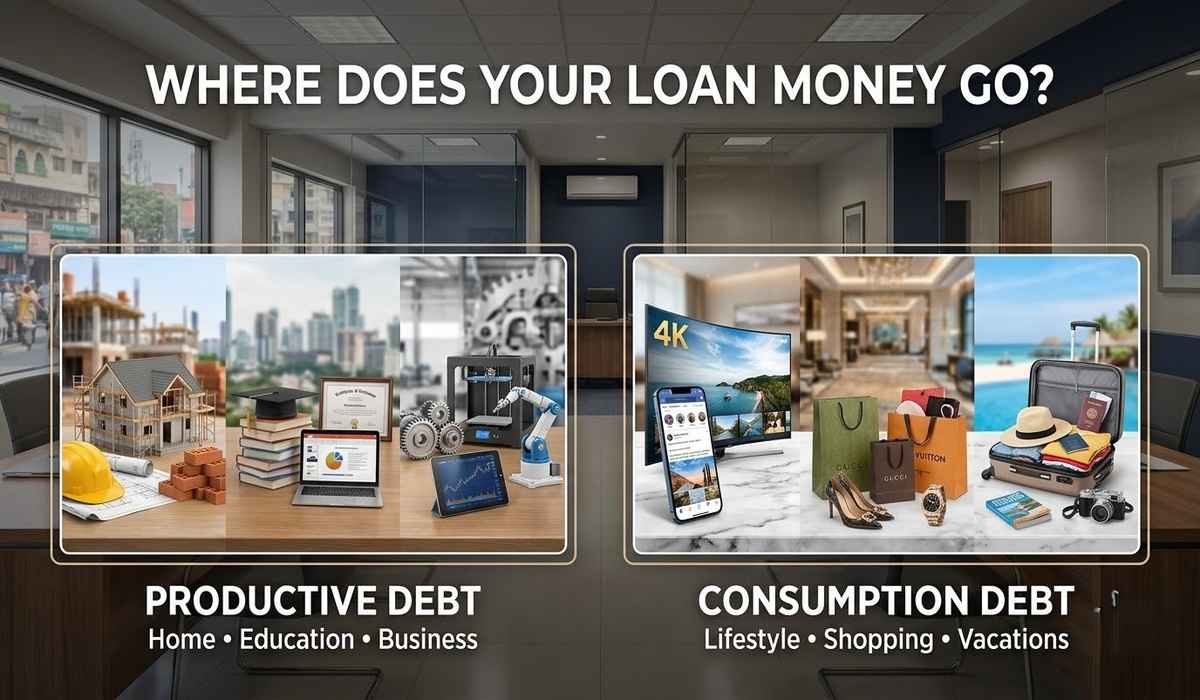
In my 14 years of investing in mutual funds and tracking household cash flows, I have seen simple definitions fail. People often ask me, “Ishwar, is a ₹10 lakh loan good or bad?” My answer is always the same: the rupee amount does not determine whether a loan is good or bad; the destination of the cash flow does.
What Defines a Good Loan?
A good loan (productive leverage) puts money into an asset or skill that generates future economic value greater than the cost of borrowing. Once the final Equated Monthly Installment (EMI) is paid, you own something valuable that continues to enhance your net worth.
- Appreciating Assets: Residential or commercial real estate in growth corridors where property value outpaces borrowing costs over long tenures.
- Human Capital: Higher education or technical certifications that substantially increase lifetime earning potential and employability.
- Business Capital: Investing in productive machinery, inventory, or technology that directly expands your business cash flow.
What Defines a Bad Loan?
A bad loan (destructive liability) funds an item that rapidly depreciates or is entirely consumed while your repayment obligation survives. You are left paying high interest long after the enjoyment of the purchase has faded.
- Depreciating Lifestyle Goods: High-end smartphones, luxury apparel, or oversized televisions bought on EMI.
- Perishable Experiences: Vacations, destination weddings, or lavish parties funded via personal loans.
- Revolving Unsecured Balances: Using credit cards to bridge regular monthly budget deficits.
The Interest Rate Ladder Explains Almost Everything
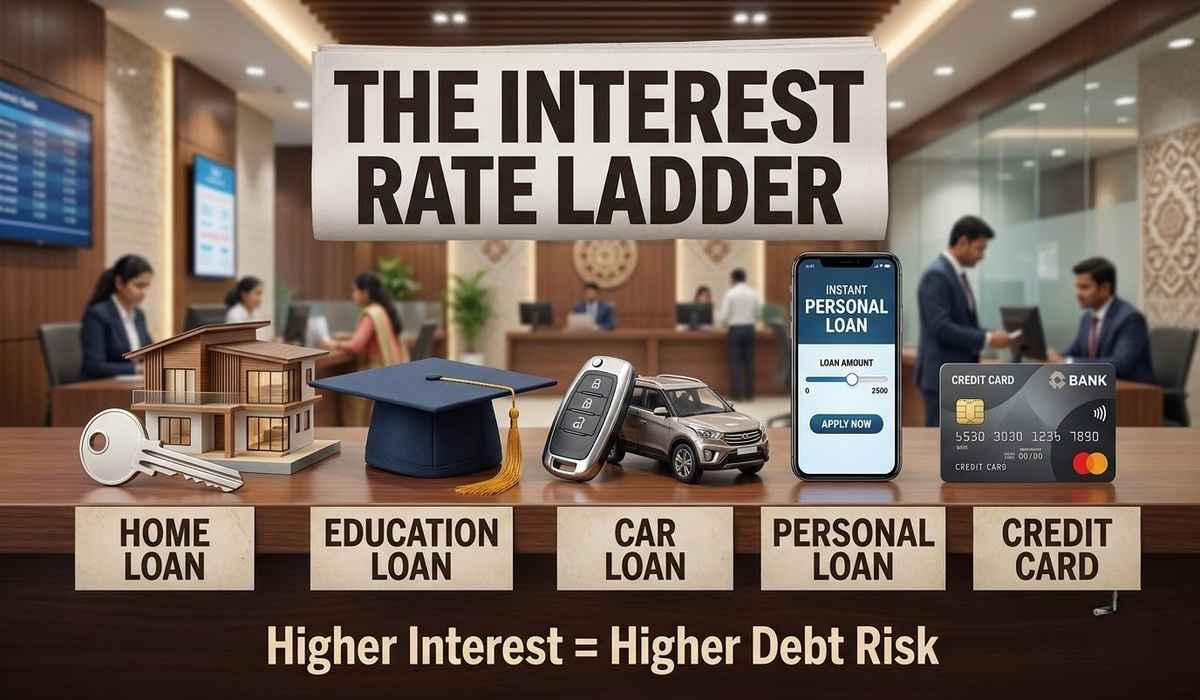
If you ever feel confused about where a loan product falls on the quality spectrum, look at the interest rate. In the banking ecosystem, lenders price loans based on risk and collateral.
When you pledge an asset, the bank charges less because their risk is protected. When you offer no collateral, the bank charges an aggressive risk premium. Let us look at the real-world interest rate ladder across Indian retail credit in 2026:
| Loan Category | Typical Interest Rate (p.a.) | Collateral Backing | Classification |
| Home Loan | 7.10% – 8.50% | Appreciating Real Estate | Good Debt (within budget) |
| Education Loan | 8.33% – 14.00% | Future Earning Power / Property | Conditional Good Debt |
| Car / Vehicle Loan | 7.45% – 11.00% | Depreciating Vehicle | Moderate / Bad Debt |
| Personal Loan | 10.50% – 24.00% | None (Unsecured) | Bad Debt |
| Credit Card Revolving | 36.00% – 52.86% | None (Unsecured) | Financial Trap |
Notice the dramatic jump? A home loan costs around 7.1%, while an unpaid credit card balance can cost nearly 53% annually. Borrowing at 40%+ Annual Percentage Rate (APR) to buy consumer goods is mathematically incompatible with wealth creation. Even if your equity portfolio or Nifty 50 index fund delivers a healthy CAGR (Compound Annual Growth Rate) of 12–15%, high-cost consumer debt will wipe out your gains.
The Minimum Due Button Is the Costliest Option on a Credit Card
One of the most deceptive features in modern banking is the “Minimum Amount Due” on your credit card statement. Banks highlight this number to make it look like a convenient payment option. In reality, clicking that button pushes you into the deepest debt trap in personal finance.
The Mathematics of Revolving Credit
As of 2026, credit card finance charges in India sit at historic highs. Depending on the card issuer, annual finance charges reach:
- 52.86% APR at Axis Bank (on entry-level and retail cards)
- 47.88% APR at IDFC First Bank
- 45.00% APR at SBI Card and HDFC Bank
Let us look at a practical example. Suppose you accumulate an outstanding balance of ₹1,00,000 on a credit card charging an average APR of 42% (3.5% per month). You decide to pay only the minimum due every month (typically 5% of the outstanding balance or ₹200, whichever is higher).
- Initial Outstanding Balance: ₹1,00,000 at 42% APR
- Time Required to Clear Debt: 8 to 10 years
- Total Interest Paid to Bank: ₹1,20,000 to ₹1,50,000
- Total Cash Outflow: ₹2,20,000 to ₹2,50,000
By paying only the minimum due, it will take you between 8 and 10 years to clear that single ₹1 lakh balance. Worse still, you will pay ₹1.2 lakh to ₹1.5 lakh purely in interest charges—more than the original ₹1 lakh you spent.
Furthermore, once you revolve a balance, you lose your interest-free grace period. Every new rupee you swipe on that card is charged interest from day one. In my 10+ years in Indian stock markets, I have never seen an investment guarantee a 42% post-tax return. Paying off revolving credit card debt is the highest-return investment you will ever make.
Read: How Much Are Indian Families Spending on Housing, Rent, and EMIs in 2026
Borrowing to Repay Borrowing Is the Point of No Return
During my time in the financial sector, I repeatedly witnessed how quickly manageable debt can turn into an unresolvable crisis. It almost always begins with a phenomenon called multi-lender stacking.
When a borrower struggles to pay an EMI on a personal loan, they often open an instant credit app or swipe a credit card to pay the installment. They are no longer borrowing to buy goods; they are borrowing to pay interest on existing borrowing.
What the RBI Data Reveals
In the RBI’s Financial Stability Report, the central bank raised a major flag regarding unsecured retail lending. The RBI noted that credit impairment (defaults and severe delays) is sharply elevated among borrowers holding loans from five or more lenders simultaneously.
According to credit bureau data from CRIF High Mark and debt-counseling profiles across India, a typical distressed retail borrower today presents a frightening profile:
- Total Unsecured Debt: Approximately ₹5 lakh spread across 3 to 4 different banks and fintech lenders.
- EMI Burden: Repayments consume 40% to 60% of the borrower’s entire monthly take-home salary.
- Slippage Contagion: Unsecured retail loans now account for 53.1% of total retail loan slippages across commercial banks.
When half your paycheck vanishes into unsecured EMIs on the first day of the month, even a minor medical emergency or temporary job loss can trigger a systemic default. Protect your CIBIL score and financial mental peace: never take a new loan to service an old one.
A Home Loan Stops Being Good Debt Above the Affordability Line
Home loans are widely celebrated as the golden standard of good debt. They offer the lowest interest rates in the retail market—starting around 7.10% p.a.—alongside attractive tax deductions under Section 24(b) and Section 80C of the Income Tax Act. With the RBI holding the repo rate steady, floating home loan EMIs have remained relatively predictable for existing borrowers.
However, a home loan instantly transforms into bad debt when it crosses the affordability line.
The Home Loan Affordability Spectrum
- Safe Zone (EMI under 35% of income): You maintain a comfortable lifestyle with a healthy savings rate and room for equity investments.
- Caution Zone (EMI between 35% and 50% of income): Requires strict household budget discipline and large cash reserves to handle unexpected expenses.
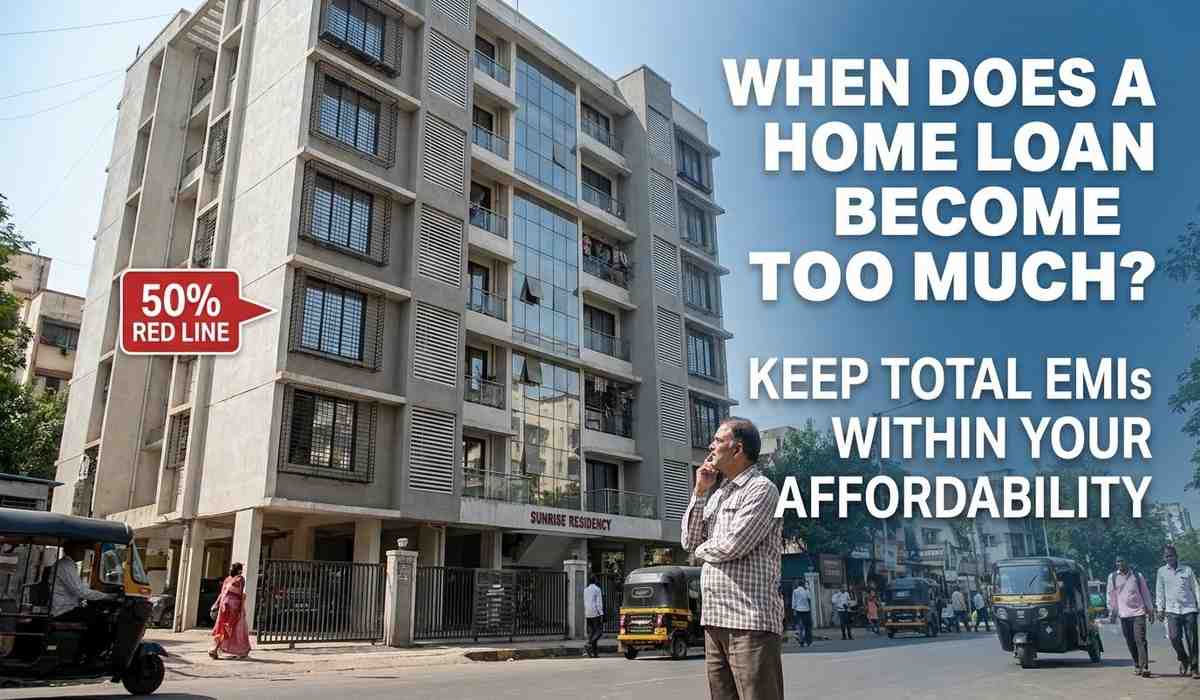
- Danger Zone (EMI above 50% of income): Creates structural cash stress, leaving your family vulnerable to job loss, medical emergencies, or interest rate hikes.
The 61% Reality Check
According to real estate and financial affordability data for 2026, the average EMI-to-income ratio for Indian homebuyers has climbed from 46% in 2020 to 61% today.
This means the average urban family buying a home is committing 61 rupees out of every 100 rupees earned solely to their mortgage EMI. This is a dangerous financial position. When your mortgage consumes more than half your income, your asset allocation is broken. You have zero margin of safety to invest in mutual funds, build a retirement corpus, or maintain adequate term insurance.
The PaisaForever Affordability Framework
Before signing a home loan agreement, apply this simple three-rule test:
- The 50% Red Line: Your total combined monthly EMIs (home loan plus any car or personal loans) must never exceed 50% of your net monthly take-home income. Ideally, keep it under 35%.
- The 20% Down Payment: Avoid borrowing 90% of the property value. Pay at least 20–30% from your own savings to ensure you have real equity from day one.
- The Emergency Reserve: After paying the down payment and registration fees, you must still have 6 months of living expenses plus EMIs sitting safely in a liquid bank account.
Education Loans Are an Investment Only When the Return Justifies the Principal
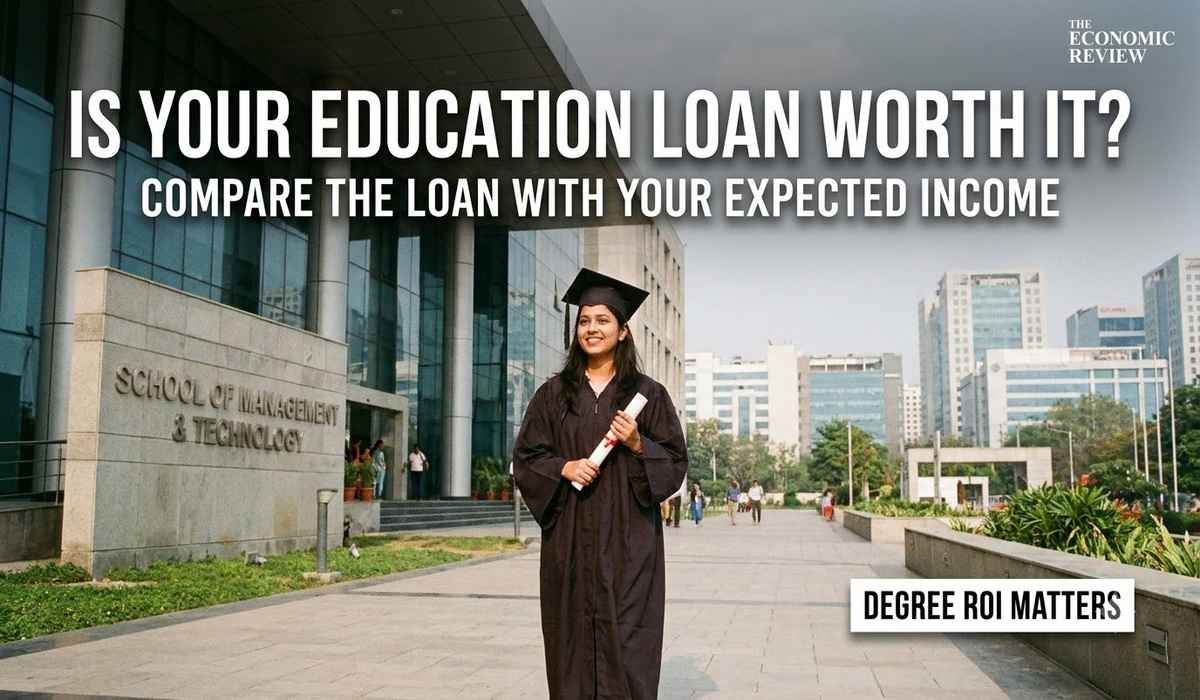
Education loans represent another classic example of conditional good debt. By investing in higher education, you are leveraging your future income to build skills today. India’s education loan book reflected this strong demand by hitting a decade-high ₹8.58 lakh crore in FY26, growing at roughly 15% year-on-year.
Major public and private banks offer education loans ranging from 8.33% to 14.00% p.a. For students admitted to premier institutions (like IITs, IIMs, or top global universities), lenders now offer collateral-free unsecured loans up to ₹1 crore to ₹1.5 crore.
The Degree ROI Rule of Thumb
- Good Debt Scenario: Total loan amount is less than or equal to your expected first-year gross annual salary. The loan can be comfortably repaid within 4 to 5 years.
- High-Risk Trap Scenario: Total loan amount is more than twice your expected first-year salary. EMIs will consume most of your entry-level take-home pay.
An education loan is only productive leverage if the earning power of the degree justifies the borrowed principal.
If a student borrows ₹40 lakh at 11% interest for an overseas degree that yields an entry-level job paying ₹6 lakh per annum, that loan is a financial trap. The monthly EMI on a ₹40 lakh loan for a 10-year tenure is approximately ₹55,000—more than the post-tax monthly salary of that job!
Before taking an education loan, calculate your expected Debt-to-Income ratio at graduation. A safe benchmark is that your total education loan should not exceed your expected first-year gross annual salary.
Vehicle and Consumer Durable EMIs Charge Interest on a Shrinking Asset
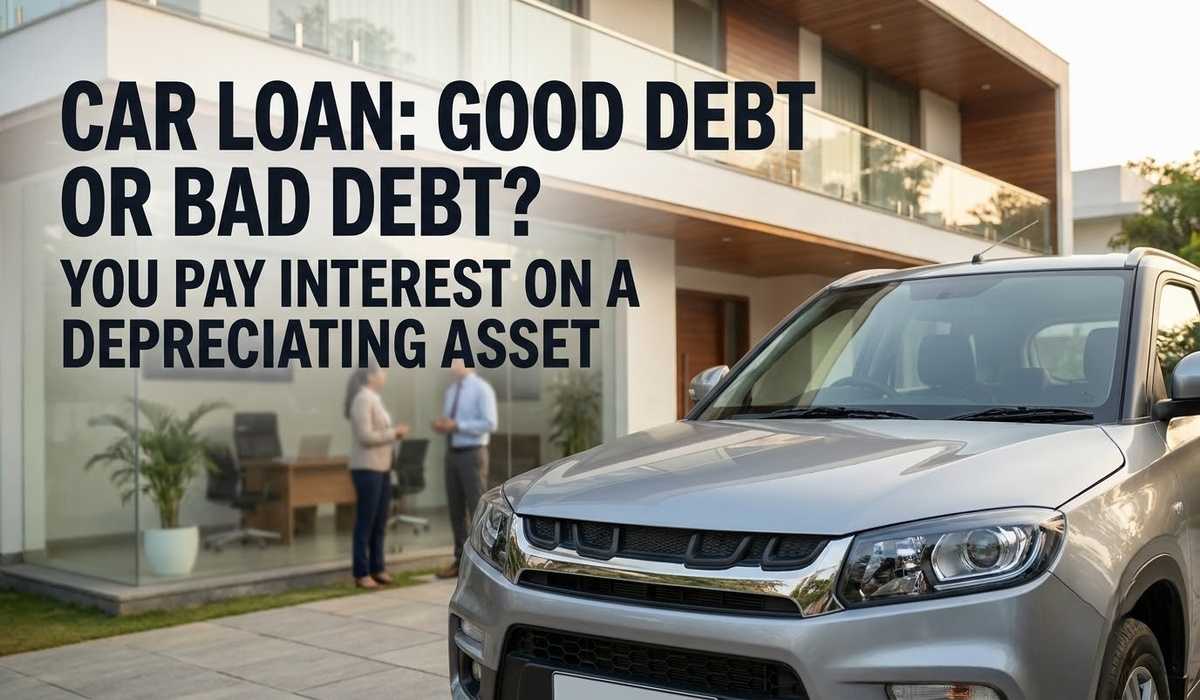
Let us examine car loans and consumer durable financing. While having a personal vehicle is a necessity for many Indian families, financially, a car is a depreciating asset. The moment you drive a new car out of the showroom, its market value drops by 8–10%. Over five years, most vehicles lose 40% to 50% of their resale value.
When you take a car loan at interest rates between 7.45% and 11.00%, you are paying compounding interest on an asset that is actively losing value every single day. A typical ₹5 lakh car loan on a five-year tenure requires a monthly EMI of ₹10,000 to ₹10,500. Over five years, you pay around ₹1.1 lakh in interest for a vehicle that will be worth less than ₹2.5 lakh when the loan ends.
The “No-Cost EMI” Illusion
The same mathematical reality applies to consumer durables—smartphones, televisions, and furniture bought on instant store EMIs.
Many buyers are lured by the “No-Cost EMI” tag on e-commerce platforms. Let me be clear: there is no free credit in the banking system. In a No-Cost EMI scheme, the interest charge is either:
- Built directly into the product price by removing upfront cash discounts you would have received otherwise.
- Charged via non-refundable processing fees and GST on interest charges levied by the lending bank.
When you finance a ₹80,000 smartphone over 12 months, you are tying up future cash flow for a gadget whose battery and market value will degrade by half within two years. Pay cash for lifestyle electronics. If you cannot buy it twice with cash, you cannot afford it.
BNPL Is the Debt That Does Not Feel Like Debt
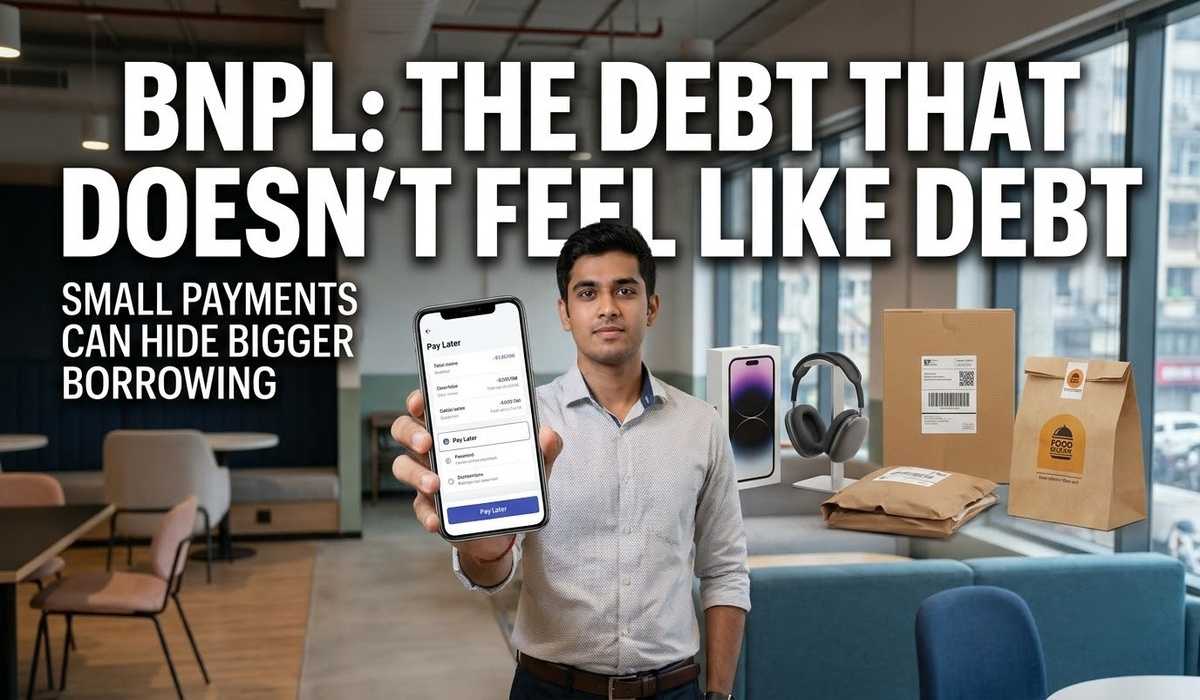
Over the last few years, Buy Now Pay Later (BNPL) platforms have surged across Indian e-commerce and food-delivery apps. BNPL thrives on a psychological design: it breaks a ₹3,000 purchase into three easy payments of ₹1,000, completely dulling the pain of spending money.
Why BNPL Is Dangerous for Young Earners
Research across the Indian fintech sector in 2026 shows a direct correlation between BNPL usage and impulse buying among young adults. Because onboarding requires just a basic KYC click, users often open four or five BNPL accounts across different apps.
Here is the hidden trap: every legitimate BNPL line is a loan reported to credit bureaus (CIBIL, Experian, CRIF High Mark). Many young earners believe BNPL is just a payment feature, not a loan. They run parallel outstanding balances of ₹5,000 here and ₹10,000 there. When they eventually apply for a prime home loan or an emergency personal loan, they are shocked to face rejection because their credit report shows 10+ active unsecured consumer loan accounts and a high credit utilization ratio.
Treat BNPL with extreme caution. If you must use it for convenience, clear the balance immediately—never let it roll over.
The 2026 Rule Change That Makes Debt Cheaper to Escape
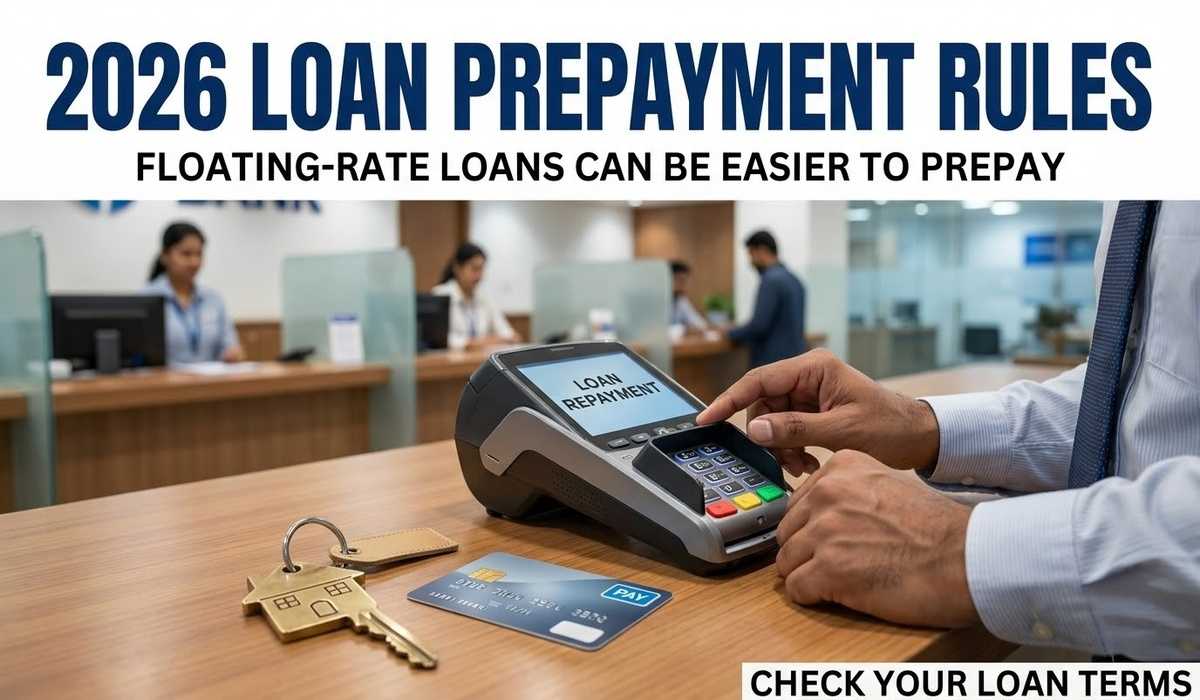
If you are currently holding high-interest debt or planning your repayment strategy, there is significant good news from the regulatory front. The Reserve Bank of India implemented a landmark consumer-protection rule effective January 1, 2026.
Zero Foreclosure Charges on Floating-Rate Loans
Under the new RBI directions, scheduled commercial banks and Non-Banking Financial Companies (NBFCs) can no longer charge prepayment or foreclosure penalties on floating-rate term loans sanctioned or renewed to individual borrowers on or after January 1, 2026.
This removal of exit costs applies across four major retail loan categories:
- Home Loans
- Personal Loans
- Auto / Car Loans
- Education Loans
Historically, lenders charged a 2% to 4% penalty if you tried to pay off your loan early using your own savings or through refinancing. This friction trapped borrowers in high-interest products even when cheaper options were available.
| Loan Feature | Old Regime (Pre-2026 Rules) | New Regime (From January 1, 2026) |
| Foreclosure Penalty | 2% to 4% penalty on outstanding principal | 0% penalty on floating-rate retail loans |
| Early Lump-Sum Payoff | Discouraged by high exit fees | Completely free using savings or annual bonus |
| Refinancing / Balance Transfer | High friction and cost to switch lenders | Seamless transfer to lower-interest lenders |
With zero lock-in and zero prepayment penalties on new floating-rate loans, your debt management strategy should become aggressive. Whenever you receive an annual workplace bonus, a tax refund, or dividends from your investments, deploy that lump sum directly toward your highest-interest principal balance. Every rupee of principal you prepay permanently destroys future compounding interest.
Also Read: Religion Based Investing: BSE SAATVIK 100 Vs NSE Shariah Nifty 50 Index
Conclusion: Take Control of Your Leverage
Understanding good loans vs bad loans is not about living a life of austerity; it is about deploying your hard-earned INR where it builds long-term wealth. When used correctly, credit is a powerful lever that helps you own a home or acquire valuable education. When used carelessly, it is an anchor that drags down your financial future.
Here are your key takeaways to implement today:
- Audit Your Loan Quality: Check the end-use of every rupee you owe. Keep asset-backed, productive loans (like home or fair-ROI education loans) and aggressively eliminate unsecured consumption debt.
- Respect the 50% Affordability Limit: Never allow your total monthly EMIs—including mortgage and vehicle payments—to cross 50% of your net take-home salary.
- Never Pay Just the Minimum Due: Always pay your monthly credit card statement balance in full. A 40%+ APR finance charge will destroy any financial planning you do elsewhere.
- Leverage the 2026 Prepayment Rules: Use annual windfalls and bonuses to prepay floating-rate retail loans without worrying about foreclosure charges.
You work too hard to let your future salary belong to lending apps and credit card issuers. Make informed, data-driven decisions with your borrowing, and build a balance sheet where your assets always outgrow your liabilities.
Disclaimer: This article is for educational and informational purposes only and should not be construed as financial advice or a recommendation to buy or sell any financial product. Interest rates, tax laws, and regulatory guidelines are subject to change. Always consult a SEBI-registered investment advisor or certified financial planner before making major credit or investment decisions.