
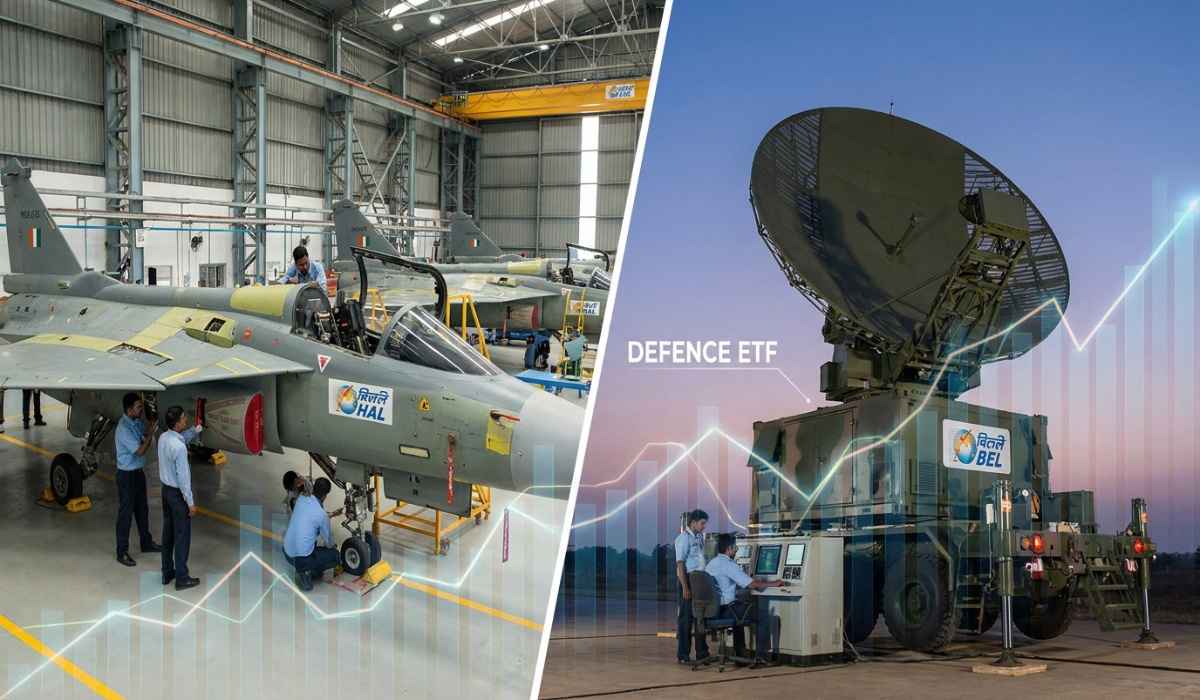
HAL and BEL are sitting on a combined order book of over ₹3.28 lakh crore. That’s not a projection or a wishful estimate. It’s signed contracts, with years of revenue already locked in. And behind those numbers is a government that just handed the Ministry of Defence a record ₹7.85 lakh crore budget for FY27.
For investors watching from the sidelines, the defence sector in India feels like it’s moving fast. New orders land every quarter, exports are hitting record highs, and policy after policy keeps tilting the playing field toward domestic manufacturers. But picking the right stock at the right time in a sector this momentum-driven can be stressful. One delivery delay or earnings miss, and a stock swings 5% overnight, even when the long-term story hasn’t changed.
That’s where defence ETFs come in. This post breaks down the structural tailwinds powering India’s defence sector in 2026, walks through the order book strength behind HAL and BEL, and shows how thematic ETFs give you a simpler way to align your portfolio with this growth without betting everything on a single name.
India’s Defence Sector: A Strategic Growth Story in 2026
Government Push for Self-Reliance and Exports
Why has India’s defence sector suddenly become “structurally overweight” among market analysts? Is this just another temporary theme fund rally, or are we watching something genuinely transformative unfold?
I’ve tracked defence stocks for over a decade. The shift happening right now isn’t comparable to anything I’ve seen before. This isn’t policy noise. The Indian defence sector is being systematically restructured through consistent government support and clear strategic priorities around national security. The numbers tell a story that should make every long-term investor sit up and pay attention.
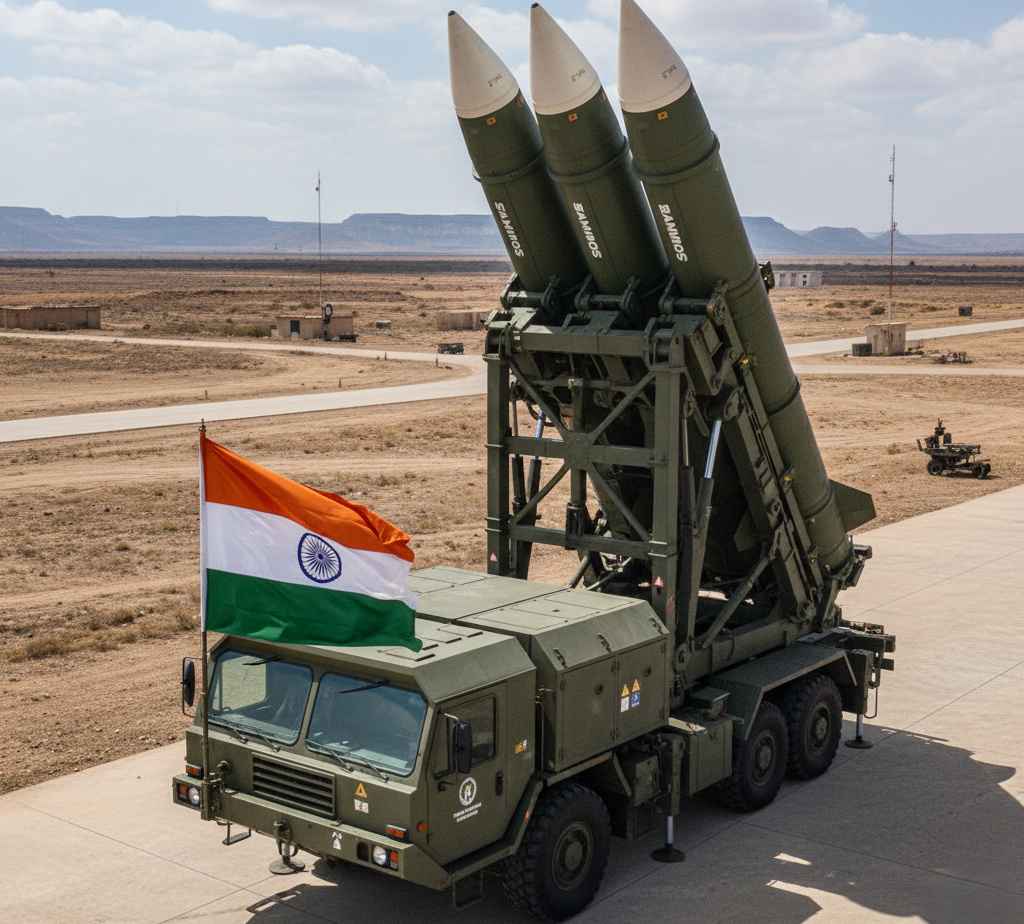
India has set an ambitious target: ₹3 lakh crore in defence production and ₹50,000 crore in defence exports by 2029. These aren’t vague aspirations. They represent a calculated pivot from decades of import dependence toward genuine global competitiveness. For context, defence exports surged to ₹23,622 crore in FY 2024-25, marking significant growth compared to previous years. We’re watching India transform from a defence importer to an exporter.

The ‘Atmanirbhar Bharat’ initiative isn’t just a catchy slogan. It’s creating tangible opportunities for listed defence companies. What matters most for equity investors is this: domestic manufacturing expansion means revenue visibility for companies like HAL and BEL extends years into the future. That’s the foundation of sustained stock performance, not speculation.
Indigenization 2.0 goes deeper than assembling imported components. The focus has shifted to critical subsystems like radars, sensors, propulsion systems, and avionics. These are high-value, high-margin segments. Domestic suppliers who master these technologies will capture disproportionate value over the next decade. This creates a technical moat that’s difficult to replicate.
When I started investing seriously in 2010, defence was synonymous with PSUs stuck in bureaucratic red tape. Today’s defence sector operates under completely different rules. The government isn’t just talking about self-reliance. It’s structuring budgets, policies, and export frameworks to make it inevitable.
Budgetary Allocations and Capital Expenditure Growth
Budget allocations reveal priorities more honestly than any policy speech.
 The Union Budget 2026-27 allocated a record ₹7.85 lakh crore to the Ministry of Defence, representing a substantial 15.19% year-on-year increase. This isn’t incremental tinkering. It’s a clear signal that defence modernization ranks among India’s top economic priorities.
Market estimates suggest a 10-15% increase in overall defence capital outlay for FY26 compared to the previous fiscal year. What should grab your attention as an investor is the composition of this spending. Capital expenditure is growing faster than revenue expenditure. Over ₹2.19 lakh crore has been earmarked specifically for modernization and capability enhancement. Capital spending translates directly into orders for defence manufacturers.
Here’s the detail that matters most: approximately 75% of the capital acquisition budget for FY26-27 is reserved for domestic industries. This isn’t protectionism for its own sake. It’s a deliberate strategy to strengthen local manufacturers and build supply chain resilience. For companies in the Defence ETF basket, this represents guaranteed addressable market expansion.
Increased funding for R&D and initiatives like iDEX (Innovations for Defence Excellence) is nurturing deep-tech startups. The government is encouraging private innovation in areas like software, artificial intelligence, and advanced electronics. From my experience analyzing tech investments, these sectors typically command higher valuations than traditional manufacturing. Defence companies integrating AI and electronics will likely trade at premium multiples.
The Rise of Private Participation and Deep Tech
A decade ago, defence meant PSUs. Period. Today, private companies contribute approximately 23% of India’s defence production. That’s a structural shift, not a statistical blip.
The defence manufacturing ecosystem now includes nearly 16,000 MSMEs, with 788 industrial licenses issued to 462 companies. This breadth of participation creates competition, drives innovation, and improves execution efficiency. Competition is healthy for the sector even if it means individual companies face margin pressure.
Budget priorities are shifting dramatically toward next-generation warfare capabilities. We’re talking about drone swarms, anti-drone systems, AI-driven surveillance, and cyber warfare solutions. These aren’t traditional metal-bending businesses. They’re technology plays. The Indian defence market is projected to grow at a CAGR of 4.05% through 2031, but segments like AI integration and advanced electronics will likely grow much faster.
This creates opportunities beyond traditional manufacturing. Companies that excel in advanced electronics and AI integration will capture outsized returns. As someone who has invested in both traditional manufacturing and technology companies, I can tell you the valuation multiples aren’t even comparable. Technology-driven defence companies will trade at premiums that reflect their growth potential and switching costs.
HAL & BEL’s Order Book Surge: Fueling Defence ETFs
When investors ask me, “Is the defence sector rally real or just hype?” I point them straight to the order books. Numbers don’t lie. The massive backlogs at Hindustan Aeronautics Ltd (HAL) and Bharat Electronics Ltd (BEL) tell a story of structural demand, not speculative fervor.
Hindustan Aeronautics Ltd (HAL): A Decade of Revenue Visibility
HAL’s order book hit ₹2.54 lakh crore by March 31, 2026.
 That’s a dramatic jump from ₹1.89 lakh crore just a year earlier. This isn’t seasonal blip territory. We’re talking about revenue visibility stretching 7-8 years ahead, a luxury most companies can only dream about.
The backbone? Major Ministry of Defence contracts. The crown jewel remains 97 LCA Mk1A aircraft worth ₹62,370 crore, supplemented by substantial helicopter and Dornier aircraft orders. These aren’t paper commitments. They’re strategic national security priorities with budget allocations already approved.
Yes, FY26 saw a slight stumble. HAL’s revenue reached ₹32,250 crore, a modest 4% increase against their 8-10% guidance. Delivery delays happen in complex aerospace manufacturing. Market sentiment, however, stayed resilient. Why? The pipeline speaks louder than quarterly misses.
HAL’s long-term order pipeline exceeds ₹4 lakh crore, expected to materialize over the next decade. Programs like AMCA (Advanced Medium Combat Aircraft), IMRH (Indian Multi-Role Helicopter), and LCA Mark 2 represent the next generation of indigenous defence capability. This isn’t incremental growth. It’s transformational.
Bharat Electronics Ltd (BEL): Diversified Growth and Future Pipeline
BEL operates differently from HAL. More diversified. More agile. On April 22, 2026, BEL secured ₹569 crore in fresh orders covering avionics, electronic warfare systems, and communication equipment. Small compared to HAL’s mega contracts, but BEL’s strength lies in velocity and variety.
BEL’s total order book stood at ₹74,000 crore as of April 1, 2026, including an export order book of $495 million. Based on trailing twelve-month revenue, this provides approximately 3 years of revenue visibility. Shorter than HAL, but still exceptional by industry standards.
Key contracts include LRSAM (₹5,000 crore), Electronic Fuses (₹4,500 crore), and Akash systems (₹2,700 crore). BEL delivered a record turnover of ₹26,750 crore in FY26, marking 16.2% growth. Execution velocity matters as much as order size.
The real excitement? BEL’s project pipeline exceeds ₹1 lakh crore over the next 18-24 months. A potential ₹30,000 crore order for the QRSAM (Quick Reaction Surface-to-Air Missile) system could materialize by March 2026. This diversified order flow reduces concentration risk inherent in mega projects.
Investing in the Defence Theme: The Role of ETFs
Here’s where most investors trip up. They see HAL and BEL’s massive order books and immediately want to buy individual stocks. I get it. The temptation is real. But defence investing isn’t straightforward.
Defence ETFs offer thematic exposure without company-specific risk.
 These exchange-traded funds typically track indices like the Nifty India Defence Index, providing passive, diversified access to the entire ecosystem. You’re not betting on one manufacturer’s execution capability. You’re riding the sector’s structural growth.
Take the Motilal Oswal Nifty India Defence ETF. As of March 31, 2026, Bharat Electronics comprised 20.24% and Hindustan Aeronautics 19.98% of holdings. You get exposure to both giants plus the broader ecosystem including private players and specialized component manufacturers.
Defence ETFs capitalize on India’s defence transformation without demanding deep sectoral expertise from investors. You don’t need to track delivery schedules, understand aerospace engineering, or predict contract award timings.
Defence is cyclical. Budget allocations fluctuate. Geopolitical tensions drive volatility. Defence ETFs suit long-term investors comfortable with sectoral cycles and short-term price swings. For those seeking regular insights on market dynamics and sectoral trends, resources like Paisa Forever’s stock market coverage help maintain perspective during inevitable volatility.
This isn’t about quick gains. It’s about aligning portfolios with India’s decade-long strategic priority: defence self-reliance. The order books at HAL and BEL provide concrete evidence this isn’t aspirational policy talk. It’s happening, contract by contract, aircraft by aircraft, system by system.
Also Read: How Indian investors can use Free AI tools for Portfolio Analysis
Disclaimer: This article is for educational and informational purposes only and should not be considered investment advice. Defence-sector stocks and ETFs can be volatile, and past performance or order-book growth does not guarantee future returns. Investors should assess risk, diversification, and personal financial goals before making any decision.