

A year ago, most people were still getting used to chatbots. Now, in 2026, AI agents are booking meetings, running supply chains, and making decisions without a human anywhere in the loop. Gartner expects 40% of enterprise apps to have task-specific AI agents built in by year’s end. That’s not a gradual shift. That’s a full sprint.
And governments are sprinting too. The recent AI summits brought together world leaders, tech giants, and policymakers to figure out what comes next. India, for its part, showed up with a INR 10,300 crore investment plan, a goal to deploy 38,000 GPUs, and a vision it calls “AI for All.” The ambition is big, but the details matter more than the slogans.
This post breaks down the major global AI trends that came out of the recent summit, from agentic AI and quantum computing to sovereignty and open-source models. Then it maps those trends against India’s own strategies for 2026, so you can see where the country aligns, where it’s carving its own path, and what it all means for businesses and builders on the ground.
Key Global AI Trends Shaping the Future in 2026
The Rise of Agentic AI and Autonomous Systems
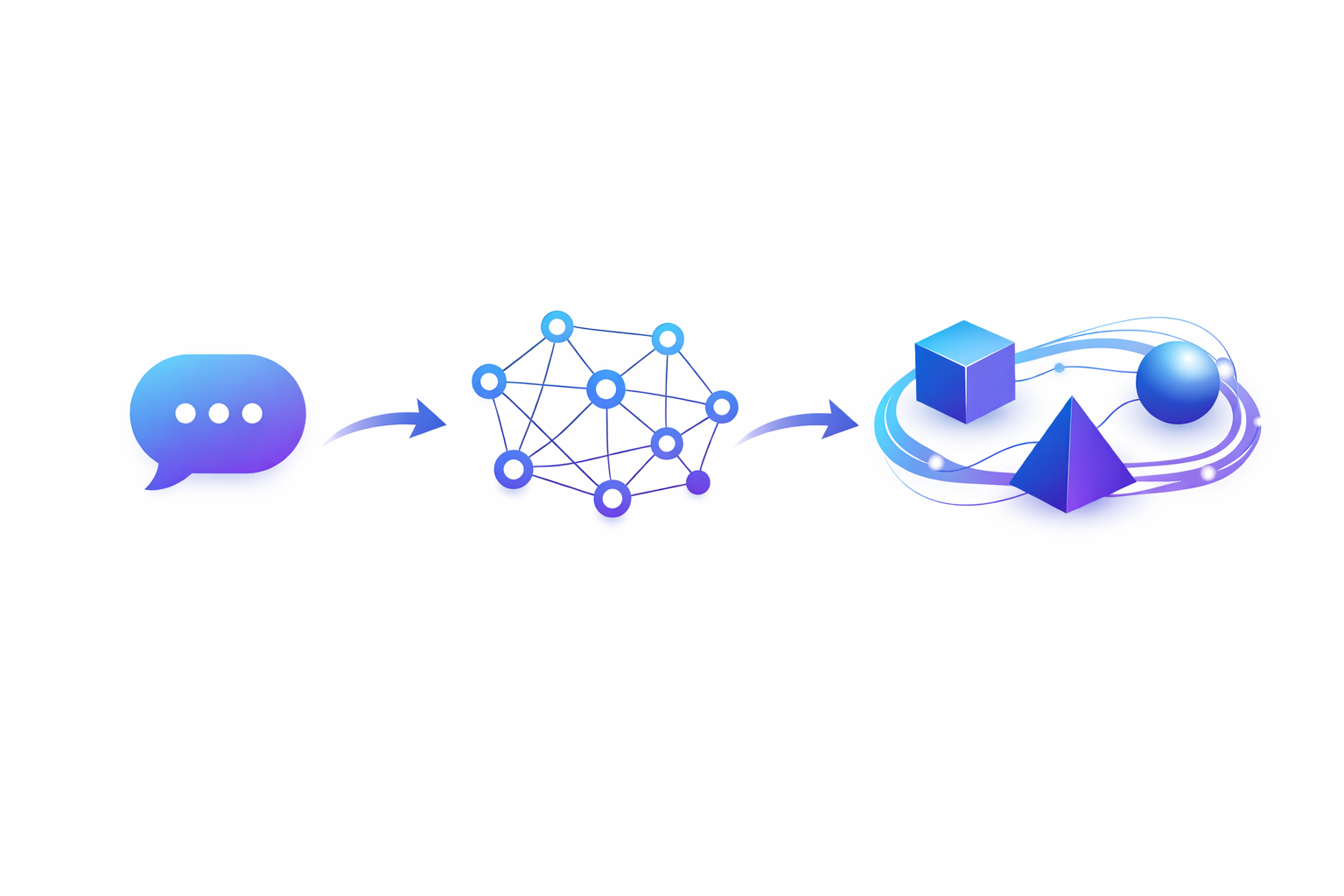
2026 has been declared the ‘Year of the Agent’ by industry leaders. This isn’t hype. It’s a fundamental shift in how AI operates in enterprise environments. We’re moving past the chatbot era into something far more sophisticated: agentic workflows where AI agents don’t just respond to queries but actually perform tasks, browse databases, interact with CRMs, and execute API calls without waiting for human intervention at every step.
Think about your current workflow. You probably toggle between five or six applications to complete a single business process. Agentic AI changes that equation entirely. These agents work across systems autonomously, making decisions based on context, historical data, and predefined objectives. Gartner’s prediction states that 40% of enterprise applications will integrate task-specific AI agents by the end of 2026. That’s not a distant future scenario. That’s happening right now in pilot programs across Fortune 500 companies.
The evolution from personal assistants to AI-orchestrated teams represents a paradigm shift. Early AI assistants could schedule meetings or answer basic questions. Today’s agents coordinate entire workflows and anticipate needs before they’re articulated. I’ve seen this transformation firsthand in financial services operations where agents now monitor portfolio risk thresholds, execute rebalancing trades, and generate compliance reports without a single manual trigger.
Cross-functional, cross-channel ‘super agents’ are emerging as the next frontier. These sophisticated systems can plan and execute complex tasks across various digital environments, moving seamlessly from email to CRM to analytics platforms to payment gateways. They don’t just complete one-off tasks. They orchestrate multi-step processes that previously required coordination between multiple departments and software systems.
The technical architecture enabling this transformation centers on what industry experts call ‘Orchestration Layers.’ These function as digital nervous systems that allow agents to reason, plan, and act independently. We’ve moved beyond static prompting where you input a command and receive a response. Modern agentic systems employ iterative reasoning chains, continuously refining their approach based on real-time feedback and changing conditions, much like how an experienced analyst adjusts strategy based on market movements rather than following a rigid playbook.
Hardware Efficiency, Quantum Computing, and the New Compute Frontier
The AI industry is experiencing a strategic pivot. Hardware efficiency has become the new scaling strategy. For years, the mantra was simple: more compute equals better performance. Throw more GPUs at the problem, scale up the parameter count, and watch accuracy improve. That brute-force approach is hitting diminishing returns both economically and technically.
The shift toward optimizing performance rather than endlessly scaling compute represents a maturation of the industry. ASIC-based accelerators designed specifically for AI workloads are emerging as viable alternatives to general-purpose GPUs. Chiplet designs allow for modular, customizable compute architectures tailored to specific use cases. Analog inference, which processes data using continuous signals rather than digital bits, offers dramatic energy savings for certain AI tasks. Quantum-assisted optimizers are beginning to tackle optimization problems that classical computers struggle with, particularly in portfolio optimization and logistics routing.
Edge AI is transitioning from conference buzzword to operational reality. Lightweight large language models now run directly on user devices, smartphones, tablets, and IoT sensors. This isn’t just about convenience. It addresses two critical concerns: privacy and offline functionality. When AI processing happens on-device rather than in the cloud, sensitive data never leaves the user’s control. Medical diagnostics, financial planning tools, and personal assistants can function without internet connectivity or third-party data exposure.
IBM has made a bold prediction that 2026 will mark the first time a quantum computer outperforms a classical computer in practical applications beyond controlled demonstrations. This quantum advantage could unlock breakthroughs in drug development, materials science, and financial optimization that are simply impossible with traditional computing architectures. Portfolio optimization across thousands of assets with complex constraints, molecular simulation for drug discovery, and supply chain optimization across global networks all stand to benefit from quantum acceleration.
The competitive landscape in AI is shifting from individual models to entire systems.
 A powerful language model is just one component. The real differentiation comes from how effectively organizations orchestrate models, tools, and workflows into cohesive systems that deliver business outcomes. From my experience in financial services, the firms winning with AI aren’t necessarily those with the most advanced models but those with the best integration between AI components, legacy systems, and human decision-makers.
AI Sovereignty, Security, and Ethical Governance
AI sovereignty has emerged as a major theme in boardroom discussions and policy debates. Companies are increasingly prioritizing the ability to run their own fine-tuned models on private infrastructure rather than depending entirely on massive public ‘black box’ models controlled by a handful of tech giants. This isn’t just about data privacy. It’s about strategic independence, regulatory compliance, and competitive differentiation.
When you rely exclusively on third-party AI services, you’re subject to their pricing changes, policy updates, and potential service disruptions. You’re also sharing your proprietary data, even if anonymized, with external providers. AI sovereignty means maintaining control over the entire stack: data, models, inference infrastructure, and governance frameworks. Financial institutions handling sensitive customer information are particularly focused on this capability.
Security-first architecture, often called DevSecOps 2.0, is becoming non-negotiable. Traditional security approaches treated security as a layer added after development. Modern AI systems require security baked into the foundation from the first line of code. The threat landscape has evolved dramatically. AI-generated phishing attacks have increased by 300%, leveraging language models to craft highly personalized, contextually relevant social engineering attacks that bypass traditional filters.
Prompt injection attacks represent a new vulnerability unique to AI systems. Malicious actors embed hidden instructions within user inputs that cause AI agents to behave in unintended ways, similar to SQL injection attacks but targeting language models instead of databases. Defending against these threats requires fundamentally different security paradigms than traditional application security.
Identity and access management strategies are being completely rethought as non-human AI agents are expected to outnumber human users in many organizations. How do you authenticate an AI agent? How do you track its actions across systems? What permissions should different agent types have? These questions don’t have straightforward answers borrowed from traditional IT security playbooks.
Human-in-the-loop governance serves as an essential safeguard. The most sophisticated agentic systems still require human validation at critical decision points, particularly for high-stakes actions like financial transactions, medical diagnoses, or legal interpretations. Creating effective ethical guardrails means defining clear boundaries where autonomous action ends and human judgment begins. I’ve implemented these frameworks in financial operations where AI can recommend portfolio adjustments but requires advisor approval before execution.
Collaborative defenses and layered security models are emerging to combat weaponized AI, deepfakes, and other sophisticated threats. No single security measure suffices. Organizations are building defense-in-depth strategies combining cryptographic verification, behavioral analysis, multi-factor authentication, and continuous monitoring to detect and respond to AI-enabled attacks in real-time.

Open Source, Multimodal, and Physical AI Advancements
The open-source AI movement continues to diversify and mature. We’re seeing a shift away from the “bigger is always better” mentality toward smaller, domain-optimized models that deliver superior performance on specific tasks while requiring far less computational resources. Chinese research institutions and companies have been particularly aggressive in releasing open-source models optimized for particular industries or languages, challenging the dominance of Western AI labs.
Multimodal AI models are advancing toward true human-like interpretation of the world. These systems don’t just process text or images in isolation. They bridge language, vision, and action into integrated understanding. In healthcare applications, multimodal AI can analyze medical images, patient history, genetic data, and clinical notes simultaneously to provide diagnostic insights that single-modality systems would miss entirely. This integrated approach mirrors how human specialists synthesize information from multiple sources rather than treating each data type in isolation.
Physical AI and robotics are expected to gain significant momentum as the industry seeks innovation frontiers beyond the diminishing returns of simply scaling large language models larger. The next breakthrough might not come from a trillion-parameter text model but from AI systems that can manipulate physical objects, navigate real-world environments, and perform complex manual tasks. Manufacturing, logistics, elder care, and agriculture all represent massive markets for physical AI applications.
Decentralized AI networks of agents are moving beyond prototype demonstrations into production deployments. These systems focus on continuous learning, shared information, and long-term knowledge retention across distributed agent populations. Instead of each AI agent learning in isolation, decentralized networks allow agents to share discoveries, coordinate actions, and build collective intelligence that improves over time. This architecture is particularly powerful for applications like autonomous vehicle fleets where individual vehicles can learn from the experiences of thousands of others.
The ‘Death of the Monolithic ERP’ is giving way to ‘Cognitive, Modular ERPs’ with AI-driven modules for functions like autonomous bookkeeping and predictive procurement. Traditional enterprise resource planning systems required extensive customization and rigid workflow adherence. AI-enabled modular systems adapt to how businesses actually operate rather than forcing businesses to conform to software constraints. Accounting modules can autonomously categorize transactions, flag anomalies, and suggest optimizations. Procurement modules can predict inventory needs, identify pricing opportunities, and negotiate with suppliers within defined parameters.
India’s Strategic Alignment and Vision for AI in 2026
India’s ‘AI for All’ Vision and Domestic Infrastructure Build-Out
Can a country of 1.4 billion people truly democratize cutting-edge technology like artificial intelligence? India believes the answer is yes. The nation’s AI strategy isn’t about chasing Silicon Valley’s playbook. It’s about solving Indian problems, in Indian languages, at Indian scale.
The vision is simple. AI for all. Not AI for the elite few who can afford expensive compute power or English-fluent models. The government wants every citizen to access AI-powered services—from farmers checking crop health via smartphone apps to small business owners automating bookkeeping in regional languages. This philosophy drives every policy decision, every rupee allocated, every partnership signed.
At the heart of this ambition lies the IndiaAI Mission, a massive INR 10,300 crore investment program designed to build domestic AI infrastructure from the ground up. By 2026, India plans to deploy 38,000 Graphics Processing Units (GPUs) across the country.
 That’s serious compute firepower. These GPUs will power everything from training large language models to running real-time inference for millions of applications.
Why does this matter? Right now, Indian startups and researchers depend heavily on foreign cloud providers. Training a competitive AI model can cost crores, and compute access remains a major bottleneck. With domestic GPU capacity, local innovators can train large-scale models competitively without bleeding capital on expensive cloud rentals or dealing with geopolitical access restrictions.
The mission also includes establishing 600 AI Data Labs nationwide. These labs will serve as research hubs, connecting academia, startups, and industry players. Think of them as digital innovation factories spread across tier-1, tier-2, and even tier-3 cities, making AI research accessible beyond Bangalore and Hyderabad.
Three Centres of Excellence have already been set up. Each focuses on a critical national priority. Healthcare. Agriculture. Sustainable cities. These aren’t vanity projects. India faces unique challenges in each sector—massive rural populations needing precision agriculture tools, overburdened public health systems requiring AI-driven diagnostics, and rapidly urbanizing cities demanding intelligent infrastructure planning.
But infrastructure alone won’t cut it. You need people who understand AI deeply, who can build, deploy, and maintain these systems. India’s AI talent pool currently stands at roughly 600,000 skilled professionals. By 2027, this number is expected to nearly double to 1.25 million. Universities are overhauling curricula, online platforms are offering specialized AI courses, and corporate training programs are ramping up. The goal is clear. Build a workforce capable of sustaining India’s AI ambitions for decades to come.
Fostering Applied AI Innovation and Localized Solutions
Talk is cheap. Deployment is everything. India’s strategy recognizes this bluntly. The focus has shifted from endless conferences and white papers to rolling up sleeves and building solutions that work in the real world.
Priority sectors are clearly defined. Healthcare tops the list. AI-powered diagnostic tools can read X-rays and scan reports faster than overworked radiologists in rural hospitals. Precision agriculture follows closely. Imagine a farmer in Maharashtra receiving personalized advice on pest control, irrigation schedules, and crop rotation—all via a simple app that understands Marathi. AI-driven logistics can optimize supply chains plagued by poor infrastructure, reducing waste and cutting costs. Multilingual digital assistants can bridge the digital divide, letting users interact with government services, banking platforms, and e-commerce sites in their native languages.
India plans to develop 12 indigenous foundation models tailored specifically to Indian languages and regulatory contexts. This is huge. English-centric models often fail spectacularly when dealing with Hindi, Tamil, Bengali, or any of India’s 22 official languages. Cultural nuances get lost. Data sovereignty becomes a concern when sensitive information flows through foreign servers. Homegrown models address both problems, ensuring relevance and control.
India’s scale is a massive advantage here. Over 800 million internet users. Hundreds of millions on digital payment platforms. A thriving developer ecosystem hungry for opportunities. The government’s bet is leveraging this scale through Digital Public Infrastructure to expand AI adoption into operational systems across public and private sectors. Aadhaar for identity. UPI for payments. CoWIN for vaccination tracking. Now, AI layers atop these platforms can deliver services at a pace and efficiency unimaginable even five years ago.
The AI Impact Summit 2026 marked a turning point. Industry roundtables moved beyond lofty visions to gritty implementation planning. How do you deploy AI in healthcare when hospitals lack reliable internet? What regulatory hurdles slow down AI adoption in finance? How do you ensure farmers trust AI-generated advice? These are the real questions getting asked and answered.
Global firms smell opportunity. Semiconductor partnerships. Cloud infrastructure expansion. AI-enabled manufacturing automation. Foreign investment is flowing in, not for charity, but because India offers a unique combination: a massive market, a skilled workforce, and government support that’s serious about execution.

Establishing Robust AI Governance and Ethical Frameworks
Technology without guardrails is a recipe for chaos. India knows this well. The government emphasizes secure, trustworthy, and robust AI development at every turn. Buzzwords? Maybe. But actions back them up.
India is actively engaging with over 30 countries to build collaborative mechanisms tackling deepfakes, synthetic media manipulation, and algorithmic bias. Deepfakes are already a problem during elections. Fake videos spread faster than fact-checks. Algorithmic bias can deny loans or jobs to deserving candidates based on flawed data. These aren’t hypothetical risks—they’re happening now.
Policymakers are walking a tightrope. Too much regulation stifles innovation. Too little invites abuse. The current approach leans towards interoperable governance standards. Let innovation scale, but maintain guardrails. Avoid rigid regulatory silos that trap startups in bureaucratic quicksand.
The AI Impact Summit Declaration introduced seven “Chakras” or pillars for AI development. Think of them as foundational principles guiding India’s AI journey. Trustworthiness of AI systems. Energy efficiency. Democratizing AI resources. Each pillar addresses a critical concern—from ensuring AI models don’t hallucinate dangerous medical advice to making sure AI data centers don’t drain the national power grid.
One concrete outcome is the “Trusted AI Commons,” a voluntary, non-binding initiative aimed at consolidating technical resources, tools, benchmarks, and best practices for secure AI. This isn’t a top-down regulatory hammer. It’s a collaborative effort bringing together academia, industry, and government to share knowledge and standardize approaches.
India is positioning itself strategically on the global stage. Advanced economies like the EU focus heavily on safety frameworks and strict regulations. Emerging markets prioritize access and digital growth, often sidelining safety concerns. India wants to be the bridge. A nation that values both innovation and responsibility. This middle path could give India significant influence in shaping future international AI accords.
Leveraging Digital Public Infrastructure for Global AI Leadership
India’s Digital Public Infrastructure is a quiet superpower. Aadhaar. UPI. Open Network for Digital Commerce (ONDC). These aren’t just successful projects—they’re exportable models that dozens of countries are studying and replicating.
Here’s the insight many miss. AI layered atop DPI creates an integrated ecosystem.
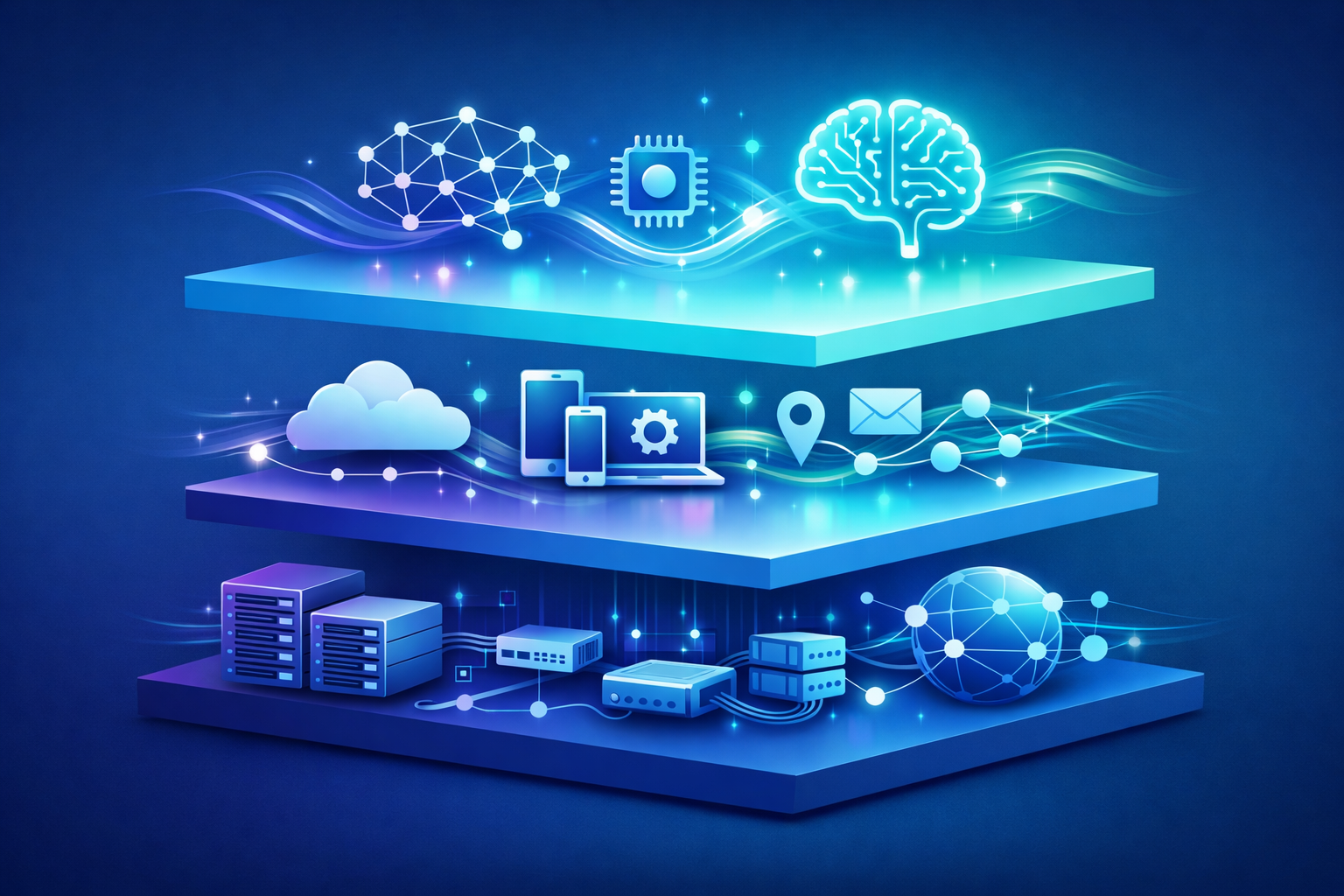 Governance standards, payment rails, identity systems, and AI applications working together seamlessly. This combination is India’s secret weapon for AI deployment and a scalable model for export globally.
Take UPI. Over 10 billion monthly transactions. Lightning-fast adoption. Now, imagine AI-powered fraud detection running on UPI rails, spotting suspicious patterns in real-time. Or AI-driven credit scoring that evaluates small business loans instantly using transaction history on ONDC. The possibilities are endless, and they’re happening now.
At the summit, NPCI extended its UPI One World wallet service to international delegates. This wasn’t a gimmick. It was a diplomatic power move, showcasing India’s digital public goods prowess and reinforcing the message: India doesn’t just build for itself—it builds systems the world can adopt.
India’s upcoming BRICS presidency amplifies this platform. The AI Impact Summit serves as a springboard for channeling collective intent into structured cooperation, joint investments, and capacity-building initiatives aimed at the Global South. Countries in Africa, Southeast Asia, and Latin America face similar challenges—large populations, resource constraints, digital leapfrogging opportunities. India’s DPI-plus-AI model offers them a proven blueprint.
The summit’s mantra, “From Vision to Action,” captures India’s mindset perfectly. No more endless declarations gathering dust in filing cabinets. The focus is tangible deliverables. Real partnerships. Measurable outcomes. Development-aligned results that improve lives, not just optics.
Also Read: Can Thematic Funds Capture India’s Semiconductors & AI Infra?
Disclaimer: The information presented in this blog is intended for educational and informational purposes only and reflects publicly available data from the 2026 AI summits and government announcements at the time of writing; it does not constitute professional financial, technological, or policy advice. While every effort has been made to ensure accuracy, the rapidly evolving nature of artificial intelligence means that facts, statistics, and policy details may change after publication. Readers are advised to consult official government sources, certified AI professionals, or legal experts before making any business or investment decisions based on the content of this article.