

The US dollar has been losing ground. Through 2025, it weakened significantly, and most experts believe this trend isn’t over yet. If you invest in Indian stocks, this shift affects your portfolio more directly than you might realize. It changes how much companies earn, what they pay for raw materials, and how attractive Indian markets look to foreign investors.
The tricky part is that a weaker dollar doesn’t help every stock equally. Some sectors stand to gain a lot from a stronger rupee. Others, especially those that earn most of their revenue in dollars, could see their margins shrink. Knowing the difference matters if you want to make smart decisions with your money in 2026.
This post breaks down how a weakening US dollar impacts the Indian stock market sector by sector. You’ll also find practical investment strategies to help you position your portfolio for the currency shifts ahead.
Understanding the Dynamics of a Weakening US Dollar and Indian Rupee
The Global Role of the US Dollar and its Influence on India’s Economy
Every serious investor in India eventually asks this question: why does the US dollar matter so much to my portfolio?
The answer is simple. The US dollar isn’t just another currency. It’s the world’s reserve currency, holding a unique position in global finance that directly touches your investments, whether you realize it or not.
When countries trade internationally, they typically settle transactions in dollars.
 India imports crude oil? Dollars. We buy electronic components from China? Dollars. Even when two non-US countries trade with each other, they often use dollars as the medium. This gives the greenback enormous influence over global commodity prices, trade flows, and investment decisions across borders.
For Indian investors, the USD-INR exchange rate impacts everything from corporate earnings to foreign investment patterns. I learned this the hard way during my early investing years. I watched my IT stock holdings swing not because the company performed poorly, but because the rupee strengthened against the dollar. The company earned the same number of dollars, but those dollars converted to fewer rupees back home. Revenue growth vanished in translation.
This isn’t a small effect. Indian companies with dollar exposure, whether exporters earning in dollars or importers paying in dollars, see their profitability directly affected by currency movements. A 5% move in the exchange rate can swing margins by the same amount or more for heavily exposed sectors.
When the US dollar weakens globally, the Indian Rupee typically gains strength. Sounds good, right? The reality is more nuanced. A stronger rupee creates winners and losers across different sectors of our stock market, reshaping the investment landscape in ways that demand your attention.
What a Weakening US Dollar Means for the Indian Rupee
Let me break down what actually happens when the dollar weakens.
When the US dollar loses value against other global currencies, fewer rupees are required to purchase one dollar.
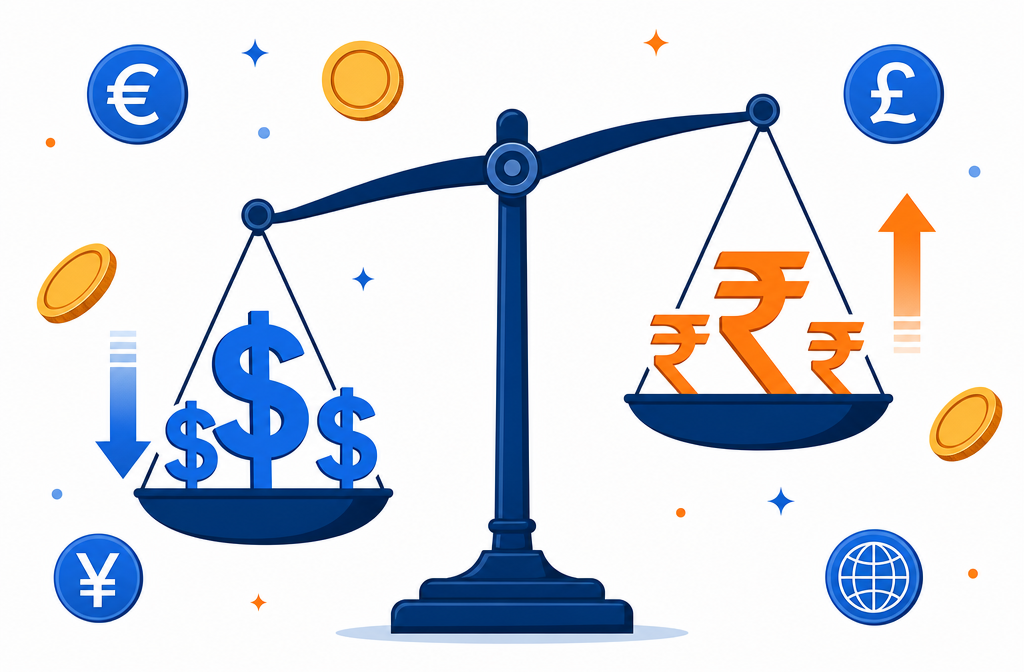 If today you need ₹83 to buy $1, but next month you only need ₹80, the rupee has strengthened. The dollar weakened. Same thing, different perspective.
This shift triggers a cascade of economic effects throughout India’s economy. First, imports become cheaper. India imports roughly 85% of its crude oil requirements. When the rupee strengthens, the same barrel of oil costs fewer rupees. Electronics components, specialty chemicals, precious metals. All cheaper.
During my time at ICICI Prudential, I witnessed firsthand how currency movements altered portfolio dynamics for institutional clients. A 3-4% strengthening in the rupee could completely change the inflation outlook, which then influenced interest rate expectations and equity valuations across the board.
Cheaper imports help control domestic inflation, giving the Reserve Bank of India more flexibility in monetary policy. Lower inflation often means the RBI can maintain or reduce interest rates, which supports equity market valuations. Lower rates make future corporate earnings more valuable in present terms. Stock prices respond accordingly.
Foreign Institutional Investors pay close attention to currency trends. Here’s why. When FIIs invest in Indian stocks, they convert dollars to rupees, buy shares, and eventually want to convert rupee gains back to dollars. A stable or strengthening rupee protects their dollar-denominated returns. If they made 15% in rupee terms but the rupee weakened 10%, their actual dollar return drops to roughly 5%. Not attractive.
A strengthening rupee reverses this problem. FIIs see their dollar returns enhanced, making Indian assets more appealing. This confidence often translates into fresh capital inflows, supporting stock prices across sectors. I’ve tracked these flows for over a decade. The correlation between rupee stability and FII sentiment is undeniable.
Historical Context and Future Projections for 2026
The US dollar didn’t just stumble in 2025. It experienced a sharp weakening that caught many investors off guard.
Fiscal concerns in the United States mounted as deficits expanded and confidence in American economic policy wavered. The dollar index, which measures the greenback against a basket of major currencies, declined noticeably. This wasn’t a brief technical correction. Market participants began questioning whether this signaled a longer-term trend shift.
Despite recent declines, currency analysts note the dollar remains overvalued relative to most global currencies. This creates room for additional cyclical weakness ahead. Think of it as gravity. What goes up often comes down, especially when fundamental valuations suggest overextension.
Experts project the greenback is entering a prolonged phase of cyclical weakness rather than a structural collapse. This distinction matters enormously. A structural collapse would indicate systemic problems with the US economy and financial system. That’s not the current scenario. Instead, we’re looking at a normal cyclical adjustment after years of dollar strength, likely extending through 2026 and possibly beyond.
What does this mean for you as an Indian investor? Global diversification becomes increasingly important. Non-US assets, including Indian equities, potentially offer better value and currency appreciation alongside fundamental returns. When I rebalanced my own portfolio in recent months, I consciously reduced my exposure to purely dollar-denominated assets and increased holdings in domestic-focused Indian companies that benefit from a stronger rupee environment.
The 2026 outlook suggests continued dollar softness, creating a favorable backdrop for certain Indian sectors while challenging others. Smart investors will position themselves accordingly.
Impact on Indian Stock Market Sectors and Investment Strategies for 2026
Many investors panic when they hear about currency movements. They wonder if their carefully built portfolios will suddenly unravel. The truth is simpler. Currency shifts create winners and losers, and understanding which sectors fall into each category can significantly shape your 2026 investment strategy.
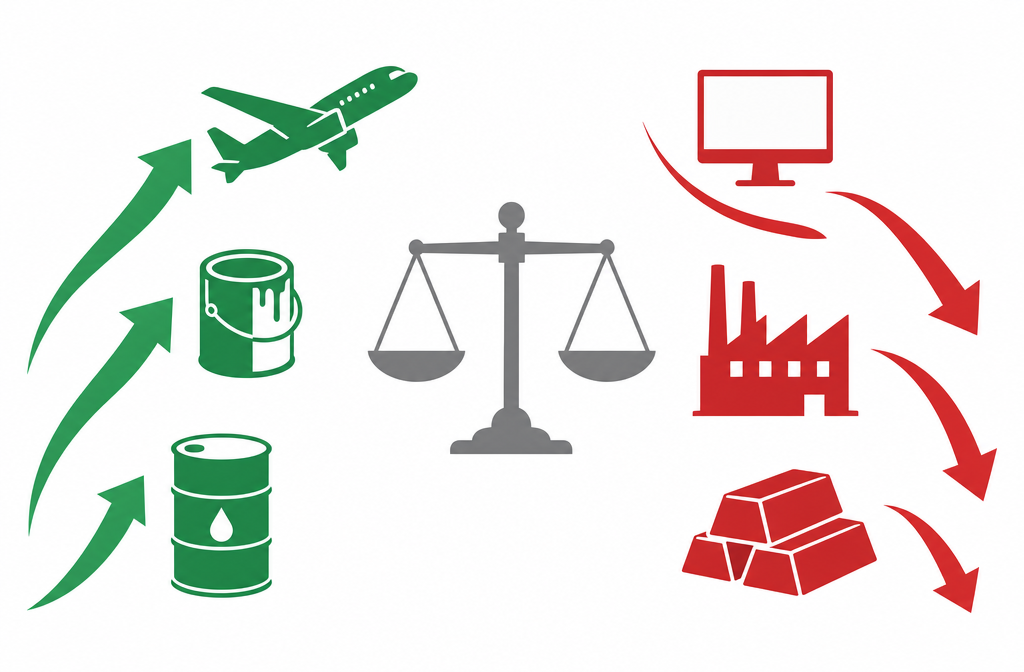
Sectors That May Benefit from a Stronger Rupee (Weaker USD)
Aviation stocks often shine when the rupee strengthens. Think about it. Airlines don’t just lease aircraft in dollars. Their spare parts, maintenance contracts, and a substantial portion of their fuel bills are all dollar-denominated. When the rupee appreciates against the dollar, these costs drop in rupee terms. The result? Improved operating margins without changing a single flight schedule. Companies like InterGlobe Aviation (IndiGo) historically see their profitability improve during such periods, though specific stock performance depends on multiple operational factors beyond currency alone.
Paint manufacturers represent another beneficiary group. These companies import significant quantities of raw materials. Titanium dioxide, a key whitening agent, and various crude oil derivatives form the backbone of their input costs. A stronger rupee directly reduces these import bills, allowing companies to either boost margins or pass savings to consumers to gain market share.
Oil Marketing Companies (OMCs) face an immediate impact. India imports roughly 85% of its crude oil requirements. Every rupee of appreciation against the dollar means lower costs for this critical import. This reduces the working capital these companies need to tie up in inventory and improves their refining margins. The ripple effect can be substantial for companies like Bharat Petroleum or Hindustan Petroleum.
Domestic consumption-oriented sectors get an indirect boost. When import costs fall, inflation typically moderates. Cheaper electronics, lower fuel prices, and reduced manufacturing costs create consumer relief. This purchasing power boost can lift FMCG companies, automobile manufacturers, and retail chains. People simply have more money to spend on everyday goods when their fuel and utility bills stabilize or decline.
Sectors Facing Headwinds with a Stronger Rupee
The flip side hits export-heavy industries hard. IT services companies earn 70-80% of their revenue in dollars and other foreign currencies. When they convert these earnings back to rupees, a stronger rupee means fewer rupees per dollar earned. A company billing $100 million gets ₹840 crore at an exchange rate of 84, but only ₹800 crore if the rupee strengthens to 80. That’s a ₹40 crore revenue hit without losing a single client. This reality affects major players across IT, pharmaceuticals, and specialty chemicals.
I’ve watched this dynamic play out repeatedly over my 10+ years in the stock market. During 2007-2008, when the rupee strengthened significantly, IT stocks underperformed despite strong business fundamentals. The currency translation simply eroded their reported growth.
Metals and commodity exporters face a double challenge. While global commodity prices are quoted in dollars, a stronger rupee diminishes their pricing competitiveness. Indian steel or aluminum becomes relatively more expensive for international buyers. Their rupee-denominated revenue shrinks even if global commodity prices remain stable.
Foreign Institutional Investors (FIIs) might reassess their allocations. When they invest in Indian stocks, they calculate returns in dollar terms. A strengthening rupee can reduce their dollar returns if stock prices don’t rise enough to offset the currency appreciation. This calculation sometimes triggers capital outflows, creating temporary market pressure. The relationship isn’t always linear, but it’s a factor that influences FII behavior.
Investment Strategies for Navigating Currency Volatility in 2026
Diversification remains your best defense. Don’t load your portfolio exclusively with IT exporters or only with import-dependent companies. Balance across sectors. Include some export-oriented businesses alongside domestic consumption plays and defensive sectors like utilities. This approach cushions your portfolio against currency swings in either direction.

Seek companies with natural hedges. Some IT firms maintain significant overseas operations with dollar expenses that partially offset their dollar revenues. Others use financial hedging instruments. These businesses deliver more stable rupee earnings regardless of exchange rate movements. During my years at ICICI Prudential, I observed how investors who focused on operationally hedged businesses slept better during currency volatility.
Consider global exposure through mutual funds. International equity funds or global debt funds can act as portfolio stabilizers. When the dollar weakens and rupee strengthens, your international holdings often gain in rupee terms. Platforms like Paisa Forever regularly analyze mutual fund options that offer such global diversification, helping investors identify funds with appropriate international exposure.
Currency-hedged ETFs offer another route. These funds invest internationally but use hedging strategies to minimize currency fluctuation impact. You get global equity exposure without the additional layer of foreign exchange volatility.
Stay informed consistently. Currency markets move on macroeconomic data, policy shifts, and global events. Regular market analysis helps you anticipate potential impacts before they fully materialize. Resources from Paisa Forever and similar analytical platforms can keep you updated on both currency trends and sectoral implications, allowing you to adjust your strategy proactively rather than reactively.
The 2026 landscape will likely continue experiencing dollar weakness cycles. Your success depends less on predicting exact exchange rates and more on building a balanced, informed portfolio strategy.
Also Read: How Nasdaq 100 ETF Benefits from Rupee Depreciation Now
Disclaimer: This blog post is intended for informational and educational purposes only and does not constitute financial, investment, or legal advice. The views expressed are based on publicly available information and the author’s personal experience, and should not be relied upon as a substitute for professional financial guidance. Readers are advised to consult a SEBI-registered investment advisor before making any investment decisions related to currency movements, sectoral stocks, or portfolio strategies.