
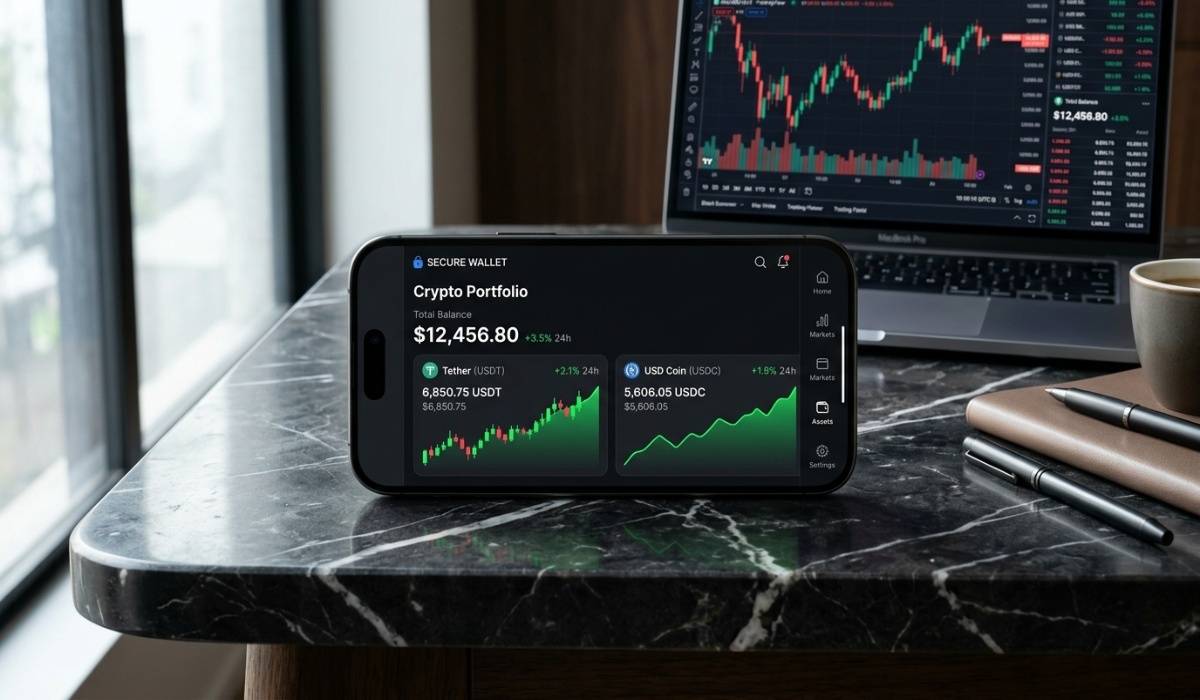
If you’re an Indian investor, your wealth is quietly shrinking. Even if your portfolio numbers look stable, a sliding currency means your domestic savings buy less on the global stage—especially after the rupee crossed 95 to the USD in early 2026 before settling around 91–93. This isn’t a temporary blip; the rupee has historically lost roughly 4.5% of its value per year against the greenback since 1991, heavily penalizing anyone planning for overseas education, international travel, or global purchasing power.
To combat this silent erosion, a growing wave of smart investors are turning to Dollar Crypto Assets—popularly known as stablecoins—as a practical way to park their money in an asset that retains its value far better than the local currency.
In this post, we will break down the exact economic forces driving the rupee’s decline, how these Dollar Crypto Assets function as a legitimate portfolio hedge, what grassroots adoption looks like across India right now, and what the strict 2026 tax and regulatory compliance frameworks mean for your money.
The Persistent Weakness of the Indian Rupee: Causes and Impact
Understanding Rupee Depreciation: Causes and Trends (2026)
The Indian Rupee is facing significant headwinds. As of April 2026, the currency hovers around ₹91–93 per US dollar. It recently touched a record low of ₹95 per USD. This marks one of its weakest phases in recent memory.
What’s driving this decline? The primary culprit is a strong US dollar, powered by higher interest rates in America. When the US Federal Reserve keeps rates elevated, global capital flows towards dollar-denominated assets seeking better returns. This strengthens the dollar and pressures emerging market currencies like the Rupee.
Rising crude oil prices add another layer of stress. India imports roughly 85% of its oil requirements. Higher oil prices mean increased dollar demand to pay for these imports, widening India’s trade deficit. Every barrel of expensive oil puts more pressure on the Rupee.
Foreign portfolio investors (FPIs) have been pulling out capital, creating additional downward momentum. When global uncertainty rises, international investors typically flee to safer havens like US Treasury bonds. This flight to safety drains dollars from Indian markets, weakening the Rupee further.
But this isn’t a new phenomenon. The Rupee has been on a consistent depreciation journey since India’s 1991 economic liberalization. From 1991 to 2025, the currency lost roughly 4.5% per year on average against the USD.
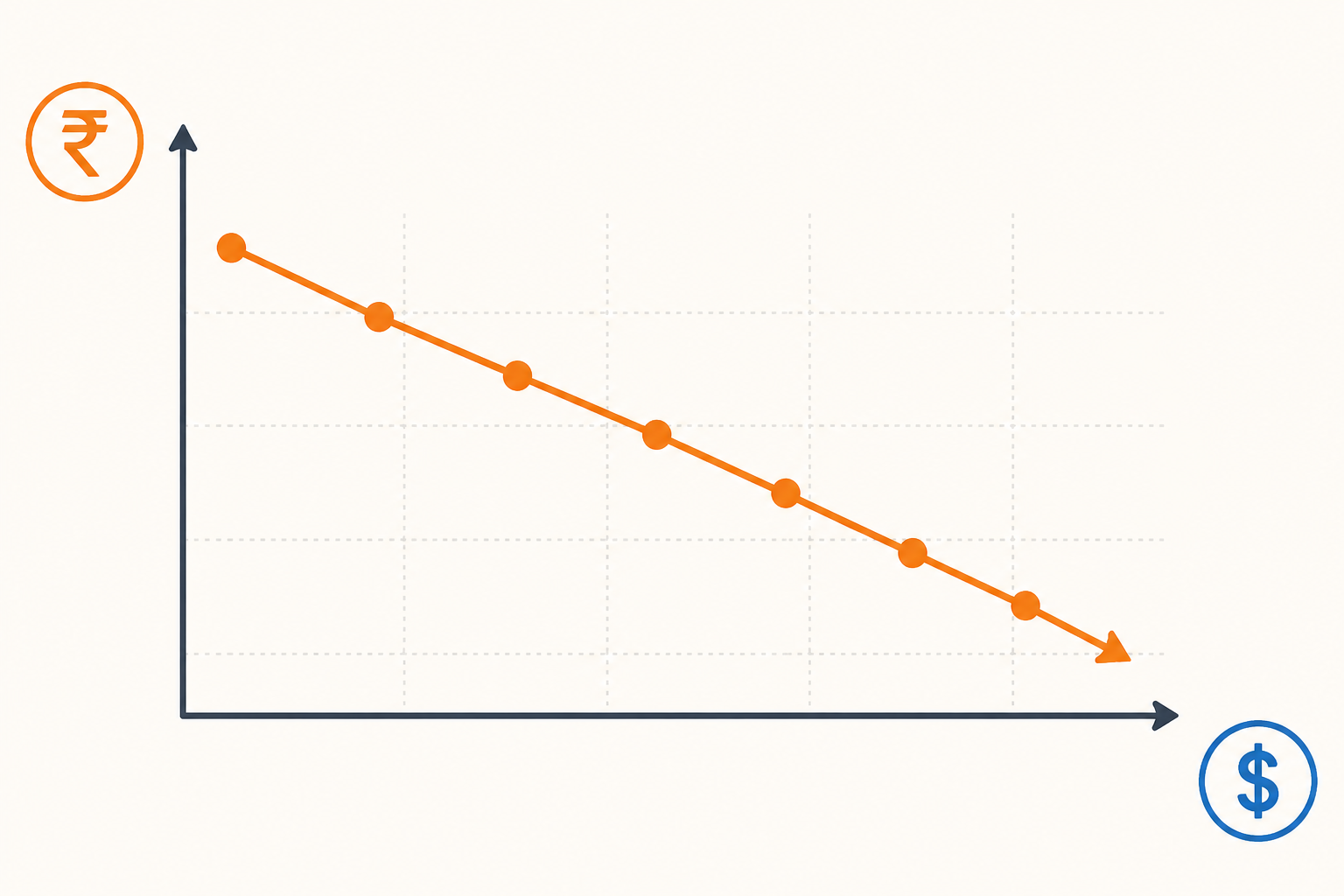 That’s a structural trend spanning over three decades.
Several fundamental factors explain this long-term weakness. Interest rate differentials between India and the US create persistent pressure. Inflation in India runs higher than in developed economies, eroding the Rupee’s purchasing power over time. India’s current account deficit remains a chronic issue. We import more than we export, creating continuous dollar demand that exceeds supply.
Understanding these dynamics is essential for investors. The Rupee’s depreciation isn’t just a number on financial news channels. It directly impacts your wealth.
Impact on Indian Investors and Global Purchasing Power
Rupee depreciation creates a hidden tax on your wealth. When the Rupee falls, imported goods become more expensive. This feeds into domestic inflation. Your grocery bills rise. Electronics cost more. International holidays become pricier.
For investors with India-only portfolios, currency depreciation quietly erodes real returns. Imagine your mutual fund portfolio grows 12% in a year. Sounds good, right? But if the Rupee weakens 8% against the dollar during the same period, your global purchasing power has increased by only about 4% in dollar terms.
Let me give you a real example. Suppose the Rupee weakens 10% over three years while your portfolio grows 30% in Rupee terms. In dollar terms, your portfolio growth is closer to 17%.
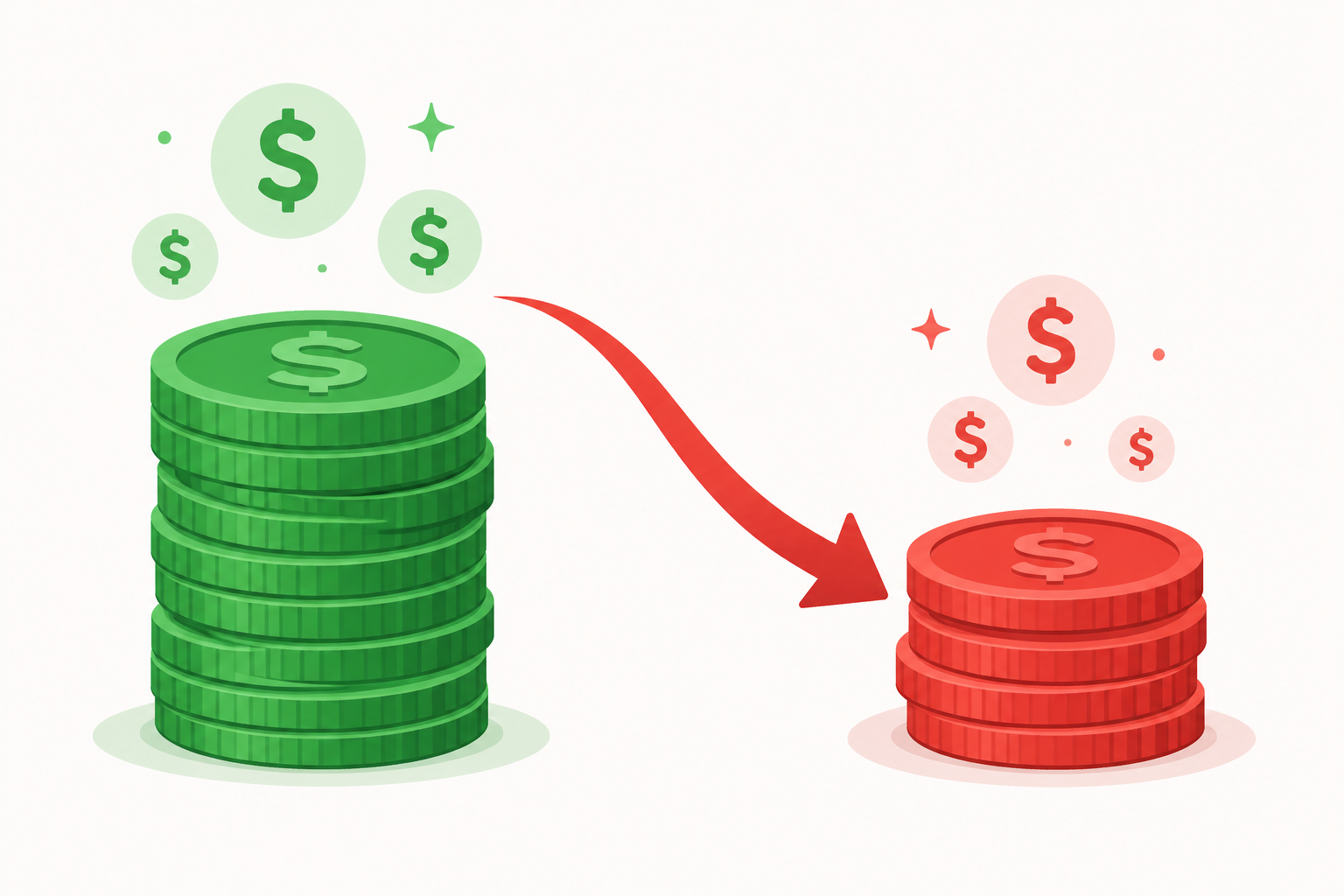 If you have children planning to study abroad, travel frequently internationally, or plan to retire overseas, this difference matters significantly.
The Reserve Bank of India actively manages currency movements to prevent sudden shocks. The RBI uses foreign exchange reserves and forward contracts as stabilization tools. However, it doesn’t fight the tide. The RBI guides the Rupee’s journey rather than resisting market-driven depreciation. It smooths the path but allows the currency to move with global trends.
This approach prevents panic but doesn’t eliminate the underlying pressures. Global factors continue to push the Rupee downward over time. Smart investors recognize this reality and plan accordingly, considering currency risk as a genuine component of their financial strategy.
Dollar Crypto Assets: A New Hedge for Indian Investors
What are Stablecoins and Why They Attract Indian Investors
When most people think of cryptocurrencies, they picture the wild price swings of Bitcoin or Ethereum. One day up 15%, the next day down 20%. For someone holding Rupees in an already volatile currency environment, adding that level of unpredictability feels like compounding risk, not solving it.
Stablecoins are different.
These are digital currencies engineered to maintain a stable value by pegging themselves to a reserve asset. Most commonly, that’s the US dollar. Tether (USDT) and USD Coin (USDC) are the two largest examples. They aim to combine the best of both worlds: the decentralization, speed, and borderless nature of cryptocurrencies, with the stability of traditional fiat currencies like the dollar.
For Indian investors watching the Rupee hover around ₹91–93 per USD in 2026, stablecoins offer something practical. They provide a way to hold dollar-denominated value without navigating the complexities of opening a foreign bank account or accessing traditional forex markets. You can convert INR to USDT on a local exchange in minutes.
The appeal is straightforward: preservation of purchasing power. If you have international financial goals, children studying abroad, or plans to travel or invest globally, holding a portion of your wealth in dollar terms protects you from domestic currency erosion. Even if you don’t, high domestic inflation combined with Rupee depreciation quietly chips away at your real wealth. Stablecoins act as a buffer.
The scale of stablecoin adoption speaks volumes.
 In 2025 alone, stablecoins moved more than $35 trillion across blockchain networks globally. That’s more than Visa and Mastercard combined. This isn’t fringe activity. It’s becoming a global payment and value transfer backbone.
Stablecoin Adoption in India: A Response to Currency Volatility
India isn’t sitting on the sidelines of this shift. We’re one of the global leaders in grassroots crypto adoption. The consistent weakness of the Rupee has played a significant role in driving interest toward dollar-pegged crypto assets among everyday Indian investors.
The Reserve Bank of India has taken notice. In its recent communications, the RBI has noted that widespread adoption of foreign currency-denominated stablecoins could pose significant risks to India’s monetary sovereignty and financial stability. That statement alone tells you the level of adoption is no longer negligible. The central bank doesn’t issue warnings about something that isn’t happening.
This growing trend has sparked discussions around creating an INR-backed stablecoin. Proposals like the ARC (Asset Reserve Coin) suggest that a Rupee-denominated stablecoin could strengthen the currency and stem capital outflows to dollar-backed alternatives. Whether that will work remains to be seen, but the conversation itself illustrates how seriously policymakers are taking the shift.
From a practical standpoint, Indian crypto exchanges have made it remarkably easy to convert INR into stablecoins. Within a few clicks, you can move money from your bank account into USDT or USDC. This accessibility has democratized access to dollar exposure in a way that wasn’t possible even five years ago. You don’t need crores of rupees or a private banker. You need a smartphone and an exchange account.
For investors trying to understand these trends and make informed decisions, staying updated with reliable sources is critical. Platforms such as Paisa Forever provide regular insights into crypto developments, helping you separate hype from reality in this fast-moving space.
Navigating the Regulatory Landscape and Risks in 2026
Here’s where things get murky. As of early 2026, India still does not have specific sectoral regulations for cryptocurrencies or stablecoins. They’re not banned. But they also don’t have official regulatory oversight. You’re operating in a gray zone.
The Reserve Bank of India maintains a cautious stance. It’s prioritizing Central Bank Digital Currencies (CBDCs) over private stablecoins. The RBI has repeatedly warned of macro-financial risks like currency substitution, where people begin preferring foreign stablecoins over the Rupee for savings and transactions. That’s a genuine concern for monetary policy effectiveness.
On the taxation front, the Union Budget for 2026-27 maintained the existing crypto tax regime: a flat 30% tax on gains from crypto transactions and a 1% Tax Deducted at Source (TDS) on trades. No changes. This signals that the government is neither encouraging nor outright discouraging crypto activity, at least not through tax policy.
What has changed is compliance. New penalty frameworks, effective April 1, 2026, include fines for non-filing of crypto transaction statements and inaccurate disclosures. If you’re trading or holding stablecoins, you now have real reporting obligations. Ignoring them can cost you.
Tighter KYC and AML compliance under FIU-IND oversight is also being enforced to mitigate fraud and misuse risks. Exchanges are under pressure to verify identities and flag suspicious activity. This is good for legitimacy, but it adds friction for users who valued anonymity.
The takeaway?
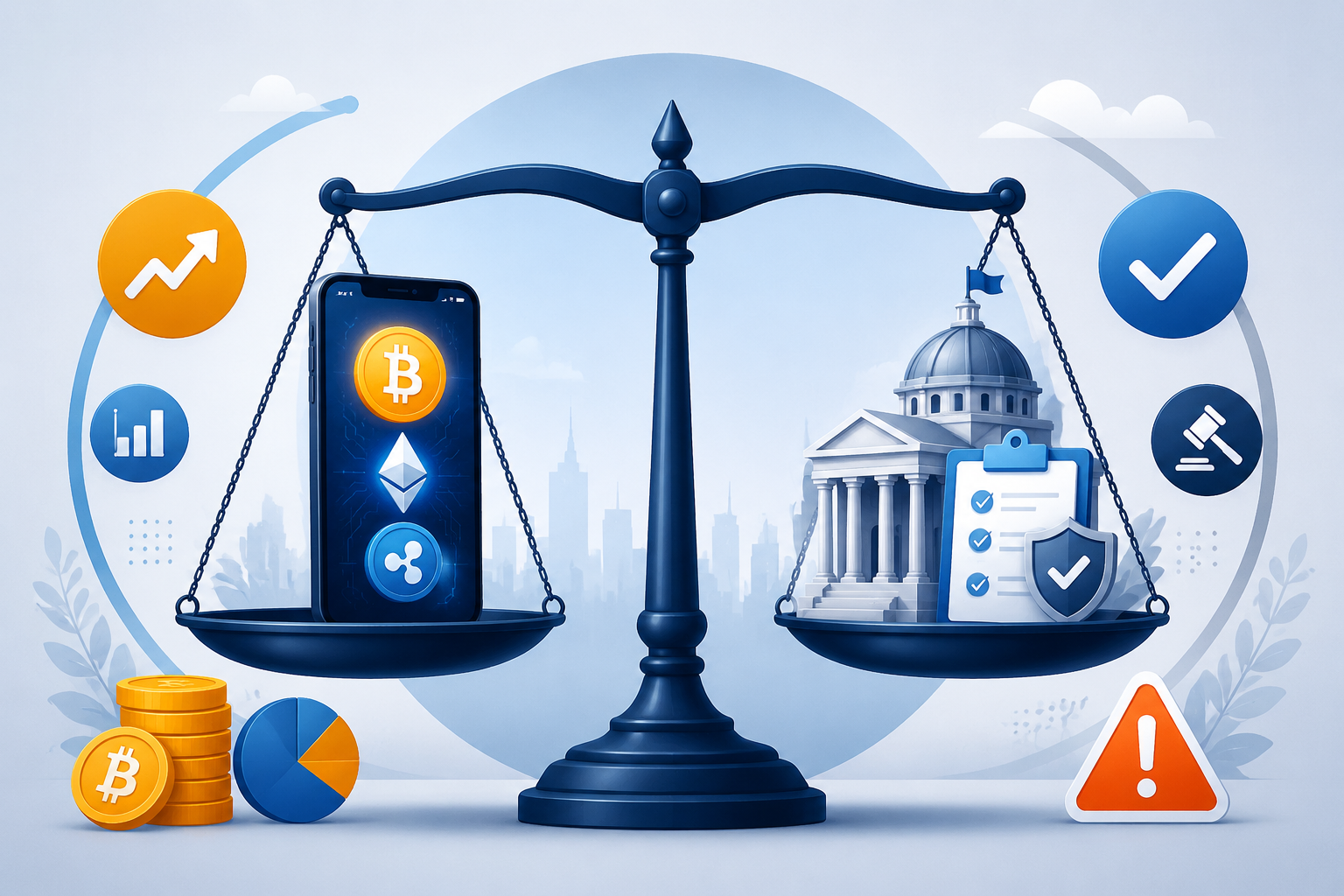 Stablecoins can be a useful tool for hedging currency risk, but they come with regulatory uncertainty and tax implications you can’t ignore. If you’re considering adding them to your portfolio, understand these evolving rules. Integrate crypto investments responsibly into your overall financial planning. Services like those offered by Paisa Forever can help you structure your portfolio in a way that balances opportunity with compliance and risk management.
Don’t chase trends. Understand the tools and use them wisely.
Also Read: Can a ₹1,000 Crypto SIP Make You Rich in India Today?
Disclaimer: Cryptocurrency and stablecoin investments are subject to high market risks, evolving regulatory frameworks, and distinct tax obligations under Indian law. The information provided in this article is for educational purposes only and does not constitute formal financial, investment, or legal advice. Readers should consult with a certified financial advisor and qualified tax consultant before allocating capital to digital assets.