

Your digital assets could vanish forever if you die unexpectedly—and it happens more often than you think. When Gerald Cotten, CEO of Canada’s biggest Bitcoin exchange, died suddenly in 2018, $250 million in cryptocurrency became permanently inaccessible because nobody else had the private keys.
This guide is for crypto holders, NFT collectors, and anyone building digital wealth who wants to protect their assets for their loved ones. You’ll discover why your regular will won’t work for crypto inheritance, explore both legal and technical solutions like dead man’s switches, and learn how to implement a secure inheritance plan that actually works.
We’ll walk you through the critical gap between traditional estate planning and digital asset management, examine your options from trusts to smart contract solutions, and show you practical strategies that balance security with accessibility. You’ll also learn the trade-offs between legal approaches and technical dead man’s switch solutions, plus best practices for managing your crypto assets while you’re still alive.
Don’t let your digital wealth become another cautionary tale—let’s make sure your crypto actually reaches the people you care about.
The Critical Problem of Crypto Asset Loss Upon Death

High-profile cases exposing inheritance vulnerabilities
When cryptocurrency investors die without proper inheritance planning, their digital assets often vanish forever, creating devastating losses for families and the broader crypto ecosystem. These high-profile cases reveal just how vulnerable your crypto holdings really are without adequate estate planning measures in place.
$250 million QuadrigaCX exchange collapse from inaccessible cold wallets
The QuadrigaCX exchange collapse stands as one of the most shocking examples of crypto inheritance failure. When the exchange’s founder died unexpectedly, he took the private keys to the exchange’s cold wallets with him, effectively locking away $250 million in customer funds permanently. This catastrophic loss highlighted how a single person’s death can render massive amounts of cryptocurrency completely inaccessible, leaving thousands of investors with no recourse to recover their digital assets.
Your crypto holdings face the same risk if you haven’t established clear inheritance protocols. Unlike traditional assets, cryptocurrency requires specific technical knowledge and access credentials that die with you if not properly documented and transferred.
Bitcoin’s diminishing circulation due to lost private keys
Research indicates that approximately 20% of all Bitcoin tokens are lost and unrecoverable, with many of these losses attributed to deceased owners who never shared their private keys or recovery phrases. This represents billions of dollars worth of cryptocurrency permanently removed from circulation, demonstrating the scale of the inheritance problem you face as a crypto investor.
Every time someone dies without proper crypto estate planning, those digital assets become forever inaccessible. Your private keys function as digital passwords that prove ownership of blockchain assets, and without them, your heirs will never gain access to your cryptocurrency holdings, regardless of their legal inheritance rights.
Growing stakes as cryptocurrency adoption increases
With surveys from Gallup and Pew Research estimating that 14% to 17% of U.S. adults have owned cryptocurrency, the potential for inheritance-related losses is expanding rapidly. As crypto adoption increases globally, more families are discovering that substantial digital wealth has been lost due to inadequate succession planning.
Your crypto inheritance challenges are compounded by the fact that many people neglect to account for cryptocurrency in their estate plans or fail to inform their heirs about how to access these holdings. Unlike traditional assets that can be recovered through legal processes, lost crypto private keys represent permanent, irreversible losses that no court order or legal intervention can remedy.
Why Traditional Estate Planning Falls Short for Digital Assets

Decentralized blockchain creates unique custody challenges
When you’re dealing with traditional assets, custody typically involves banks, brokers, or other financial institutions that maintain comprehensive records and can work with courts during estate proceedings. However, cryptocurrency operates on decentralized blockchain networks where you, as the asset holder, maintain complete control through private keys. This decentralization means there’s no central authority or institution that can recover your digital assets when you’re gone – if your private keys are lost, your crypto inheritance becomes permanently inaccessible.
Your cryptocurrency holdings exist solely as cryptographic proof on the blockchain, making them fundamentally different from traditional assets that have institutional backing and recovery mechanisms. Unlike your bank account or stock holdings, where financial institutions can verify ownership and transfer assets to beneficiaries through established legal processes, your crypto assets require direct access to private keys or seed phrases that only you possess.
Private key security conflicts with inheritance accessibility
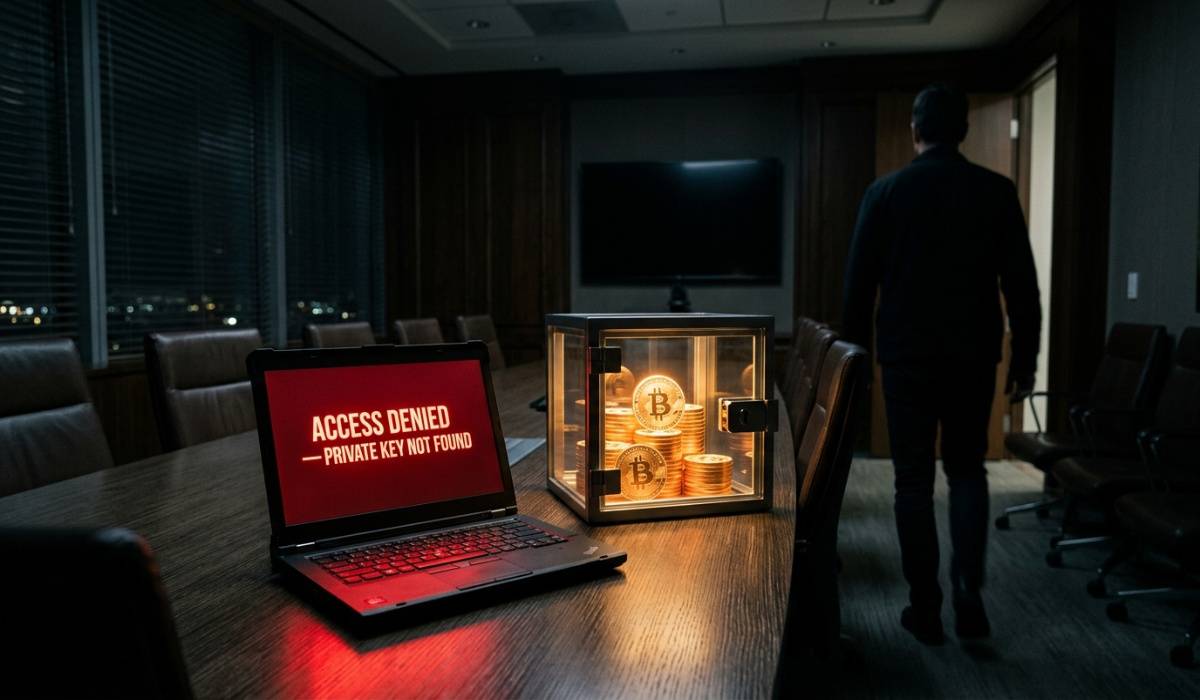
You face a fundamental dilemma in crypto inheritance planning: the very security measures that protect your digital assets during your lifetime become barriers for your beneficiaries after death. Your private keys must remain absolutely secure and private to prevent theft, yet they need to be accessible to your heirs for successful inheritance transfer.
This creates an inherent tension in cryptocurrency estate planning. If you store your private keys too securely – perhaps in encrypted formats or complex cold storage solutions – your beneficiaries may never be able to access them. Conversely, if you make your keys too accessible for inheritance purposes, you increase the risk of theft while you’re alive. The blockchain’s immutable nature means there’s no “password reset” option or customer service to help recover lost access.
Public probate processes expose crypto holdings to risks
Traditional probate proceedings are public records, which means when your estate goes through the court system, your cryptocurrency holdings become visible to anyone who searches court documents. This public exposure creates significant security risks for your digital asset inheritance, as it essentially broadcasts to the world that valuable crypto assets are potentially available.
Your crypto holdings, once revealed through probate, become targets for sophisticated scams, hacking attempts, and fraud directed at your beneficiaries. Unlike traditional assets that remain under institutional protection during probate, your cryptocurrency becomes vulnerable the moment its existence is made public through court filings, creating additional risks that didn’t exist with conventional estate planning.
Court delays can cause massive losses during market volatility
The cryptocurrency market’s extreme volatility means that court delays in probate proceedings can result in devastating losses to your intended inheritance. While traditional assets might fluctuate modestly during lengthy probate processes, your crypto assets could lose 50% or more of their value during typical court delays of months or years.
Your beneficiaries face the frustrating situation of watching your digital asset inheritance diminish in value while legal proceedings slowly unfold. The time-sensitive nature of cryptocurrency markets conflicts directly with the traditionally slow pace of probate courts, potentially eroding the wealth you intended to transfer to future generations through no fault of legal or technical failures, but simply due to market timing and bureaucratic delays.
Legal Solutions: Wills vs Trusts for Crypto Inheritance

Intestacy laws leave crypto assets vulnerable to government distribution
When you pass away without a proper crypto inheritance plan, your digital assets become subject to intestacy laws—the legal framework that determines how your property is distributed when you die without a will. This creates a particularly vulnerable situation for your cryptocurrency holdings, as probate courts applying these laws may not even discover your digital assets exist.
Under intestacy laws, the court determines asset distribution based on a predetermined hierarchy of relatives, typically starting with your spouse and children, then extending to parents, siblings, and other family members. However, cryptocurrencies present a unique challenge because they’re often stored in digital wallets or exchanges that leave no paper trail. Without proper documentation or awareness from your family members, these assets could remain undiscovered indefinitely, effectively making them inaccessible forever.
Your crypto assets face additional risks under intestacy proceedings, as they may be distributed to family members who lack the technical knowledge to manage them properly. Unlike traditional assets that can be easily identified through bank statements or property records, cryptocurrencies require specific private keys and seed phrases for access—information that dies with you if not properly documented.
Will-based inheritance creates public exposure and lengthy probate
Including your cryptocurrency in a traditional will creates significant challenges that you should carefully consider. When your assets go through probate court, your will becomes a public document, exposing details about your crypto holdings to anyone who chooses to review court records. This public exposure can make your beneficiaries targets for theft or fraud, as criminals often monitor probate records for valuable assets.
The probate process itself can take several months to years to complete, during which time your crypto assets remain frozen and subject to market volatility. Your cryptocurrency could lose substantial value while awaiting court decisions, or conversely, your heirs might miss opportunities for gains during bull markets. The prolonged timeline also means your beneficiaries face uncertainty about when they’ll actually gain access to their inheritance.
Court fees and administrative costs further erode the value of your crypto estate during probate. These expenses are typically paid from the estate assets, potentially reducing what your intended beneficiaries ultimately receive. Additionally, your cryptocurrency may be used to pay off any outstanding debts you leave behind, which could significantly impact the inheritance your loved ones receive.
Trust-based management bypasses courts and maintains privacy
Setting up a trust for your crypto assets offers significant advantages over traditional will-based inheritance. Any assets held in a trust do not go through probate, allowing your beneficiaries to receive their inheritance much more quickly and privately. This approach eliminates the public exposure that comes with probate proceedings, protecting your family from potential security risks associated with known crypto holdings.
A trust gives you precise control over how your cryptocurrency is distributed to your beneficiaries. You can specify exactly which assets go to whom, determine the timing of distributions, and even include special criteria or conditions that must be met before beneficiaries can access their inheritance. This level of control is particularly valuable for crypto assets, where you might want to ensure your heirs have adequate knowledge before gaining access to significant digital wealth.
The privacy benefits of trust-based crypto inheritance cannot be overstated. Unlike wills, trust documents remain private, keeping details about your cryptocurrency holdings confidential. This privacy protection extends to your beneficiaries, who won’t have their newly acquired crypto wealth publicly documented in court records where it could attract unwanted attention from criminals or scammers targeting crypto holders.
Trustee expertise requirements for handling digital assets
When establishing a trust for your cryptocurrency assets, selecting a trustee with appropriate technical expertise becomes crucial for successful asset management. Your trustee will need to understand how to securely store private keys, manage various types of digital wallets, and navigate different cryptocurrency exchanges. Without this specialized knowledge, even the most well-intentioned trustee could inadvertently compromise your crypto security or lose access to assets entirely.
You should consider appointing either a tech-savvy family member or a professional service that specializes in digital asset management as your trustee. This person must understand the fundamental differences between public and private keys, know how to execute cryptocurrency transactions safely, and stay informed about the rapidly evolving crypto landscape. They’ll also need to provide guidance and education to your beneficiaries who may lack cryptocurrency experience.
The trustee’s responsibilities extend beyond technical management to include understanding the tax implications of crypto inheritance and distribution. They must be prepared to help your beneficiaries navigate capital gains tax obligations and understand the stepped-up basis rules that apply to inherited cryptocurrency. This combination of technical and financial expertise makes trustee selection one of the most critical decisions in your crypto inheritance planning process.
Technical Dead Man’s Switch Solutions

Smart contract automation for inheritance transfers
With the legal challenges of traditional estate planning in mind, smart contracts offer a revolutionary approach to crypto inheritance through automated dead man’s switch mechanisms. You can set up a smart contract that automatically transfers funds from your wallet to your beneficiaries’ wallets unless you actively decline the request within a predetermined timeframe, typically 90 days.
The process works elegantly: your beneficiaries or lawyer trigger the transfer request, and since you cannot respond if deceased, the funds automatically transfer after the waiting period expires. This system eliminates the need for complex legal procedures while ensuring your digital assets reach their intended recipients.
For enhanced security, you can implement a staggered release system where increasing percentages become available over time:
- 0.5% after 1 week
- 2% after 1 month
- 10% after 6 months
- 20% after 1 year
- Remaining balance after 5 years
You should also consider implementing a Raspberry Pi or AWS instance that automatically denies requests at 80% of the deadline, providing an additional failsafe. This device can be programmed to go offline only after your death, with clear instructions for your beneficiaries.
A basic smart contract structure includes mapping your wallet address to trustee addresses and unlock times. You regularly update the unlock time, and if you fail to do so, your designated trustee can withdraw the funds. However, be aware that early smart contract implementations may be vulnerable to re-entrancy attacks and require proper security auditing.
Sarcophagus protocol’s encrypted data release system
Now that we’ve explored basic smart contract automation, the Sarcophagus protocol represents a more sophisticated approach to dead man’s switch cryptocurrency inheritance. This protocol provides an encrypted data release system specifically designed for secure information transfer upon predetermined conditions.
The Sarcophagus system allows you to encrypt sensitive data, including wallet seed phrases and private keys, within a digital “sarcophagus” that only opens when specific conditions are met. Unlike simple time-based switches, this protocol offers enhanced security through cryptographic protection of your most sensitive information.
Your encrypted inheritance data remains completely secure until the dead man’s switch triggers, at which point the protocol automatically releases the decryption keys to your designated beneficiaries. This ensures that even if the system is compromised, your private information remains protected by strong encryption standards.
The protocol addresses many vulnerabilities present in simpler dead man’s switch implementations by providing multiple layers of security and verification. You can configure complex trigger conditions that go beyond simple time-based releases, incorporating additional verification mechanisms to prevent accidental activation.
Biometric and health monitoring integration possibilities
Previously, we’ve discussed automated systems, but biometric integration represents the cutting edge of dead man’s switch technology for cryptocurrency inheritance. You can potentially integrate health monitoring devices to create more responsive and accurate death detection systems.
However, current smartwatch technology presents significant limitations. Your device might register extremely low heart rates during deep sleep – sometimes as low as 15-30 BPM – which could trigger false alarms. Professional athletes commonly experience heart rates as low as 20 BPM without any health concerns, making simple heart rate monitoring unreliable for death detection.
For more accurate implementation, you would need medical-grade implantable devices similar to defibrillators that can detect true cardiac arrest through Bluetooth connectivity to your monitoring system. These devices provide much more reliable physiological data than consumer wearables.
A more practical approach involves integrating official death certificates into blockchain systems. When death certificates are digitally signed and recorded on blockchain networks, your smart contracts could automatically trigger based on this verified information rather than potentially faulty biometric data.
The most secure implementation would use multi-signature requirements: your biometric sensor signs, a medical professional signs, and your next of kin provides confirmation. This multi-factor authentication significantly reduces the risk of false triggers while maintaining automation benefits.
Multi-signature wallet recovery mechanisms
With biometric considerations in mind, multi-signature wallet recovery mechanisms provide a robust foundation for cryptocurrency inheritance planning. You can establish multi-sig wallets that require multiple signatures to authorize transactions, creating built-in safeguards for inheritance transfers.
In a typical setup, you might configure a 2-of-3 or 3-of-5 multi-signature wallet where your signature, combined with signatures from trusted family members or legal representatives, controls asset access. This eliminates single points of failure while ensuring legitimate access during emergencies.
Your multi-sig configuration can work alongside dead man’s switch protocols by requiring both time-based triggers and human verification. For example, after the predetermined waiting period expires, your beneficiaries would still need to provide their signatures to complete the transfer, preventing unauthorized access even if the automated system is compromised.
You can also implement social wallet recovery systems, as proposed by Ethereum’s founder, where designated “guardians” can collectively authorize wallet recovery. This approach balances security with accessibility, though it requires careful guardian selection to avoid family disputes or privacy concerns.
The most sophisticated implementations combine Shamir’s Secret Sharing with multi-signature requirements, distributing recovery information across multiple trusted parties. This ensures that no single person can access your funds while guaranteeing recovery remains possible for legitimate beneficiaries, providing the ultimate balance between security and inheritance accessibility.
Implementation Strategies for Secure Crypto Inheritance

Time-delayed Transfer Systems with Beneficiary Requests
When implementing time-delayed transfer systems for your crypto inheritance, you create a security buffer that prevents premature access while ensuring legitimate beneficiaries can claim your assets. These systems typically operate by establishing predetermined waiting periods between beneficiary requests and actual asset transfers, giving you time to intervene if unauthorized access attempts occur.
Your time-delayed system should include automated notifications that alert you when beneficiaries initiate claims. This allows you to verify the legitimacy of requests and cancel transfers if you’re still alive and simply unable to access your accounts temporarily. Many digital asset inheritance platforms offer email, SMS, or push notifications that activate when beneficiaries submit death certificates or other required documentation.
Consider implementing graduated delay periods based on asset values. Smaller amounts might have shorter waiting periods (perhaps 30-60 days), while larger portfolios could require 90-180 days before transfers execute. This approach balances accessibility for legitimate claims with security against fraudulent attempts.
You should also establish clear protocols for beneficiaries to follow when requesting access. This includes specific documentation requirements, identity verification procedures, and communication channels they must use. Document these procedures thoroughly and ensure your beneficiaries understand the process before they need to use it.
Multi-factor Authentication and Guardian-based Approaches
Multi-factor authentication systems for crypto inheritance create multiple verification layers that significantly enhance security while maintaining accessibility for legitimate beneficiaries. Your implementation should combine something beneficiaries know (passwords or PINs), something they have (hardware devices or mobile apps), and something they are (biometric verification).
Guardian-based approaches represent one of the most effective multi-factor strategies for your digital asset inheritance. In this system, you designate trusted individuals who hold portions of your access credentials without any single guardian having complete control. A typical setup might involve three guardians where any two can collaborate to grant beneficiary access, ensuring funds remain accessible even if one guardian becomes unavailable.
When selecting guardians for your crypto inheritance plan, choose individuals who understand basic security principles and can maintain confidentiality over long periods. Geographic distribution of guardians provides additional security, as coordinated attacks become more difficult when guardians live in different locations or countries.
Your guardian-based system should include clear instructions for each guardian regarding their responsibilities and the specific steps they must take when beneficiaries request access. Regular communication with guardians ensures they remain available and understand their roles in your inheritance plan. Consider providing guardians with sealed instructions that contain detailed procedures and contact information for other guardians.

Graduated Release Schedules for Large Portfolios
For substantial cryptocurrency holdings, implementing graduated release schedules protects beneficiaries from immediately accessing large amounts that could compromise their financial security or make them targets for theft. Your graduated schedule should consider beneficiary age, financial sophistication, and the total value of inherited assets.
Structure your release schedule to provide immediate access to essential funds while delaying larger distributions. A common approach involves releasing 10-25% of assets immediately upon successful inheritance claim processing, followed by additional tranches released at predetermined intervals over several years. This ensures beneficiaries have resources for immediate needs while protecting them from overwhelming financial responsibility.
Consider implementing milestone-based releases tied to beneficiary achievements rather than simple time delays. These might include completing financial education courses, reaching specific ages, or demonstrating responsible management of earlier distributions. Such conditions encourage beneficiaries to develop appropriate skills for managing substantial digital assets.
Your graduated release system should include mechanisms for emergency access to additional funds when beneficiaries face unexpected circumstances. Establish clear criteria for emergency releases and designate trusted advisors who can authorize accelerated distributions when justified. Document these procedures thoroughly to prevent confusion during stressful situations.
Hardware and Software Deadman Switch Combinations
Combining hardware and software deadman switch solutions creates redundant security layers that significantly improve the reliability of your crypto inheritance system. Your hardware components might include specialized devices that require regular physical interaction to prevent automatic key releases, while software elements monitor your digital activity across various platforms.
Physical deadman switches can involve hardware wallets with built-in inheritance features or dedicated devices that monitor your interaction patterns. These devices typically require you to perform specific actions within predetermined timeframes to prevent automatic activation of inheritance protocols. Configure multiple hardware triggers to avoid false activations due to travel, illness, or temporary unavailability.
Software-based deadman switches monitor your digital footprint across email accounts, social media platforms, or specialized inheritance services. These systems track login patterns, response times to periodic check-ins, and other activity indicators that suggest you remain alive and in control of your assets. Implement multiple software monitoring points to create comprehensive coverage of your digital presence.
Your combined approach should include fail-safes that prevent accidental activation while ensuring legitimate inheritance claims proceed smoothly. Establish multiple verification methods that beneficiaries must complete before gaining access, including both automated system confirmations and manual review processes. Regular testing of your deadman switch systems ensures they function correctly when needed while identifying potential vulnerabilities before they compromise your inheritance plan.
Document all aspects of your hardware and software deadman switch combination, including backup procedures for system failures and alternative access methods for beneficiaries. Store these instructions securely while ensuring designated individuals can locate them when necessary.
Legal vs Technical Approach Trade-offs

Regulatory Compliance and Tax Reporting Obligations
When choosing between legal and technical approaches for crypto inheritance, you must carefully consider the regulatory landscape. Legal solutions like custodial inheritance through regulated exchanges automatically handle compliance requirements, as these platforms maintain comprehensive records and provide necessary documentation for tax purposes. Your beneficiaries receive clear statements showing cost basis, transaction history, and capital gains calculations required by the IRS, which treats cryptocurrency as property subject to estate tax rules.
Technical solutions, while preserving privacy and control, place the entire compliance burden on your shoulders and your beneficiaries. You’re responsible for maintaining detailed records of purchase dates, costs, and transaction histories across multiple exchanges and wallets. Without proper documentation, your heirs may face unfavorable tax treatment or IRS penalties when they inherit your digital assets at stepped-up basis.
The complexity increases significantly with self-custodial approaches. Unlike traditional assets that leave paper trails through financial institutions, your Bitcoin holdings stored in hardware wallets create no automatic records for estate administrators. This documentation gap can result in substantial unexpected tax liabilities for your beneficiaries, particularly when they lack the technical knowledge to reconstruct transaction histories from blockchain data.
Privacy Concerns Versus Legal Enforceability
The fundamental tension between privacy and enforceability represents one of the most challenging trade-offs in crypto inheritance planning. Technical solutions like self-custodial storage preserve Bitcoin’s core principles of sovereignty and privacy – no third parties can freeze, seize, or restrict your assets. You maintain complete anonymity and avoid regulatory reporting requirements that come with custodial platforms.
However, this privacy comes at the cost of legal protection. Courts cannot compel hardware wallet manufacturers to release assets to rightful heirs, and dispute resolution becomes nearly impossible once private keys are lost or contested. The “all or nothing” nature of technical approaches means that family disputes over Bitcoin inheritance can prove especially destructive, as cryptocurrency transactions are irreversible regardless of legal outcomes.
Legal approaches through custodial services sacrifice privacy for enforceability. Your transactions become subject to regulatory reporting and potential government oversight, but beneficiaries gain the security of established legal procedures. Courts can mandate asset release to rightful heirs, and professional custodians provide insurance coverage and regulatory oversight that technical solutions cannot match.
Multi-signature inheritance represents a middle ground, offering enhanced security while maintaining some legal recourse through service providers who specialize in inheritance procedures and can guide beneficiaries through claiming processes.

Technical Complexity Barriers for Average Users
The technical knowledge gap between crypto holders and their beneficiaries creates the most significant barrier to successful inheritance. While you may have spent considerable time learning wallet management, private key security, and transaction processes, your average family member lacks this specialized knowledge. This disparity often leads to inheritance plan failures even when proper documentation exists.
Hardware wallets require specific software, PIN codes, and recovery procedures that can overwhelm inexperienced users. A single mistake during the inheritance claiming process can lock funds forever, making technical approaches particularly risky for families without crypto expertise. The situation worsens when you implement advanced security measures like multi-signature setups or passphrase protection – these provide excellent theft protection but create additional complexity layers that beneficiaries may find insurmountable.
Custodial solutions eliminate these technical barriers entirely. Your beneficiaries need no understanding of private keys, seed phrases, or wallet software, as the process mirrors traditional inheritance procedures that attorneys and families already understand. Professional custodians handle all technical aspects, converting Bitcoin to cash if desired or transferring it to beneficiary-controlled wallets.
Even seemingly straightforward tasks like importing a wallet or understanding derivation paths can result in permanent fund loss if executed incorrectly by inexperienced users, highlighting why technical complexity represents such a significant barrier for average families.
Professional Guidance Requirements for Comprehensive Planning
Both legal and technical approaches require professional expertise, but the type and extent of guidance differs substantially. Legal solutions demand estate planning attorneys experienced in cryptocurrency matters, as traditional estate lawyers may not understand Bitcoin’s unique characteristics or current regulatory requirements. You need professionals who regularly handle digital asset cases and understand state-specific legislation like North Carolina’s RUFADAA (Revised Uniform Fiduciary Access to Digital Assets Act).
Technical approaches require a broader range of professional support. Beyond legal counsel for estate document integration, you need technical advisors who understand blockchain technology, wallet security, and inheritance mechanisms. This dual requirement often makes comprehensive technical planning more expensive and time-consuming than custodial approaches.
The American College of Trust and Estate Counsel emphasizes that digital asset planning involves more than listing valuables – it requires ensuring functional access and assigning specific authority. Professional guidance becomes critical for high-net-worth crypto investors dealing with estate tax implications, as cryptocurrency’s rapid appreciation can create significant exposure to both capital gains and estate taxes.
Consider that professional maintenance requirements continue throughout your lifetime. Technical setups need regular updates as technology evolves, while legal approaches require periodic review to ensure compliance with changing regulations. The ongoing professional support costs must factor into your decision between legal and technical inheritance strategies.
Read: How to plan for the inheritance of your crypto, NFT, & other digital assets
Best Practices for Managing Digital Assets While Living

Regular estate plan updates as regulations evolve
With the rapidly changing landscape of cryptocurrency regulations, you need to regularly review and update your estate planning documents to ensure they remain compliant and effective. The legal framework surrounding digital assets continues to evolve, with new laws emerging at both federal and state levels that can impact how your crypto inheritance is handled.
You should schedule annual reviews of your crypto estate plan, particularly focusing on changes in tax regulations, inheritance laws, and digital asset classification. As governments worldwide implement new frameworks for cryptocurrency taxation and inheritance, your existing documentation may become outdated or non-compliant. Consider working with legal professionals who specialize in digital asset planning to stay ahead of regulatory changes.
Additionally, you’ll want to monitor changes in cryptocurrency exchange policies and custodial services, as these can affect how your beneficiaries access inherited assets. Some platforms have updated their terms of service regarding deceased account holders, while others have introduced new verification requirements that could impact your inheritance strategy.
Proper record keeping for tax compliance
Your crypto inheritance planning must include meticulous record-keeping systems that will help your beneficiaries navigate complex tax obligations. You need to maintain comprehensive documentation of all cryptocurrency transactions, including purchase dates, costs, exchanges, and wallet transfers, as these records are essential for calculating capital gains taxes.
Create detailed logs that include transaction hashes, wallet addresses, exchange records, and fair market values at the time of each transaction. This documentation becomes critical for your heirs, who will need to establish the cost basis of inherited crypto assets. Store these records in multiple formats and locations, ensuring they’re accessible to your designated beneficiaries.
You should also document any staking rewards, mining income, or DeFi protocol interactions, as these activities can create taxable events that your beneficiaries need to understand. Implement a systematic approach to tracking these activities throughout the year, rather than attempting to reconstruct records retroactively.
Balancing security with accessibility for heirs
You face the challenge of securing your crypto assets while ensuring your beneficiaries can actually access them when needed. This requires implementing layered security measures that protect against theft while avoiding creating insurmountable barriers for legitimate inheritance.
Consider using multi-signature wallets that require multiple parties to authorize transactions, allowing you to maintain security while providing your heirs with necessary access credentials. You might establish a system where family members or trusted advisors hold separate keys, preventing any single point of failure while maintaining robust protection.
Hardware wallet storage combined with properly secured seed phrase distribution offers another approach to balance security and accessibility. You can store hardware wallets in secure locations while providing your beneficiaries with detailed instructions and backup recovery phrases stored separately in bank safety deposit boxes or with trusted legal counsel.
Implement time-locked mechanisms or smart contracts that automatically transfer assets after specified periods of inactivity, but ensure these systems are thoroughly tested and documented. Your security measures should be sophisticated enough to deter bad actors while remaining comprehensible to your designated heirs.
Documentation and instruction preparation for beneficiaries
Your beneficiaries will likely need extensive guidance to successfully inherit and manage crypto assets, making comprehensive documentation preparation essential. You must create detailed instruction guides that explain not only how to access your digital assets but also how to securely manage them after inheritance.
Prepare step-by-step guides that cover wallet access procedures, private key management, exchange account recovery, and transaction execution. Include screenshots, video tutorials, or written instructions that assume minimal technical knowledge, as your beneficiaries may not be familiar with cryptocurrency operations.
Document the location and access methods for all your crypto holdings, including hot wallets, cold storage devices, exchange accounts, and DeFi protocol positions. Create inventories that list each asset type, approximate quantities, and specific access requirements. This documentation should be stored securely but made accessible to your designated executor or trustee.
You should also prepare educational materials explaining cryptocurrency basics, tax implications, and market volatility risks. Your beneficiaries will need to understand these concepts to make informed decisions about holding, selling, or transferring inherited digital assets. Include contact information for crypto-savvy financial advisors, tax professionals, and legal counsel who can provide ongoing guidance during the inheritance process.

The death of QuadrigaCX founder Gerald Cotten serves as a stark reminder that your crypto assets could vanish forever without proper inheritance planning. While technical solutions like smart contract dead man’s switches offer innovative approaches, they come with their own complexities and risks. Legal experts emphasize that trusts generally provide better privacy and efficiency than wills for digital asset inheritance, though both approaches require you to carefully balance security with accessibility.
Your best strategy combines both legal and technical considerations. Work with an attorney experienced in digital assets to establish proper estate planning documents, whether through a will or trust structure. Consider technical solutions like the Sarcophagus protocol as complementary tools, but don’t rely solely on technology without legal backing. Remember that doing nothing is the worst option—your digital assets need the same thoughtful planning as your traditional investments. Start planning today, because in the decentralized world of crypto, there’s no centralized authority to rescue lost funds once you’re gone.
Also Read: Automate Profits: AI Trading Bots for Stocks & Crypto
Disclaimer: This blog post is intended for informational and educational purposes only and does not constitute legal, financial, or tax advice; readers should consult a qualified attorney or financial advisor experienced in digital asset law before making any decisions regarding cryptocurrency inheritance planning. The regulatory and legal landscape surrounding cryptocurrency inheritance — including tax treatment, succession laws, and smart contract enforceability — varies significantly by jurisdiction and is subject to rapid change, particularly in India where Virtual Digital Asset (VDA) regulations are still evolving. The author and publisher are not responsible for any loss, damage, or legal liability arising from the use or reliance on the information presented in this article, including outcomes related to technical solutions such as dead man’s switches, smart contracts, or multi-signature wallet configurations.