

Gold doesn’t pay dividends. It doesn’t report quarterly earnings. It just sits there. And yet, a ₹10,000 monthly SIP in Gold ETFs turned into over ₹9 lakh in five years for some Indian investors. That number has caught a lot of people off guard, especially those who always thought of gold as something their grandparents hoarded.
The usual case for rupee cost averaging makes intuitive sense with equity mutual funds. Companies grow, profits compound, and your SIP picks up more units during dips. But gold is a different animal altogether. Its price moves on fear, inflation, central bank buying, and geopolitical tension. It produces zero cash flow. So the honest question worth asking is whether the SIP strategy actually holds up for a commodity that earns nothing on its own, or if you’re just averaging into an unpredictable ride.
This post breaks down how Gold ETF SIPs work for Indian investors, whether rupee cost averaging genuinely benefits you with a non-yielding asset, and what the gold outlook looks like heading into 2026. We’ll also cover the real risks, the key factors moving gold prices, and how much gold actually makes sense in your portfolio.
Understanding Gold SIPs and Rupee Cost Averaging for Indian Investors
Over my 14+ years of investing in mutual funds, one question comes up repeatedly: “Should I invest in gold through SIPs, or is it just better to buy when prices are low?” The short answer? Timing the gold market is nearly impossible, even for seasoned investors.
That’s where Gold SIPs come in. They remove the guesswork.
What is a Gold SIP and How it Works
A Gold SIP, or Systematic Investment Plan in gold, lets you invest a fixed amount regularly in gold-related instruments. This could be gold mutual funds or Gold ETFs. You pick an interval that works for you. Weekly, monthly, quarterly. The choice is yours.
Here’s what makes it appealing: you don’t deal with physical gold at all. No worries about purity, no locker rentals, no security concerns. Everything happens digitally. Gold Fund SIPs offer this convenience without requiring a demat account, making them accessible to anyone with a bank account.
The entry barrier is incredibly low. Some Gold Fund SIPs accept investments starting at just ₹100. Yes, one hundred rupees. This democratizes gold investing in a way physical gold never could.
When you set up a Gold SIP, your investment amount automatically purchases units of a Gold Fund at the Net Asset Value (NAV) on your selected date. Simple, automated, disciplined. The system works for you while you focus on your career, family, or other priorities.
Direct Gold ETF purchases do require a demat account and trading knowledge. But Gold Fund SIPs sidestep that entirely, making them perfect for beginners who want gold exposure without the learning curve.
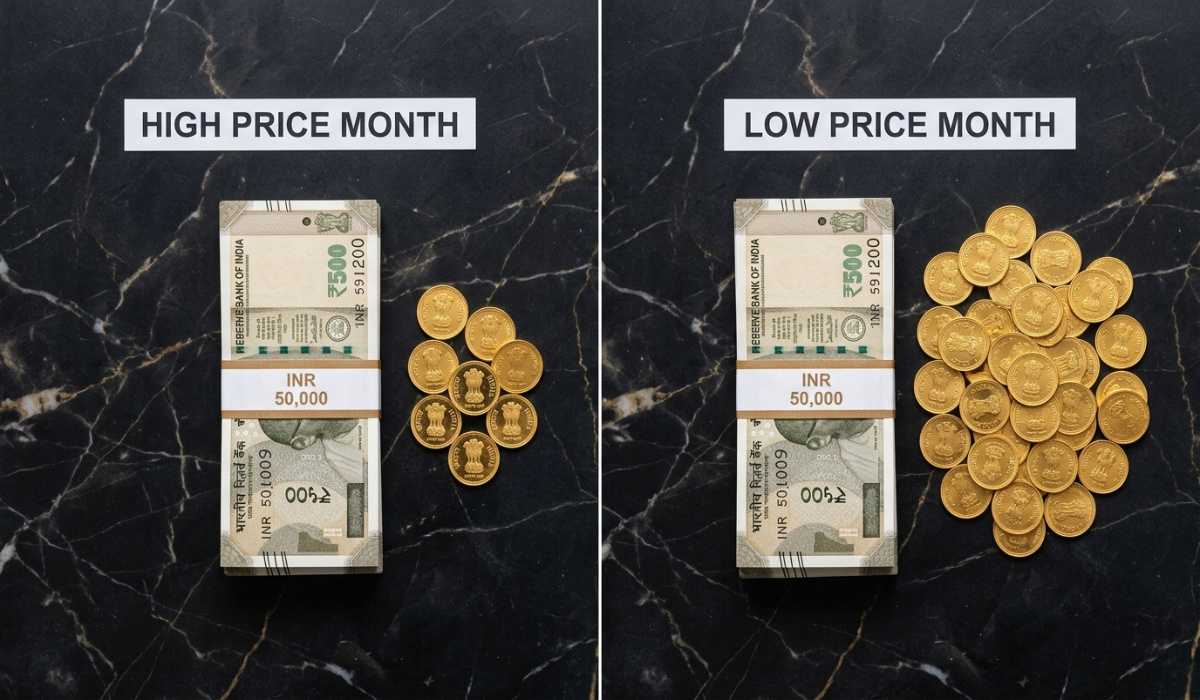
The Principle of Rupee Cost Averaging in Gold Investment
Rupee Cost Averaging, or RCA, is the engine that makes SIPs work so well.
The concept is straightforward. You invest the same amount every month, regardless of whether gold prices are soaring or tanking. When prices drop, your fixed investment buys more units. When prices spike, you buy fewer units. Over time, your average purchase cost smooths out.
I’ve watched this play out in my own portfolio. During 2020, when gold prices touched historic highs around ₹55,000 per 10 grams, my SIP bought fewer units that month. But in 2021, when prices corrected to ₹45,000, the same SIP amount accumulated significantly more units. The result? My average cost settled somewhere in between, protecting me from the pain of investing a lump sum at the peak.
This strategy shines particularly bright with volatile assets. Gold prices can swing wildly based on currency movements, geopolitical tensions, and central bank policies. RCA takes the emotion out of these swings.
The psychological benefit matters too. SIPs create discipline. You’re not tempted to wait for “the perfect moment” or panic during corrections. The investment happens automatically, building a saving habit that compounds over years.
From my time at ICICI Prudential, I saw countless investors trying to time gold purchases. Most failed. Markets are efficient at making fools of those who think they can predict short-term movements.
Historical Performance and Benefits of Gold ETF SIPs
Let’s talk numbers.
 Real, verified data.
A ₹10,000 monthly SIP in Gold ETFs could have grown to over ₹9 lakh in five years, with XIRR (extended internal rate of return) ranging from 17% to 17.71%. Funds like LIC MF Gold ETF, UTI Gold ETF, HDFC Gold ETF, and Nippon India ETF Gold BeES delivered these returns. That’s ₹6 lakh invested turning into ₹9 lakh. A gain of ₹3 lakh, or 50% appreciation.
Now, past performance doesn’t guarantee future results. Every mutual fund document tells you this, and it’s true. But gold’s historical role as an inflation hedge is well-documented across decades, not just one bull run.
During 2022, when equity markets tanked globally due to rising interest rates, gold held its ground. When 2023 brought banking sector concerns and recession fears, gold rallied. This inverse correlation with equities makes gold a powerful risk reducer in portfolios.
Gold ETFs and Gold Fund of Funds eliminate the headaches of physical gold. No making charges, no concerns about 22-karat versus 24-karat purity, no storage costs. You own paper gold backed by actual physical gold held in secure vaults.
The surge in investor interest tells its own story. Gold ETFs received record investments of around ₹3,751 crore in January 2025. This wasn’t speculation. Market volatility, global trade tensions, and currency concerns drove smart investors toward the safety of gold.
Gold as a Diversifier and Hedge Against Inflation
Gold doesn’t follow the stock market’s rules. That’s precisely why it belongs in your portfolio.
When equity markets crash, gold often rises or stays stable. It’s considered a store of value and a hedge against financial uncertainties. During economic turmoil, investors worldwide flock to gold. This consistent behavior makes gold predictable in its role, even if its price movements aren’t.
Inflation erodes purchasing power. Your ₹100 today buys less tomorrow. Gold acts as a buffer. When currency values decline due to inflation, gold prices typically rise. Not always in perfect lockstep, but the historical correlation is strong.
Adding gold to a basket of investments diversifies your overall portfolio, particularly when overall markets are volatile. Think of it as insurance. You don’t buy insurance hoping to use it. You buy it for peace of mind when things go wrong.
My portfolio follows a principle often discussed on platforms like Paisa Forever: balance across asset classes. Gold sits alongside equity mutual funds, debt instruments, and some international exposure. No single asset dominates. This approach has helped me weather multiple market cycles without panic selling.
A well-rounded financial plan doesn’t put all eggs in one basket. Gold for diversification works best alongside other assets like stocks and mutual funds. The goal is stability, not wild gains from any single asset.
Gold won’t make you rich overnight. It’s not designed to. It’s designed to protect what you’ve already built.
Gold Investment Outlook for Indian Investors: Beyond 2026

Expert Forecasts for Gold Prices in 2026 and Long-Term
Will gold continue its upward march through 2026 and beyond? Based on current market dynamics and expert analysis, the answer leans strongly toward yes.
The global economic landscape of 2026 presents a compelling case for gold. Geopolitical tensions haven’t eased. Inflation concerns persist across major economies. These factors create an environment where gold’s outlook remains constructive, with several analysts projecting prices could reach the $5,500 to $6,000 range by year-end 2026.
Here’s what matters for Indian investors. The international gold price directly influences rates in India. When global prices rise, your local jeweler’s rates follow. This correlation makes understanding international forecasts essential for anyone planning a Gold ETF SIP.
Short-term volatility is inevitable. Interest rate decisions by the U.S. Federal Reserve can trigger temporary dips. But here’s my perspective after 14 years of active market watching: these corrections often present buying opportunities rather than exit signals. The long-term trajectory looks upward, supported by sustained investor demand and persistent global uncertainties.
The economic scenario matters greatly. In a moderate slowdown with falling interest rates, experts anticipate gold could deliver 5% to 15% gains in 2026. Should we witness a severe economic downturn, gold might surge 15% to 30%. This asymmetric upside potential makes gold particularly attractive as portfolio insurance.
Central bank buying remains robust. Countries continue diversifying reserves away from traditional currencies. In India specifically, there’s discussion about pension funds potentially entering the gold investment space. This institutional demand could provide sustained price support beyond retail investor activity.
My five years at ICICI Prudential taught me to look beyond headline predictions. Focus on the underlying structural drivers: currency debasement concerns, deficit spending by governments, and gold’s role as crisis insurance. These factors won’t disappear in 2026.
Key Economic and Global Factors Influencing Gold Rates
Gold prices don’t move in isolation. Multiple forces push and pull simultaneously. Understanding these factors helps you make sense of daily price movements and, more importantly, long-term trends.
Economic Indicators That Matter
The Consumer Price Index (CPI) deserves your attention. When CPI numbers rise, inflation fears grip investors. Gold becomes attractive as a purchasing power protector. I’ve watched this pattern repeat countless times over my investing journey.
Repo rate changes by the Reserve Bank of India create immediate ripples. Lower repo rates reduce the opportunity cost of holding non-yielding assets like gold. More people shift allocation toward gold when fixed deposit rates fall. A GDP slowdown pushes risk-averse investors toward safe havens. Gold benefits from this defensive positioning.
Global Market Dynamics
Indian gold prices track COMEX futures closely. The correlation is strong and undeniable. A weak U.S. dollar typically elevates international gold prices since gold is dollar-denominated. When the dollar drops, gold becomes cheaper for holders of other currencies, boosting demand.
Federal Reserve decisions echo across global markets. Rate hikes strengthen the dollar and pressure gold. Rate cuts do the opposite. Global recession fears drive safe-haven buying. These aren’t abstract concepts. They directly impact your Gold ETF NAV.
Government Policy Impact
Import duties significantly affect domestic pricing. India imports most of its gold. Any duty increase gets passed to consumers immediately. The government has adjusted these rates based on current account deficit concerns.
Digital gold regulations continue evolving. Clearer frameworks might boost adoption. GST changes can shift demand patterns between physical gold and financial gold products like ETFs. Stay informed about policy shifts.
Seasonal Demand Patterns
Indian weddings and festivals create predictable demand spikes. October through December typically sees peak prices as consumers buy for Diwali and wedding season. Agricultural income cycles matter too. Good monsoons improve rural purchasing power, supporting gold demand in subsequent months.
This seasonal pattern affects your SIP strategy less than you might think. Regular monthly investments automatically capture both seasonal highs and lows, which is precisely how rupee cost averaging works in your favor.
Technology and Innovation
Digital platforms like Bajaj Finserv, PhonePe, and Paytm have democratized gold access. You can now invest ₹100 instead of buying a whole gold coin. Blockchain technology promises transparent pricing and trading. AI-driven price alerts help investors track markets efficiently.
These innovations make gold investment more accessible. Platforms like Paisa Forever provide educational resources to help investors navigate these technological changes while making informed decisions about gold allocation.
Risks and Considerations for Gold Investors
Gold isn’t a perfect investment. No asset is. Understanding the limitations helps you allocate appropriately.
The Income Challenge
Gold generates zero income. Your equity mutual funds pay dividends. Fixed deposits provide interest. Gold just sits there, hoping to appreciate. This matters for retirees needing regular cash flow. This matters for anyone comparing gold against income-generating alternatives.
I’ve seen investors plow excessive capital into gold, then struggle with liquidity needs. Don’t make this mistake. Gold should complement your portfolio, not dominate it.
Short-Term Price Volatility
Gold can swing violently in brief periods. Global events trigger rapid moves. Market sentiment shifts quickly. A strong U.S. economic report might send gold down 2% in a day. Geopolitical tensions might push it up 3% overnight.
These fluctuations create paper losses that test investor patience. Market conditions and global events drive this volatility. Your emotional resilience matters as much as your financial analysis.
Correction Scenarios
A 5% to 20% price correction remains possible. Stronger-than-expected economic growth reduces safe-haven demand. Rising bond yields make fixed-income investments more attractive. A surging dollar pressures gold prices downward.
Having witnessed multiple market cycles, I can tell you corrections feel worse than they actually are for SIP investors. Why? Because you’re buying more units at lower prices. Your average cost drops. This mechanical advantage works in your favor during downturns.
Portfolio Balance Concerns
Over-concentration creates vulnerability. Some investors, excited by gold’s recent performance, allocate 40% or 50% to gold. This creates an undiversified portfolio that swings excessively with gold price movements.
Financial planning demands balance.
 Gold investments should be approached with strategy, not emotion. Your overall financial goals should drive allocation decisions.
Cost Considerations
Gold ETFs charge expense ratios. Gold Fund of Funds add another layer of fees. These costs reduce your net returns over time. A 0.5% expense ratio might seem small, but compounded over decades, it matters.
Compare expense ratios across funds. Lower costs mean more of gold’s price appreciation flows to you. This simple math adds up significantly over long investment horizons.
Strategic Approach to Gold Investment and Portfolio Allocation
How much gold should you own? The question matters more than most investors realize.
The 10-20% Allocation Rule
Gold works best as a portfolio component, not a standalone strategy. Financial experts generally recommend allocating 10% to 20% of your portfolio to gold. This range provides meaningful diversification benefits without excessive concentration risk.
My personal approach leans toward 15% in current market conditions. This allocation gives me inflation protection and crisis insurance while leaving adequate capital for equity growth and income generation. Your situation might differ based on age, risk tolerance, and financial goals.
Multi-Asset Balance
Combining gold with equities, bonds, and other assets creates resilience. When stocks fall, gold often rises or holds steady. When inflation surges, gold protects while bonds struggle. This negative or low correlation to other assets provides the diversification benefit everyone talks about.
Real-world example from my experience: During the March 2020 market crash, my equity portfolio dropped 30%. My gold holdings rose slightly. The combined effect cushioned the overall portfolio damage significantly. This isn’t theory. This is how diversification actually works when markets stress.
Goal Alignment Matters
Your gold allocation should match your personal financial objectives. Saving for retirement 20 years away? You can handle more equity and less gold. Protecting accumulated wealth 5 years before retirement? Increase your gold allocation for stability.
Risk appetite plays a crucial role. Conservative investors sleep better with higher gold allocations. Aggressive investors might minimize gold to maximize equity exposure. Neither approach is wrong. Both should align with individual circumstances.

Practical Tips for Beginners
Track gold price trends without obsessing over daily movements. Understand the difference between short-term noise and long-term signals. Avoid impulse purchases driven by fear or greed. These emotional decisions rarely work out well.
Consult financial experts when appropriate. Resources like Paisa Forever offer educational content covering gold alongside stock market updates and mutual fund analysis, helping you understand how gold fits within a comprehensive financial plan.
Start small if you’re uncertain. A ₹5,000 monthly SIP in a Gold ETF lets you learn through experience without excessive risk. Increase allocations as your understanding grows. This measured approach builds both your portfolio and your investment confidence simultaneously.
Remember the core principle: gold enhances portfolios through diversification, not speculation. Treat it as long-term financial insurance, not a get-rich-quick scheme. This mindset shift separates successful long-term investors from disappointed short-term traders.
Also Read: Silver’s Industrial Demand Drives India’s Solar Future Now
Disclaimer : This article is intended for educational and informational purposes only and does not constitute financial, investment, or tax advice tailored to your individual circumstances. Past performance of Gold ETFs and SIPs, including return figures cited herein, is not indicative of future results, and all investments in gold-related instruments carry market risk including the potential loss of principal. Readers are strongly advised to consult a SEBI-registered investment adviser or certified financial planner before making any investment decisions related to Gold ETFs, Gold Mutual Funds, or any other financial instruments discussed in this article.